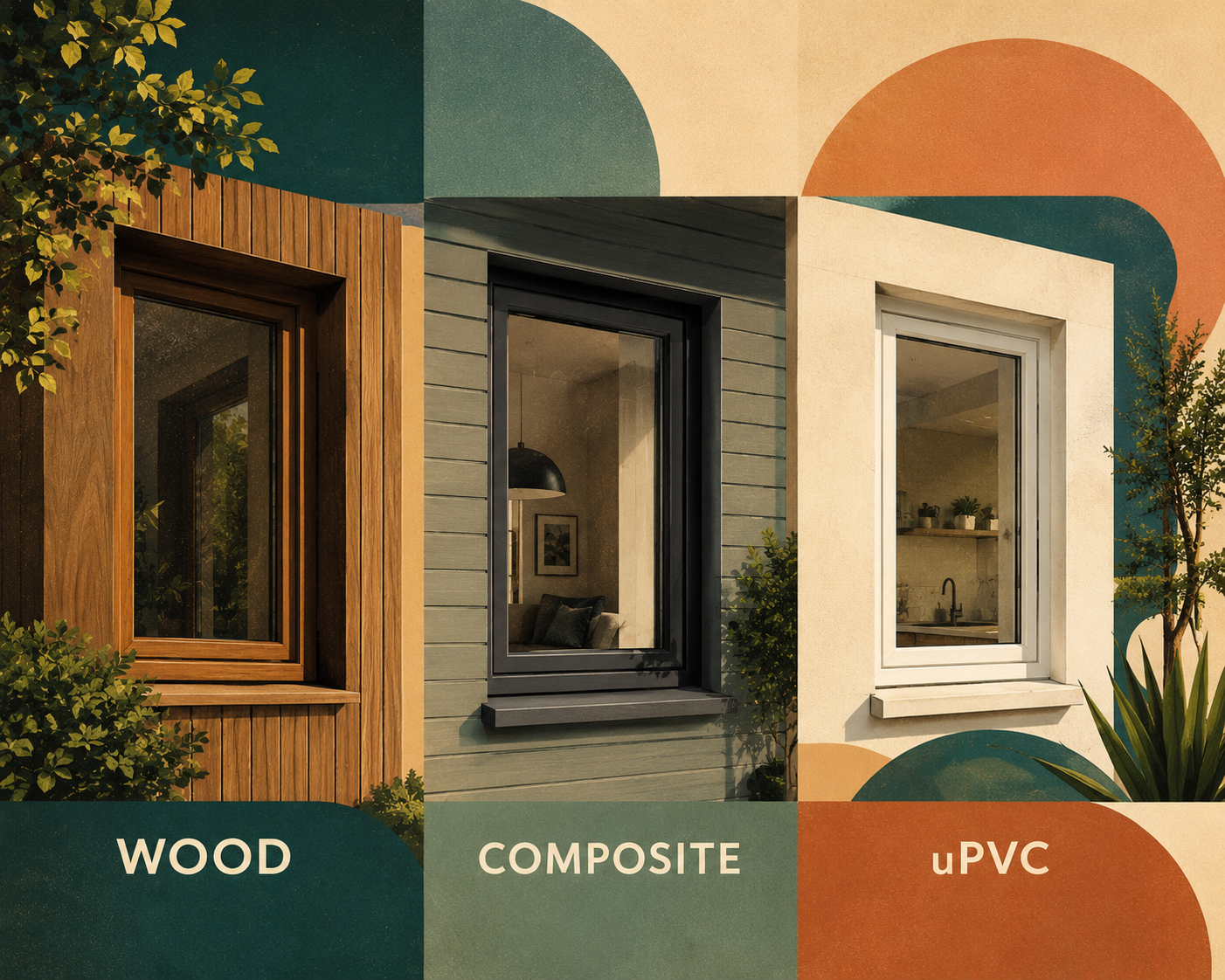
There are more choices to make when selecting a front door than one might think. Thermal performance, security, longevity, maintenance needs, and aesthetic appeal are all impacted by material selection, and the best option differs based on the property, its architectural context, and the household’s preferences. Suppliers like Replace Windows provide composite door options in addition to other materials, representing a market where a well-informed comparison is the best place to start because there isn’t a single product that works for every circumstance.
Why Material Choice Defines Long-Term Value
You don’t buy front doors very often. The material used must function effectively and maintain its beauty over a period measured in decades rather than years because most homeowners replace an exterior door once or twice during their time in a property. Therefore, a door’s initial cost is only one aspect of its worth; other factors include durability, maintenance needs, and the rate at which performance deteriorates over time.
A door that is less expensive to purchase but needs to be repainted every two years, swells seasonally, or loses its thermal performance within ten years is a worse long-term investment than one that is more expensive at first but requires less maintenance over the course of its service life.
The Case for Timber
Manufactured alternatives find it difficult to match the warmth and authenticity of solid wood doors. The material is available in profiles that fit period properties where contemporary alternatives would look out of place, has natural variety, and ages in ways that can enhance rather than decrease its character. When properly specified, hardwood species like oak and iroko are dense enough to offer good thermal and acoustic performance. When damaged, they can be restored rather than replaced.
Maintenance is the trade-off. In order to avoid moisture intrusion, timber doors need to be treated on a regular basis. Ignoring this might have subtle but cumulative effects. If a door is not repainted or resealed on time, it will eventually warp, crack, or let water in, which will affect its appearance and functionality. Timber is still an appealing option for homeowners who are prepared to make that maintenance commitment. The alternatives should be carefully considered by those who are not.
uPVC and the Argument for Low Maintenance
During the 1980s and 1990s, uPVC doors were the most popular option for residential replacement projects since they require very little upkeep. They don’t require painting, don’t swell or warp in response to seasonal variations in moisture, and withstand the weathering that eventually deteriorates wood.
Since then, the thermal performance and visual range of modern uPVC profiles have significantly increased. Heat loss is minimised by multi-chamber frame designs, and there are now many more colour and finish options than the white that defined earlier editions. Despite its practical benefits, uPVC may not be suitable in conservation areas or houses with significant period character due to its inability to properly recreate the visual depth and material quality of timber.
What Composite Doors Offer
Composite doors are designed items that have a foam-filled interior and a timber core with outside skins, usually made of glass-reinforced plastic. The structure is intended to preserve the aesthetic appeal of a solid timber door while removing the upkeep requirements that make wood difficult for many homeowners.

The exterior cover comes in a variety of hues and finishes and can be shaped to resemble conventional panel profiles. The skin does not need to be painted because it is not made of solid wood, and it is not affected by the moisture-driven movement that causes solid wood to swell or warp. When installed with suitable multi-point locking mechanisms, the whole design gives a high level of security, and the foam core typically outperforms both solid timber and ordinary uPVC in terms of thermal performance.
Security Across All Three Materials
Door security is not solely dependent on material; it also depends on construction, hardware, installation, and material. A sturdy wooden door with a high-quality multi-point lock and a well-constructed frame works nicely. The performance of a composite door with a comparable locking system is very similar. Current security criteria are also met by uPVC doors with reinforced frames and contemporary locking systems.
Rather than the door leaf itself, the hardware and frame are typically the weak points in residential door security. Regardless of the material selected, it is important to specify the proper lock grades, hinges, and letterplate reinforcing.
Matching Material to Property
When deciding between timber, composite, and uPVC, the most helpful question is not which material is objectively better but rather which one works best for this particular property, area, and household. A new-build subdivision or a detached home from the 1970s requires a different approach than a Victorian terrace in a protected district. The building’s architectural language, budget, and maintenance appetite all contribute to a judgment that only has the right solution for the particular circumstance at hand.