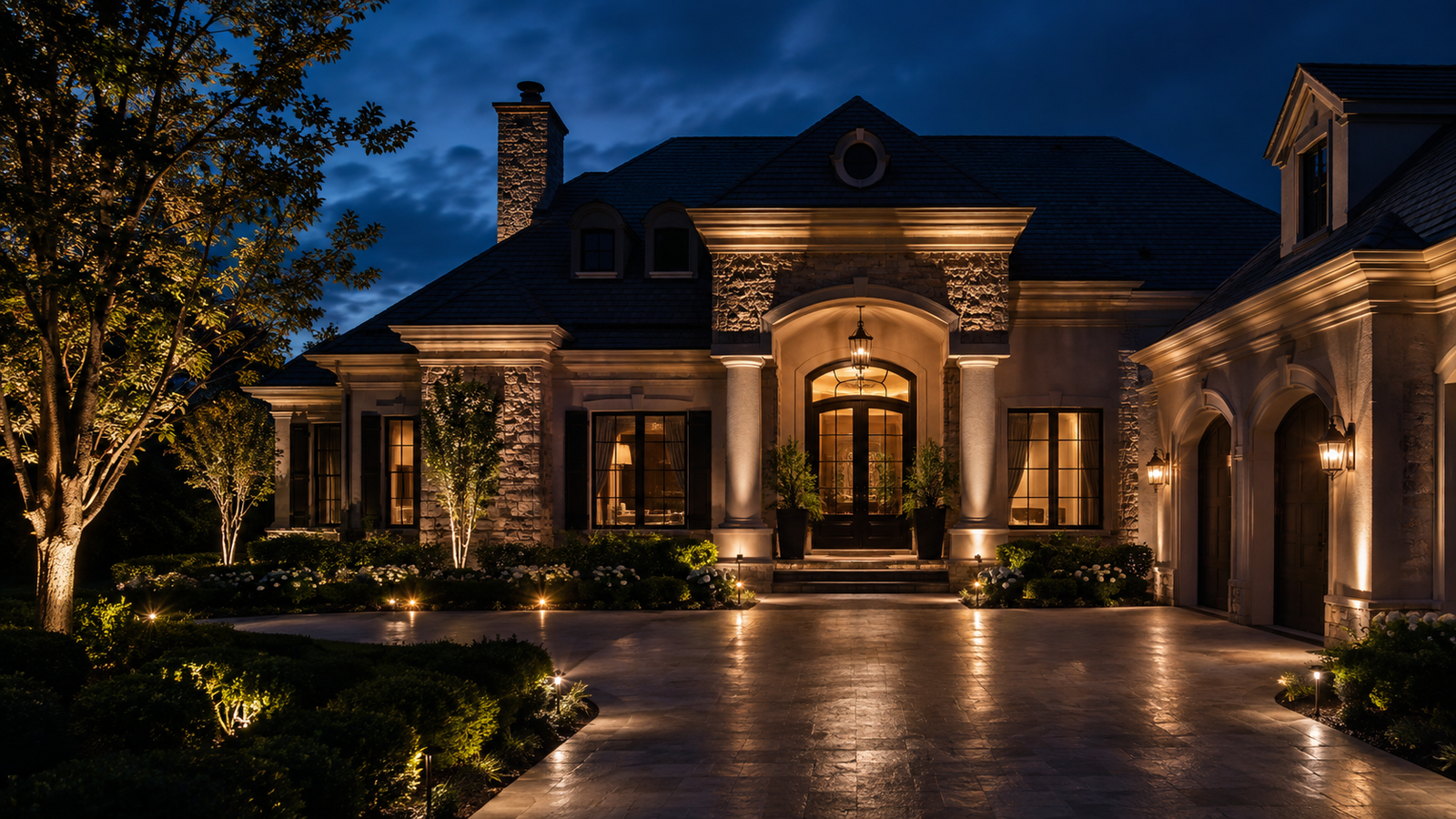
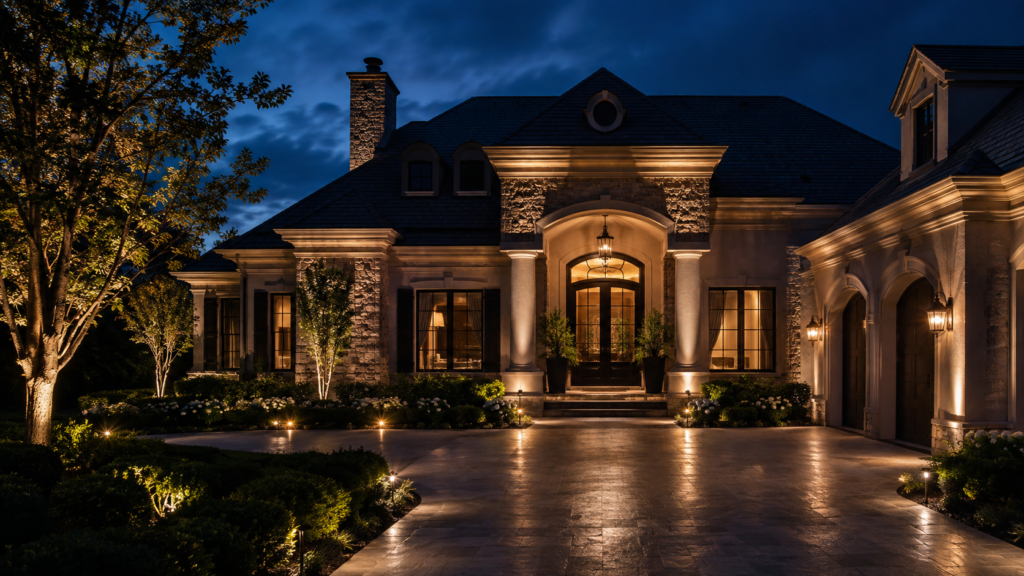
Architecture does not disappear when the sun goes down, but the way we perceive it changes completely. In daylight, a building is defined by its materials, proportions and relationship with the surrounding landscape. At night, those qualities remain visible only when light reveals them. A carefully positioned beam can turn an ordinary brick wall into a richly textured surface, separate a sculptural tree from the darkness or give a familiar entrance an entirely new presence.
This is why architectural lighting should be approached as a form of visual composition rather than a simple attempt to make everything brighter. The most memorable nighttime exteriors use contrast, direction and shadow to decide what deserves attention. Like a photographer controlling exposure or a painter arranging highlights, the designer selects which details emerge and which remain quietly in the background.
The Building Becomes a Nighttime Canvas
During the day, sunlight generally arrives from above and moves gradually across a building. Artificial light offers much greater control. It can travel upward from the ground, skim sideways across a textured wall or descend from a concealed position beneath the roof. Each direction produces a different interpretation of the same structure.
Lighting a facade from the front tends to flatten its appearance because shadows become less pronounced. Moving the light to one side emphasizes depth, revealing the edges of stone, brick and decorative panels. Uplighting makes columns, arches and vertical forms feel more dramatic, while downlighting can suggest the softer effect of moonlight.
The choice is not merely technical. It determines whether the building appears monumental, intimate, mysterious or calm. Before selecting fixtures, it is worth deciding what kind of nighttime character the architecture should express.
Begin With a Clear Focal Point
A successful composition needs somewhere for the eye to rest. On a traditional home, the focal point might be an arched doorway, a chimney or a pair of symmetrical columns. A modern building may be defined by a cantilevered roof, a concrete wall or the geometric meeting of different materials. In a garden, a mature tree, sculpture or water feature might deserve the leading role.
Trying to illuminate every element equally weakens the visual hierarchy. If the doorway, roofline, walls, lawn and every plant receive the same brightness, nothing feels important. Instead, select one primary feature and a few supporting details. The primary subject can receive the strongest or most precisely controlled beam, while secondary areas remain softer.
Darkness should not be treated as unfinished space. It provides the visual pause that makes illuminated forms more noticeable. A small number of intentional highlights will usually create more atmosphere than a yard filled with competing fixtures.
Choose a Beam That Fits the Subject
The shape of a light beam affects how an architectural feature is perceived. A narrow beam can isolate a slender tree trunk, column or sculpture. A wider beam may be more suitable for a broad wall, dense canopy or substantial section of facade. Adjustable fixtures allow the direction to be refined after installation as the composition is viewed from different positions.
Designers and homeowners comparing narrow, wide, ground-mounted and adjustable formats can explore Outdoor Spotlights from Dazuma for examples of how different fixtures may be incorporated into an exterior lighting concept.
The beam should relate to the dimensions of its subject. If it is too narrow, part of the feature may vanish abruptly into darkness. If it is too wide, light can spill onto unrelated surfaces and reduce the clarity of the composition.
Use Grazing Light to Reveal Texture
Materials are central to architecture, but their tactile qualities can become invisible under flat illumination. Grazing light solves this problem by placing the source close to a surface and directing the beam almost parallel to it. The light catches every projection and leaves small shadows in every recess.
This technique can bring remarkable depth to rough stone, handmade brick, board-formed concrete and heavily grained timber. Even a subtle pattern may become dramatic when the light travels across it at a shallow angle. However, grazing also reveals cracks, uneven repairs and construction imperfections. It should therefore be tested before being applied across an entire facade.
Smooth walls may benefit from a different approach. Lighting them from farther away creates a more even wash and emphasizes the overall plane rather than its texture. The correct technique depends on whether the intention is to celebrate the surface itself or use it as a quiet background.
Let Architecture and Landscape Share the Composition
A building is rarely experienced in isolation. Trees, hedges, paths and garden structures help define its setting. Exterior lighting becomes more convincing when architecture and landscape are treated as parts of the same image.
Illuminating a tree in front of a softly lit wall can create layers of depth. A beam passing through branches may cast moving shadows across the facade, giving a static surface a changing quality. Lighting a tree from below emphasizes its structure, while positioning the source behind it produces a silhouette.
The relationship should remain balanced. A highly illuminated garden can visually overpower a modest building, while a brilliant facade may reduce surrounding plants to a dark, empty border. The brightest feature should support the intended focal point, and transitions between illuminated areas should feel deliberate.
Think About the Viewing Angle
Outdoor lighting is often adjusted while standing beside the fixture, but this is rarely the most important viewpoint. A home might normally be seen from the sidewalk, driveway, garden gate or a room inside the house. Public buildings may be approached from several streets and observed at different speeds.
Before finalizing the position of a spotlight, examine its effect from every common approach. A beam that looks elegant from the front may expose an unpleasantly bright light source when viewed from the side. A fixture hidden behind planting during summer may become visible after leaves fall in winter.
Whenever possible, conduct nighttime tests with temporary lights. Moving a fixture by a small distance or changing its angle can alter the result significantly. This process is comparable to adjusting a camera before taking a photograph: framing matters as much as the subject.
Color Temperature Changes the Emotional Tone
The color of white light influences how both architecture and landscape are perceived. Warmer light tends to complement brick, wood, bronze and warm-toned stone. It creates an intimate atmosphere associated with candlelight and traditional interiors. More neutral illumination may sharpen the appearance of concrete, steel and pale contemporary surfaces.
Very cool light can give an exterior a striking graphic quality, but it may also feel severe in a residential setting. It can alter the natural appearance of foliage and create an uncomfortable contrast with warm light coming through the windows.
Consistency is generally helpful, although carefully controlled variation can define separate layers. A slightly warmer entrance might invite people toward the door while neutral accent light reveals a modern sculpture. The difference should appear intentional rather than resulting from an accidental mixture of lamps.
Shadow Is Part of the Design
Shadow is not simply the absence of light. It describes form, creates rhythm and introduces mystery. When a spotlight hits the side of a column, the illuminated edge explains its shape because the opposite side remains dark. When branches cast shadows against a wall, the image changes with the wind.
Eliminating every shadow can make an exterior appear flat and strangely artificial. The more interesting approach is to control shadows so that they contribute to the composition without concealing steps, pathways or entrances that require safe visibility.
This distinction separates aesthetic accent lighting from general safety lighting. The two can coexist, but each should have a clear purpose. Functional fixtures help people move through the space, while spotlights create visual emphasis and emotional atmosphere.
Restraint Prevents Glare and Visual Clutter
A spotlight is most effective when viewers notice the illuminated subject rather than the fixture itself. Glare occurs when a bright source is visible from a normal viewing position or when a beam is directed toward someone’s eyes. It can reduce visual comfort and make the surrounding darkness harder to see into.
Fixtures can be concealed among plants, placed behind low architectural elements or fitted with shields that limit stray light. Beams should terminate on the intended wall, tree or object instead of continuing toward neighboring windows or the open sky.
Restraint also protects the wider nighttime environment. Lower brightness, accurate aiming and scheduled operating hours can reduce unnecessary light beyond the property. Good architectural lighting does not need to announce itself from a great distance. Its power comes from precision.
Materials and Maintenance Affect the Final Image
Outdoor fixtures face moisture, dirt, temperature changes and plant growth. A carefully planned effect can deteriorate when a lens becomes cloudy, a fixture shifts in soft ground or foliage grows across the beam. Product selection must account for exposure, construction quality and the practical ability to adjust and clean each light.
The lighting composition should be reviewed as the landscape matures. Trees become taller, branches spread and seasonal plants alter sightlines. What worked during installation may need refinement a year later. This flexibility is especially important when living elements form part of the design.
Architecture Continues After Sunset
Outdoor spotlights give architecture a second identity. They can reveal the weight of a stone wall, trace the vertical movement of a column or transform a tree into a living sculpture. Yet their effectiveness depends less on extreme brightness than on understanding proportion, texture, viewpoint and shadow.
The finest nighttime compositions do not illuminate everything. They edit. By selecting meaningful features and allowing darkness to frame them, light can make familiar architecture feel newly discovered every evening.