When an accident causes injuries or property damage, determining who is responsible becomes an important part of the legal process. In Lakewood, Colorado, questions about negligence, liability, and compensation often arise when injured individuals seek financial recovery for their losses.
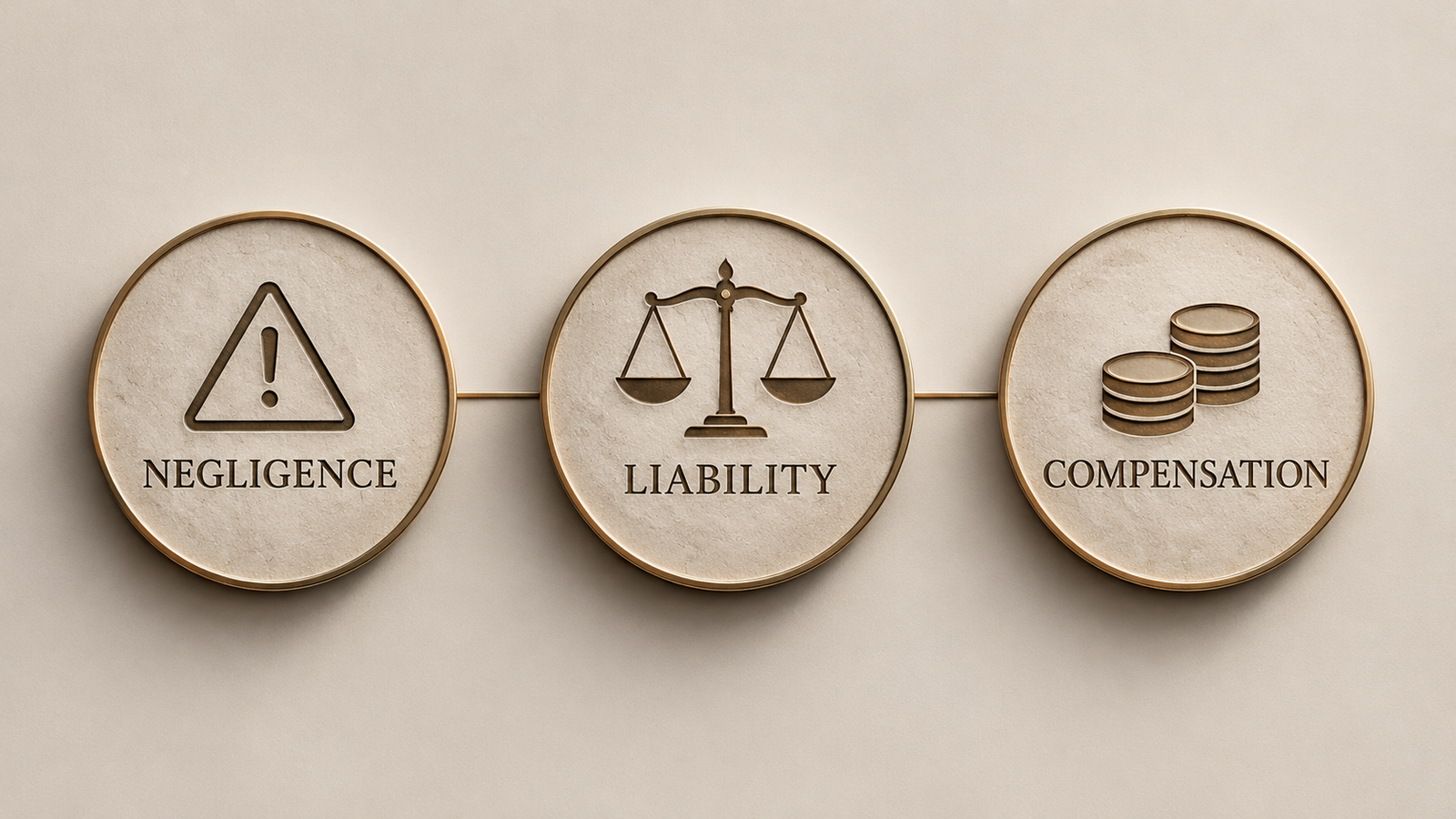
Although these legal concepts are closely connected, each serves a different purpose. Negligence focuses on careless behavior, liability determines legal responsibility, and compensation addresses the losses resulting from an incident. Understanding how these elements work together can help individuals make informed decisions when dealing with personal injury claims.
Understanding Negligence in Personal Injury Cases
Negligence refers to a situation where a person acts carelessly or fails to take proper precautions, resulting in injury or harm to someone else. In personal injury cases, establishing negligence is often the first step toward determining whether a claim has legal grounds.
For example, a driver who ignores traffic signals, becomes distracted, or fails to maintain a safe distance may cause an avoidable collision. However, proving negligence requires more than showing that an accident occurred. The injured person must generally prove that the other party failed to act responsibly and caused resulting harm.
Road accidents remain a safety concern in Lakewood, with changes in traffic collision rates highlighting the importance of responsible driving and awareness of legal rights. If you’re a victim of a similar situation, a Lakewood Car Accident Attorney can help you understand your legal rights, determine who may be responsible, and guide you through the process of seeking compensation for your injuries and losses.
Legal professionals can review accident reports, assess medical documentation, investigate liability, and assist with insurance negotiations or legal proceedings when necessary.
How Liability Determines Legal Responsibility
Liability refers to the legal responsibility a person or organization may have for causing another individual’s injuries or losses. While negligence often forms the basis of liability, the two concepts are not identical.
A person may behave carelessly, but liability generally requires a legally recognized connection between that behavior and the resulting harm.
For example, if a driver violates a traffic rule but that violation has no connection to a collision, it may not establish responsibility for the accident.
Liability can also involve multiple parties. In certain situations, employers, property owners, manufacturers, or other individuals may share responsibility depending on the circumstances and applicable laws.
Identifying the responsible parties helps determine who may be required to compensate the injured person.
The Importance of Evidence
Evidence plays a central role in connecting negligent behavior to an accident and its consequences. Without reliable documentation, determining responsibility can become challenging, especially when the people involved provide conflicting accounts.
Photographs, surveillance footage, witness statements, and official accident reports may help establish what happened.
Medical records are equally important because they document injuries, treatment, and recovery needs. These records can help demonstrate the relationship between an incident and the harm experienced.
In more complicated cases, accident reconstruction specialists or other experts may provide additional insight into how an incident occurred.
Collecting and preserving evidence promptly can strengthen the accuracy of a claim and reduce uncertainty during negotiations or legal proceedings.
Understanding How Shared Fault Affects Claims
Not every accident involves only one responsible party. Sometimes, several individuals contribute to an incident through separate actions or decisions.
Comparative negligence rules address situations where an injured person shares some responsibility for the harm they experienced.
For example, one driver may be speeding while another fails to yield. Depending on the evidence, both actions could contribute to a collision.
Shared responsibility can significantly influence the outcome of compensation negotiations.
How Compensation Addresses Accident-Related Losses
Compensation is intended to address the financial and personal losses caused by an accident. The amount someone may recover depends on the circumstances, the severity of the injuries, and the applicable legal rules.
Economic damages generally include measurable expenses such as medical treatment, rehabilitation, lost wages, and property repairs.
Noneconomic damages may address physical pain, emotional distress, and reduced enjoyment of everyday activities.
For example, someone recovering from a serious collision may require ongoing medical care while being unable to return to work. A compensation claim may account for both immediate expenses and reasonably supported future losses.
However, compensation is not automatic. The claimant must establish the relevant legal requirements and provide evidence supporting the damages requested.
The Role of Insurance in Compensation Claims
Insurance companies frequently become involved when accidents result in injuries or property damage. Depending on the circumstances, an injured person may submit a claim against the responsible party’s liability insurance.
The insurer typically investigates the incident, reviews available evidence, and evaluates the claimed losses before deciding whether to offer a settlement.
Disagreements may arise over who caused the accident, whether particular injuries resulted from it, or how much compensation is appropriate.
Maintaining medical records, repair estimates, payment receipts, and communication records can help support the claim.
It is also important to review settlement terms carefully. Accepting a final settlement may prevent someone from seeking additional compensation for the same injuries later.
Understanding insurance procedures can help injured individuals make more informed decisions throughout the process.
Protecting Your Rights Through Informed Decisions
Understanding negligence, liability, and compensation provides a useful foundation for handling personal injury claims. Each concept plays a distinct role in determining whether someone may be legally responsible for an accident and what financial recovery might be available.
Taking practical steps after an incident can also make a difference. Seeking appropriate medical attention, preserving evidence, documenting expenses, and keeping accurate records can help establish the facts surrounding a claim.
Individuals should also avoid making assumptions about responsibility before the available evidence has been reviewed.
Ultimately, informed decisions begin with understanding how careless actions can create legal responsibility and how proven losses may lead to compensation. With reliable documentation, awareness of applicable laws, and appropriate guidance when needed, injured individuals can approach the claims process with greater clarity and confidence.
When an accident causes injuries or property damage, determining who is responsible becomes an important part of the legal process. In Lakewood, Colorado, questions about negligence, liability, and compensation often arise when injured individuals seek financial recovery for their losses.
Although these legal concepts are closely connected, each serves a different purpose. Negligence focuses on careless behavior, liability determines legal responsibility, and compensation addresses the losses resulting from an incident. Understanding how these elements work together can help individuals make informed decisions when dealing with personal injury claims.
Understanding Negligence in Personal Injury Cases
Negligence refers to a situation where a person acts carelessly or fails to take proper precautions, resulting in injury or harm to someone else. In personal injury cases, establishing negligence is often the first step toward determining whether a claim has legal grounds.
For example, a driver who ignores traffic signals, becomes distracted, or fails to maintain a safe distance may cause an avoidable collision. However, proving negligence requires more than showing that an accident occurred. The injured person must generally prove that the other party failed to act responsibly and caused resulting harm.
Road accidents remain a safety concern in Lakewood, with changes in traffic collision rates highlighting the importance of responsible driving and awareness of legal rights. If you’re a victim of a similar situation, a Lakewood Car Accident Attorney can help you understand your legal rights, determine who may be responsible, and guide you through the process of seeking compensation for your injuries and losses.
Legal professionals can review accident reports, assess medical documentation, investigate liability, and assist with insurance negotiations or legal proceedings when necessary.
How Liability Determines Legal Responsibility
Liability refers to the legal responsibility a person or organization may have for causing another individual’s injuries or losses. While negligence often forms the basis of liability, the two concepts are not identical.
A person may behave carelessly, but liability generally requires a legally recognized connection between that behavior and the resulting harm.
For example, if a driver violates a traffic rule but that violation has no connection to a collision, it may not establish responsibility for the accident.
Liability can also involve multiple parties. In certain situations, employers, property owners, manufacturers, or other individuals may share responsibility depending on the circumstances and applicable laws.
Identifying the responsible parties helps determine who may be required to compensate the injured person.
The Importance of Evidence
Evidence plays a central role in connecting negligent behavior to an accident and its consequences. Without reliable documentation, determining responsibility can become challenging, especially when the people involved provide conflicting accounts.

Photographs, surveillance footage, witness statements, and official accident reports may help establish what happened.
Medical records are equally important because they document injuries, treatment, and recovery needs. These records can help demonstrate the relationship between an incident and the harm experienced.
In more complicated cases, accident reconstruction specialists or other experts may provide additional insight into how an incident occurred.
Collecting and preserving evidence promptly can strengthen the accuracy of a claim and reduce uncertainty during negotiations or legal proceedings.
Understanding How Shared Fault Affects Claims
Not every accident involves only one responsible party. Sometimes, several individuals contribute to an incident through separate actions or decisions.
Comparative negligence rules address situations where an injured person shares some responsibility for the harm they experienced.
For example, one driver may be speeding while another fails to yield. Depending on the evidence, both actions could contribute to a collision.
Shared responsibility can significantly influence the outcome of compensation negotiations.
How Compensation Addresses Accident-Related Losses
Compensation is intended to address the financial and personal losses caused by an accident. The amount someone may recover depends on the circumstances, the severity of the injuries, and the applicable legal rules.
Economic damages generally include measurable expenses such as medical treatment, rehabilitation, lost wages, and property repairs.
Noneconomic damages may address physical pain, emotional distress, and reduced enjoyment of everyday activities.
For example, someone recovering from a serious collision may require ongoing medical care while being unable to return to work. A compensation claim may account for both immediate expenses and reasonably supported future losses.
However, compensation is not automatic. The claimant must establish the relevant legal requirements and provide evidence supporting the damages requested.
The Role of Insurance in Compensation Claims
Insurance companies frequently become involved when accidents result in injuries or property damage. Depending on the circumstances, an injured person may submit a claim against the responsible party’s liability insurance.
The insurer typically investigates the incident, reviews available evidence, and evaluates the claimed losses before deciding whether to offer a settlement.
Disagreements may arise over who caused the accident, whether particular injuries resulted from it, or how much compensation is appropriate.
Maintaining medical records, repair estimates, payment receipts, and communication records can help support the claim.
It is also important to review settlement terms carefully. Accepting a final settlement may prevent someone from seeking additional compensation for the same injuries later.
Understanding insurance procedures can help injured individuals make more informed decisions throughout the process.
Protecting Your Rights Through Informed Decisions
Understanding negligence, liability, and compensation provides a useful foundation for handling personal injury claims. Each concept plays a distinct role in determining whether someone may be legally responsible for an accident and what financial recovery might be available.
Taking practical steps after an incident can also make a difference. Seeking appropriate medical attention, preserving evidence, documenting expenses, and keeping accurate records can help establish the facts surrounding a claim.
Individuals should also avoid making assumptions about responsibility before the available evidence has been reviewed.
Ultimately, informed decisions begin with understanding how careless actions can create legal responsibility and how proven losses may lead to compensation. With reliable documentation, awareness of applicable laws, and appropriate guidance when needed, injured individuals can approach the claims process with greater clarity and confidence.