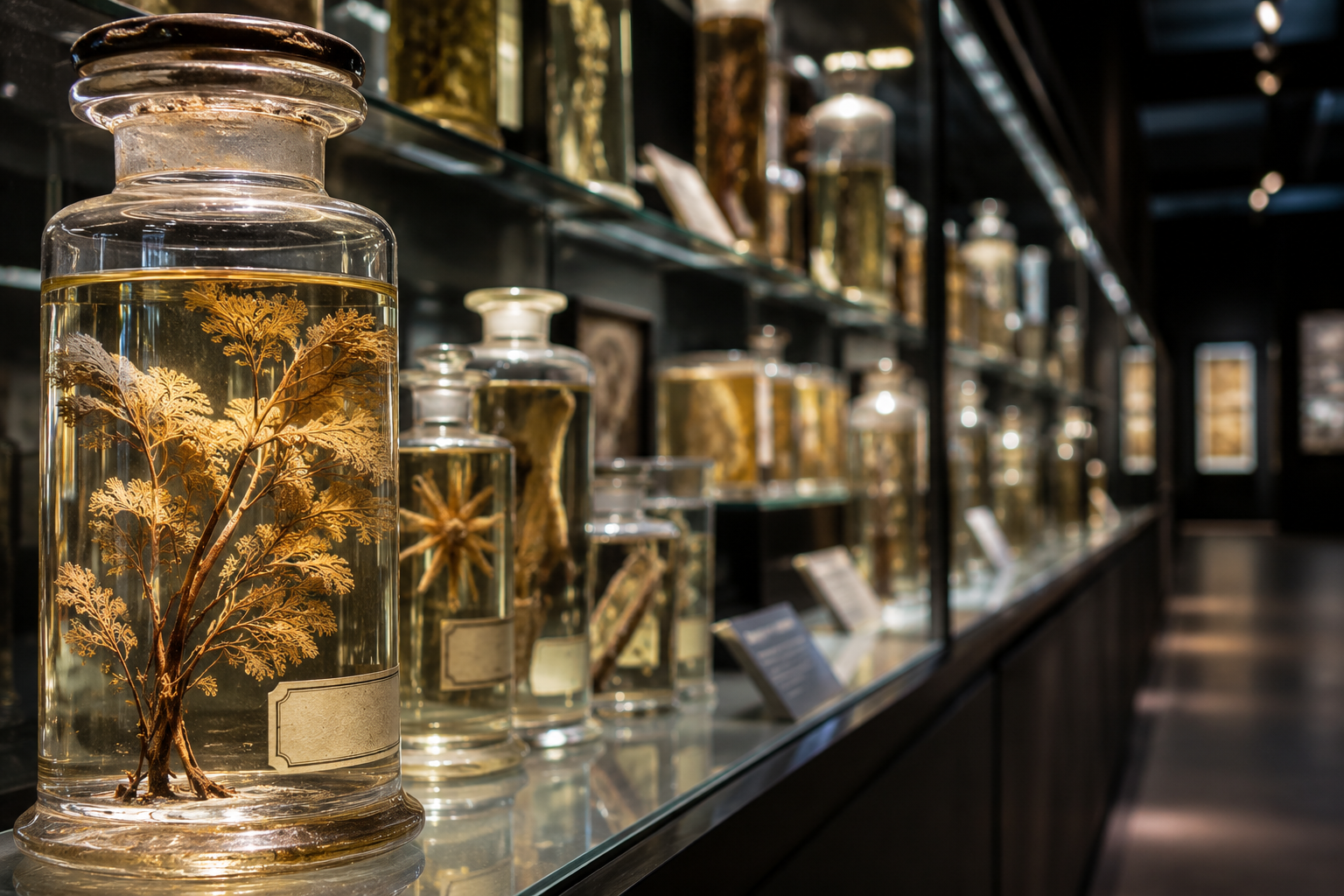
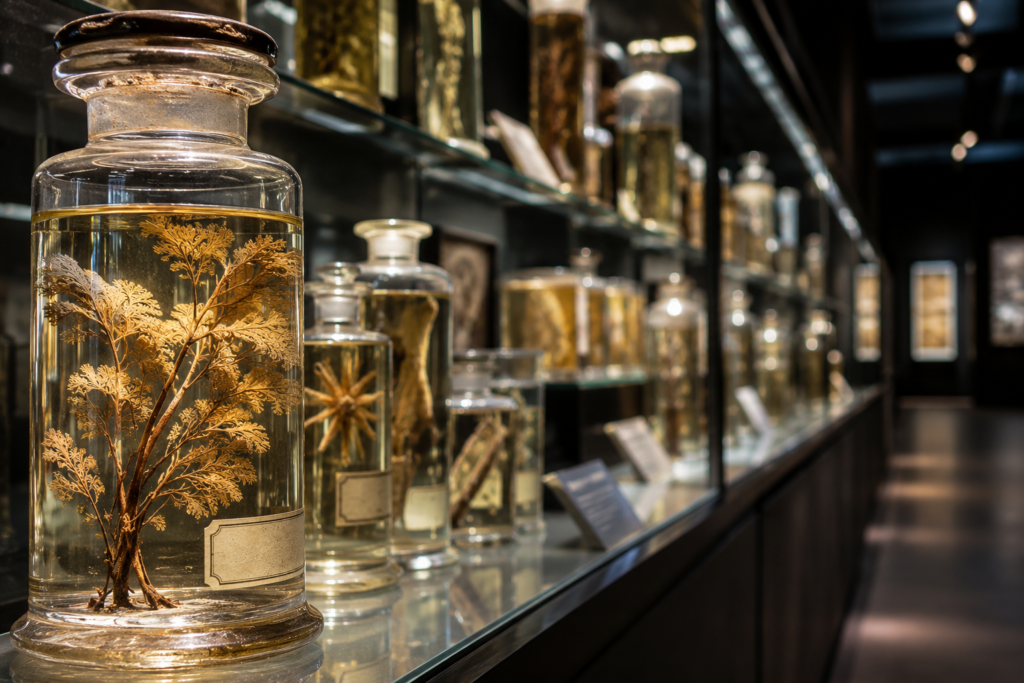
In a quiet corner of London, thousands of preserved anatomical specimens tell a story of scientific brilliance, human obsession, and the unsettling question of who owns the dead.
There are museums in which humanity preserves its greatest achievements. Magnificent paintings, ancient manuscripts, extraordinary sculptures, objects through which entire civilizations attempt to communicate their existence to future generations.
And then there are museums in which humanity has preserved humanity itself.
In London’s Lincoln’s Inn Fields, behind the elegant exterior of the Royal College of Surgeons of England, stands one of the most remarkable and morally complicated museums in Europe. Its collections contain thousands of anatomical preparations, including genuine human organs, bones, tissue specimens, and remains that were collected long before the modern language of medical consent existed.
The Hunterian Museum is not a theatrical house of horrors. There are no manufactured monsters, elaborate jump scares, or enthusiastic attempts to convince visitors that the building is haunted. Its contents are considerably more unsettling precisely because they are real.
Behind glass, the human body has been carefully divided, studied, classified, and preserved. The familiar structures of life become objects of scientific observation. Organs that once belonged to living individuals are suspended in preservative solutions. Bones become instruments of anatomical comparison. Diseases are made visible through the tissues they altered.
Each specimen represents knowledge. But many also represent a person.
The distinction is easy to overlook when confronted with the extraordinary visual order of the displays. The cabinets are elegant. The arrangement is meticulous. The historical instruments possess the strange beauty of objects manufactured in an age when even the practical instruments of science could resemble minor works of art.
Yet beneath this aesthetic sophistication lies a question that refuses to disappear: how much of our understanding of the human body was acquired through practices that would now be considered deeply unethical?
The museum takes its name from John Hunter, the celebrated eighteenth-century Scottish surgeon whose intellectual appetite helped transform the study of anatomy into an increasingly experimental scientific discipline. His collection became one of the foundations of modern medical education in Britain.
Hunter was unquestionably a remarkable scientist. He was also a collector whose determination to possess and study bodies sometimes collided with the wishes of the people to whom those bodies belonged.
Perhaps nowhere is that contradiction more painfully evident than in the story of Charles Byrne, the so-called Irish Giant, whose skeleton remained on public display for more than two centuries despite accounts of his desperate attempts to prevent precisely that fate.
Today, the Hunterian stands at a fascinating intersection of scientific history, artistic beauty, human mortality, and institutional responsibility.
To understand it is to enter a world in which the pursuit of knowledge was capable of producing extraordinary achievements, while occasionally displaying a rather spectacular indifference to the human beings from whom that knowledge was extracted.
The Man Who Collected Death
John Hunter was born in Scotland in 1728, during a period when medicine occupied an uncomfortable territory between empirical investigation, inherited tradition, and occasional outright superstition.
The human body remained an imperfectly understood landscape. Surgeons could perform operations, amputate limbs, and treat injuries, but infection was poorly understood, effective anesthesia lay in the future, and many surgical interventions were extraordinarily dangerous.
What surgeons lacked was not necessarily confidence. Eighteenth-century medicine had rather generous supplies of that. What it lacked was systematic knowledge supported by careful observation and experiment.
Hunter helped change this.
In 1748, at approximately twenty years old, he travelled to London to assist his older brother, William Hunter, an already established physician and teacher of anatomy. There he entered a world in which medical education depended upon direct contact with the human body.
Dissection was indispensable. It also presented a practical difficulty: the supply of legally available human remains was severely restricted.
For anatomists, access to bodies was therefore a valuable and frequently controversial resource. The increasing demand for anatomical education would eventually encourage an entire illicit economy dedicated to supplying cadavers.
Hunter’s scientific ambitions extended far beyond human dissection. He studied animals, plants, reproduction, inflammation, blood circulation, bone development, and the physiological differences between species.
He approached living organisms not as isolated collections of parts, but as interconnected systems governed by observable biological processes.
This comparative approach was remarkably important. By examining how different organisms were structured and how their tissues responded to injury and disease, Hunter sought principles that might improve the treatment of human patients.
He served as an army surgeon during the Seven Years’ War, was elected a Fellow of the Royal Society in 1767, and developed a distinguished surgical career at St George’s Hospital.
His achievements helped establish the foundations of scientific surgery, particularly through his interest in experimentation and the relationship between anatomy and physiological function.
Yet Hunter was not satisfied with observing specimens and recording their characteristics.
He wanted to possess them.
Over the course of his career, his collection expanded into an extraordinary private museum containing thousands of anatomical preparations, natural history objects, and pathological specimens.
By the time of his death in 1793, the collection comprised approximately 14,000 specimens and preparations, ranging from the remains of familiar animals to rare examples of unusual biological conditions.
It was an attempt to organize life itself into a system that could be observed, classified, and understood.
In its ambition, the collection resembled the great encyclopedic projects of the Enlightenment. The universe was to be examined, measured, categorized, and made intellectually manageable.
There was something exhilarating about this worldview. It suggested that nature’s mysteries could be approached through observation rather than inherited authority.
There was also something profoundly unsettling about its appetite for possession.
A body, once transformed into a specimen, could become something that its collector owned, displayed, and eventually passed on to an institution.
The individual from whom it came might vanish almost entirely from the historical record.
Hunter died in October 1793. Six years later, the British government purchased his collection for £15,000 and placed it in the care of the Company of Surgeons, the institution that would become the Royal College of Surgeons of England.
In 1813, a museum based on the collection opened to the public.
Its contents would influence generations of medical practitioners and researchers. They would also preserve, sometimes unintentionally, the evidence of a period when scientific curiosity could claim authority over human dignity.
The official Hunterian Museum biography of John Hunter documents the extraordinary range of his career. His legacy remains inseparable from both the progress he made possible and the ethical questions his methods continue to provoke.
Behind the Glass: What the Hunterian Museum Actually Contains
The museum’s collection is genuinely astonishing, though not always for the reasons suggested by the more sensational corners of the internet.
The Hunterian is not merely a warehouse of preserved human organs. Its displays tell the much broader history of surgery, anatomy, and medical knowledge, from early anatomical investigation to contemporary technologies.
Following a five-year redevelopment, the museum reopened on 16 May 2023. The £4.6 million project introduced new displays and interpretations while retaining the essential historical character of the collection.
According to the institution, the exhibition includes more than 2,000 anatomical preparations from John Hunter’s original collection, alongside surgical instruments, medical models, paintings, historical documents, and contemporary exhibits concerning modern medicine.
It contains what the museum describes as England’s largest public display of human anatomy.

Wikimedia Commons /
CC BY 4.0. Unmodified.
Among the human remains preserved in the institution’s collections are bones, teeth, organs, skin, soft tissues, embryonic specimens, and microscopic preparations. Not every item is on public display, but human anatomical material remains central to the museum’s identity.
There are pathological preparations demonstrating the effects of diseases, anatomical structures carefully exposed for teaching purposes, and specimens that reveal variations in human development.
Some demonstrate conditions that would once have been difficult to understand without directly examining the affected tissues. Others preserve evidence of historical surgical practices, medical experimentation, and the changing relationship between disease and treatment.
Alongside the human material are extensive examples of comparative anatomy.
Animals formed a crucial part of Hunter’s research. By examining similarities and differences between species, he hoped to understand the biological processes that united living organisms.
This makes the collection considerably more intellectually interesting than a simple exhibition of human abnormalities.
It tells the story of an ambitious attempt to comprehend the structure of life itself.
The surgical instruments are equally revealing.
To examine medical tools manufactured centuries ago is to encounter the physical reality of medicine before antiseptic surgery, modern anesthetics, antibiotics, and advanced imaging.
The instruments may appear beautiful today, with their carefully fashioned metal components and polished handles, but their historical applications were often brutal.
Imagine undergoing an operation in a period when the surgeon’s speed was not simply a matter of professional efficiency but a potentially essential response to the absence of effective pain relief.
The clinical elegance of the instrument offers remarkably little reassurance about the experience of the patient.
These objects provide a necessary reminder that medical progress did not occur as a sudden, benevolent revelation. It emerged through centuries of uncertainty, painful experimentation, accumulated knowledge, and frequent failure.
The museum’s history is itself marked by destruction.
During the Second World War, the Royal College of Surgeons suffered severe damage when incendiary bombs struck its London buildings in May 1941. Approximately two-thirds of the museum’s collections were destroyed, including thousands of specimens from Hunter’s original holdings.
The surviving material is therefore more than an extraordinary collection of anatomical objects. It is also the remnant of a considerably larger scientific archive.
Each surviving specimen represents a fragment of an intellectual project that has endured death, institutional transformation, war, and repeated changes in the way society understands the human body.
There is something strangely moving about the survival of these fragile preparations.
Human tissue, preserved for scientific investigation, has in some cases outlived the institutions, political systems, and architectural spaces that once surrounded it.
Yet longevity alone does not answer the question of whether everything that can be preserved should remain preserved forever.
The Irish Giant: A Body That Was Never Allowed to Rest
Of all the extraordinary stories associated with the Hunterian Museum, none reveals its moral contradictions more painfully than that of Charles Byrne.
Born in Ireland in 1761, Byrne developed extraordinary height as a result of a condition now understood to have involved a pituitary gland abnormality causing gigantism and acromegaly.
He eventually reached approximately seven feet seven inches, or 2.31 metres, and became known throughout Britain as the Irish Giant.
In an eighteenth-century society fascinated by unusual bodies, Byrne’s height transformed him into a public spectacle.
He travelled and exhibited himself for paying audiences, becoming a recognizable figure in a culture in which physical difference could create both celebrity and vulnerability.
The circumstances of his fame are important.
Byrne was not merely an object of public curiosity. He was a young man navigating a world that regarded his body as an extraordinary attraction, a source of income, and an opportunity for scientific investigation.
His physical difference gave him a degree of public visibility that few ordinary individuals could have achieved. It also meant that others regarded his body as something unusually valuable.
Among those interested in possessing his remains was John Hunter.
According to longstanding historical accounts, Byrne became deeply concerned that his body would be acquired by anatomists after his death. He reportedly wanted to be buried at sea, where his remains would be protected from dissection.
The precise details of this wish survive through historical testimony rather than a written testament. Nevertheless, the story of Byrne’s determination to avoid anatomical examination has become central to the ethical debate surrounding his remains.
When Byrne died in 1783, at approximately twenty-two years old, his fears were not unfounded.
Hunter obtained his body, reportedly through a payment of £500, a substantial sum at the time. Historical accounts differ in their description of the precise arrangements through which the remains were acquired.
Byrne’s body was subsequently prepared as an anatomical specimen.
His skeleton became part of Hunter’s collection.

Wikimedia Commons /
Public Domain. Unmodified.
What happened next transformed an already disturbing episode into one of the most enduring controversies in the history of anatomical museums.
Byrne’s skeleton was displayed for generations.
For more than two centuries, visitors could look upon the remains of a man who had reportedly tried to prevent his body from becoming an anatomical exhibition.
It was an extraordinary contradiction.
The museum’s purpose was to advance knowledge about the human body. Yet one of its most famous exhibits represented a case in which the acquisition of knowledge appeared to have taken precedence over the wishes of the individual concerned.
The scientific importance of Byrne’s remains was considerable.
His skeleton provided valuable evidence concerning gigantism and acromegaly. Later medical research, including genetic studies, contributed to understanding hereditary factors associated with his condition.
Researchers identified a genetic connection between Byrne and individuals living centuries later who shared a related predisposition to pituitary disease.
These investigations illustrate how historical biological material can provide information unavailable to earlier generations.
But scientific usefulness and ethical legitimacy are not identical concepts.
The fact that a person’s remains can help researchers does not automatically establish an unlimited moral entitlement to retain or display them.
In January 2023, the trustees of the Hunterian Collection announced that Byrne’s skeleton would not be included in the museum’s redesigned public displays.
The skeleton remains in the institution’s care and may be available for legitimate scientific research. It has not, however, been returned for burial at sea.
The distinction matters.
Removing a human skeleton from public exhibition is not necessarily the same as resolving the ethical circumstances of its acquisition or retention.
The museum’s official statement concerning Charles Byrne acknowledges the ethical controversy and explains its decision to discontinue the display.
Critics have argued that respecting Byrne’s reported wishes should require more than placing his remains in storage. Others have emphasized the continuing scientific value of the collection and the potential benefits of future research.
Both positions raise questions that extend well beyond this individual case.
Can a person’s wishes regarding their body be overridden because later generations believe that the remains possess scientific significance?
Does the passage of centuries diminish the obligation to respect those wishes?
And when a museum acknowledges that a particular historical acquisition would be considered unethical today, what responsibility follows from that acknowledgment?
Charles Byrne died in the eighteenth century.
Yet the debate about what should happen to his body belongs very much to the twenty-first.
The Beautiful Horror of Anatomical Collections
To describe the Hunterian Museum as beautiful may initially seem inappropriate.
Its contents include human remains, evidence of disease, and objects associated with suffering and death. Beauty is not generally the first concept that comes to mind when confronted with such material.
And yet the historical relationship between anatomy and art has always been more complex than a simple division between the attractive and the grotesque.
During the Renaissance, the scientific examination of the body became deeply intertwined with artistic practice.
Artists studied muscular structure, skeletal proportions, and the physical relationships that made convincing representations of human movement possible.
Leonardo da Vinci’s anatomical drawings remain among the most remarkable examples of this relationship. They reveal a mind fascinated by the body not only as a visual subject but as a system of structures and functions.
Similarly, Andreas Vesalius’s sixteenth-century anatomical treatise De humani corporis fabrica transformed medical illustration into an extraordinary achievement of scientific observation and visual communication.
The human body was represented with an almost theatrical sophistication.
Skeletons appeared in carefully constructed landscapes. Muscular figures were posed like classical sculptures. Anatomical dissection became the subject of images that resembled elaborate artistic compositions rather than merely instructional diagrams.
This intersection of science and visual culture continued into the Enlightenment, when anatomical collections became part of a broader fascination with classifying the natural world.
Collectors assembled extraordinary cabinets containing minerals, preserved animals, botanical specimens, fossils, and objects regarded as unusual or mysterious.
These cabinets of curiosities, or Wunderkammern, were predecessors of modern museums and expressions of a worldview in which knowledge was closely connected to the possession and arrangement of remarkable objects.
The collector attempted to create a miniature universe.
And the universe, apparently, was expected to fit inside a sufficient number of cabinets.
Hunter’s collection belongs intellectually to this tradition, although his scientific ambitions extended far beyond the acquisition of curiosities for their own sake.
His museum was intended to support systematic investigation, comparison, and medical education.
Yet it retained something of the fascination with unusual things that characterized the earlier culture of collecting.
Preserved anatomical structures could become objects of scientific examination and aesthetic contemplation simultaneously.
They revealed patterns, textures, and forms that were ordinarily concealed beneath the surface of the skin.
For artists, the revelation of these hidden structures has long provided a way to question conventional understandings of beauty and identity.
Contemporary artistic investigations continue to draw upon this relationship. The anatomical imagery explored in Michael Reedy’s macabre studies of the human body demonstrates how the visual language of medicine can be transformed into a meditation on mortality, psychology, and the fragile construction of the self.
Similarly, the surrealist paintings of Valerio Carrubba incorporate imagery associated with historical anatomical atlases, transforming the dissected body into an unsettling artistic landscape.
These works reveal something fundamental about our relationship with anatomy.
We are fascinated by the hidden structures that make us alive, even while instinctively recoiling from the knowledge that our bodies can be opened, examined, and reduced to their constituent parts.
The effect is not simply horror.
It is recognition.
Every anatomical specimen reveals something that exists, in one form or another, within the observer.
The distance between subject and object is suddenly much smaller than it appears.
One is not looking at an alien biological construction. One is looking at the material architecture of human existence.
The beauty of anatomical illustration and preservation, then, is inseparable from a certain discomfort.
The objects are aesthetically compelling because they reveal extraordinary natural complexity. They are disturbing because they expose the physical vulnerability that polite society generally prefers to conceal.
There is an additional danger in this aesthetic fascination.
When human remains are admired primarily for their visual qualities, the original individuals can disappear from consideration.
A preserved heart may be praised for its delicate structure while the identity, suffering, or circumstances of the person to whom it belonged remain unknown.
Scientific and artistic appreciation do not necessarily require this erasure. But preventing it demands conscious effort.
A museum must be able to show why an object matters without allowing the beauty of its presentation to obscure the human history of its acquisition.
The Hunterian’s extraordinary collection makes that responsibility impossible to ignore.

Wikimedia Commons /
CC BY 4.0. Unmodified.
Who Owns the Dead? The Ethics of a Modern Museum
The most significant transformation in the Hunterian Museum’s recent history has not been architectural.
It has been philosophical.
Contemporary museums are increasingly expected to explain not only what they possess, but how they came to possess it.
This change has profound implications for institutions whose collections were assembled during periods when scientific authority, economic inequality, and imperial power frequently intersected.
Human remains are particularly complicated.
A preserved anatomical specimen is not equivalent to an ordinary historical artefact.
It may have considerable educational value. It may provide information about diseases, surgical techniques, or human development that would otherwise be inaccessible.
But it is also the physical remains of someone who once lived.
This simple fact introduces questions of dignity, consent, privacy, cultural belief, and historical responsibility.
In eighteenth-century Britain, the demand for human bodies to support medical education encouraged the development of an illegal trade in cadavers.
So-called resurrectionists removed bodies from graves and sold them to anatomists and medical schools.
The practice created widespread public anxiety, particularly among communities that lacked the financial resources to protect their dead.

Eventually, Parliament passed the Anatomy Act of 1832, expanding the circumstances in which bodies could legally be supplied for anatomical study.
The legislation helped reduce the market for grave robbery, but it also established a system in which the bodies of unclaimed people, especially those who died in institutions associated with poverty, could become available for dissection.
The UK Parliament’s historical account of body snatching illustrates the difficult relationship between the development of medical education and the unequal treatment of the dead.
Legal reform did not automatically resolve the moral problem.
It changed the mechanisms through which bodies could be obtained, but the burdens of supplying anatomical material continued to fall disproportionately upon people with limited social and economic power.
There is a troubling historical pattern here.
Those with the greatest authority to study the human body were rarely those most vulnerable to becoming anonymous anatomical specimens.
Medical institutions gained prestige through scientific discovery. Wealthy patrons and professional elites supported the advancement of knowledge. Meanwhile, the bodies that made much of this investigation possible frequently came from people whose names were never recorded in the public narrative of scientific achievement.
The issue also intersects with the broader history of European imperial expansion.
Colonial institutions and scientific collecting practices often operated within unequal relationships of power. Human remains and cultural objects were sometimes removed from communities that had little meaningful opportunity to refuse.
Not every specimen in every historical anatomical collection was acquired through the same circumstances, and responsible historical analysis requires distinctions between different objects, periods, and methods of acquisition.
Nevertheless, the history of scientific collecting cannot be entirely separated from the political and economic systems within which it developed.
Today, the Royal College of Surgeons of England explicitly acknowledges that many human anatomical preparations in its collections were acquired before contemporary standards of consent were established.
Its published Human Remains Statement recognizes the individuals whose bodies contributed to the development of medical knowledge and sets out the institution’s commitment to respectful treatment.
This represents an important change in the language surrounding anatomical collections.
The people behind the specimens are no longer described exclusively as sources of information.
They are acknowledged as individuals to whom the institution owes a degree of respect.
Yet acknowledgment is only the beginning of the ethical process.
The difficult questions remain practical.
Should every historically acquired human specimen continue to be displayed? Should some remains be returned to families or communities? Can educational value justify retention when the original individual objected to the use of their body?
And who should possess the authority to make such decisions?
Scientists may emphasize the importance of preserving material for future research. Historians may argue that collections document medical practices that society needs to confront. Museum professionals may seek ways to retain educational value while reducing unnecessary exposure or sensationalism.
Families, descendants, and affected communities may reasonably regard the same remains through an entirely different moral framework.
These positions cannot always be reconciled.
Nor should the debate be reduced to a simplistic confrontation between enlightened science and irrational sentiment.
Respect for the dead is not necessarily an obstacle to scientific progress.
It may be one of the principles that makes progress worthy of the name.
The case of Charles Byrne demonstrates the tension particularly clearly.
Removing his skeleton from public display acknowledges that the historical treatment of his remains raises serious ethical concerns. Retaining the skeleton for future research preserves the possibility of additional scientific discoveries.
Whether that compromise is morally sufficient remains contested.
In the redesigned Hunterian, the interpretation of the collections attempts to address these complexities rather than present medical history as an uncomplicated succession of heroic discoveries.
This is a valuable development.
A museum does not become less intellectually impressive when it acknowledges the injustices associated with its collections.
Quite the opposite.
It becomes capable of telling a more accurate and more human history.
The People Inside the Jars
There is something almost unbearably strange about the idea that a human being can become part of a museum collection.
During life, the body is inseparable from personal experience. It moves through streets, embraces other people, experiences pleasure and illness, suffers injuries, and gradually acquires the physical traces of its own history.
It is, in the most immediate sense, the material expression of an individual existence.
After death, that same body can become something very different.
It can be described in a catalogue, assigned a reference number, placed inside a cabinet, and preserved for the instruction of people who will never know the person to whom it belonged.
The transformation is extraordinary.
And it is precisely this transformation that makes the Hunterian Museum such a compelling place.
Its specimens occupy a strange territory between the individual and the universal.
They are fragments of particular lives, yet they also reveal structures and processes shared by humanity as a whole.
One can examine an anatomical preparation and learn something fundamental about the human body. But the same preparation may also raise questions that cannot be answered through scientific observation alone.
Who was this person?
What did they believe?
Did they have a family?
Did they ever imagine that, centuries after their death, strangers would be standing before their remains in a London museum?
And would they have wanted that?
For many specimens, these questions may never receive satisfactory answers.
The historical documentation is incomplete. Names have disappeared. The circumstances of acquisition are uncertain or poorly recorded.
Even where the scientific significance of a specimen is well understood, the biography of the individual may remain almost entirely inaccessible.
That absence is itself part of the collection’s history.
There is a temptation to regard the Hunterian as a monument to the extraordinary ambition of John Hunter and the surgeons who followed him.
And in many ways, it is.
The development of anatomical knowledge contributed enormously to the progress of medicine. The understanding of disease, injury, physiological function, and surgical intervention would be fundamentally poorer without the generations of researchers who examined the structure of living organisms.
But the museum is also a monument to those who participated in that history without necessarily choosing to do so.
Some were patients. Some were individuals who donated their bodies or consented to examination. Others lived in periods when consent was not sought in ways that modern society would recognize as meaningful.
Some have names and documented biographies.
Others survive only as anatomical preparations.
The scientific value of their remains does not diminish their humanity.
Indeed, the greatest intellectual achievement of a modern anatomical museum may be its ability to preserve scientific knowledge without forgetting the individuals from whom that knowledge was obtained.
This is where the Hunterian becomes something more than an exhibition of medical history.
It becomes a place in which visitors are invited to consider the moral cost of curiosity, the boundaries of ownership, and the uncomfortable fact that human progress is not always accompanied by human compassion.
The history of medicine contains extraordinary achievements.
It also contains decisions that future generations have had good reason to question.
Both deserve to be remembered.
Perhaps that is the most appropriate way to experience the Hunterian Museum today: not as a collection of grotesque curiosities, nor as an unquestionable celebration of scientific genius, but as a complicated record of humanity attempting to understand itself.
Inside its cabinets are specimens that have helped explain the mechanisms of life, the consequences of disease, and the extraordinary structures of the human body.
But behind the glass, there is another history.
A history of people whose bodies became objects of study, whose identities were sometimes forgotten, and whose remains continue to challenge our understanding of dignity long after their deaths.
The most disturbing thing about the Hunterian Museum is not that it contains pieces of human beings.
It is that, for so much of its history, the world was perfectly comfortable calling those pieces a collection.
And perhaps the most important thing the museum can teach us today is to remember that they were never merely specimens.