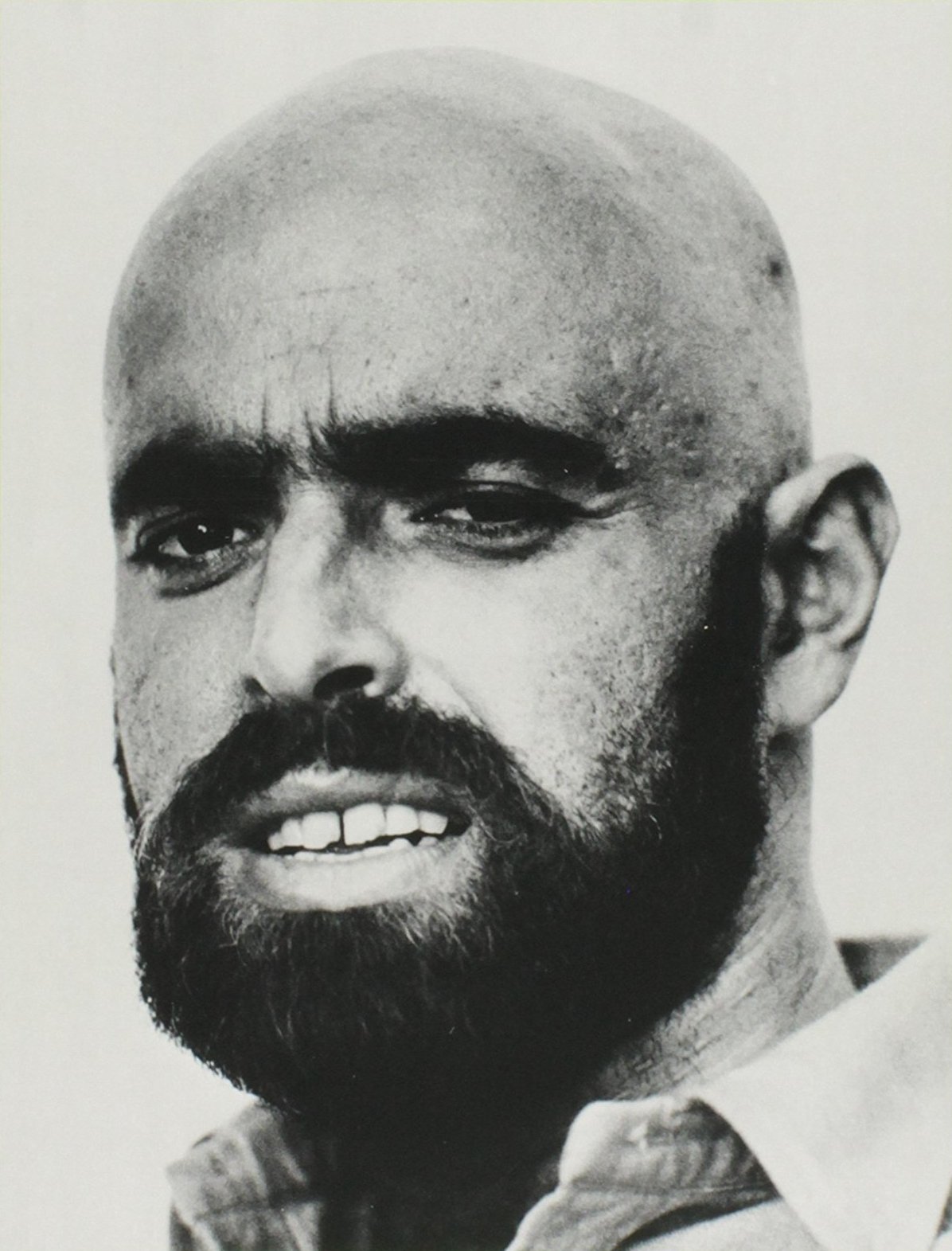

Shel Silverstein has the suspicious quality of a writer who looks simple only until you return to him as an adult. As children, many readers first meet him through funny drawings, crooked rhymes, ridiculous situations, and poems that seem to move with the speed of playground gossip. Then, years later, the same poems begin to feel less like jokes and more like small traps someone left behind for our older selves.
That is the strange thing about Silverstein. His work rarely announces its depth. It does not arrive wearing the costume of “important literature,” which is usually a good sign. Instead, it enters casually, barefoot, a little dirty, possibly laughing at its own inappropriate timing. And then it stays.
His poems are funny, but not merely funny. Tender, but rarely sentimental. Dark, but never theatrically so. They understand childhood as a place of appetite, fear, mischief, loneliness, invention, embarrassment, and secret moral intelligence. In other words, they understand childhood much better than most adults do.
This is why Shel Silverstein’s poems continue to circulate decades after their publication. They do not simply belong to children. They belong to anyone who remembers how strange being alive felt before we learned to pretend it was normal.
Childhood Without the Perfume

Many writers for children treat childhood as a soft-focus paradise, a pastel waiting room before adulthood begins. Silverstein never fully accepted that lie. His children are not porcelain creatures floating through innocence. They are jealous, lazy, frightened, greedy, brave, dramatic, loving, ridiculous, and occasionally wiser than everyone around them.
That honesty is part of what gives his poems their staying power. He does not simplify children into symbols of purity. He lets them be people — unfinished, contradictory, and often hilariously unreasonable.
In poems like “Sick,” “Smart,” “Whatif,” and “Sarah Cynthia Sylvia Stout Would Not Take the Garbage Out,” childhood is not a moral lesson wrapped in rhyme. It is a theatre of negotiation. The child tries to avoid school, escape consequence, manage fear, or transform ordinary life into absurd spectacle. Silverstein does not judge too harshly. He simply allows the logic to play itself out until it becomes comedy.
The comedy works because the psychology is accurate. Children often experience minor problems as epic events. Silverstein knew this. He understood that a messy room can become a moral universe, a garbage pile can become apocalypse, and an imaginary illness can become a full dramatic performance worthy of an underfunded but passionate theatre company.
The Joke That Opens a Wound

Silverstein’s poems frequently begin as jokes. That is part of their charm, but also part of their danger. A joke lowers the reader’s defenses. It says: relax, this will not hurt. Then, quite often, it does.
“Masks” is perhaps the clearest example. The poem is brief, almost impossibly economical, and yet it contains an entire tragedy of hidden identity and missed recognition. It is one of those Silverstein works that children can understand instantly and adults can spend years trying not to think about.
This ability to compress emotional complexity into simple poetic structures is central to his genius. He does not overexplain. He trusts the image. He trusts the rhythm. More importantly, he trusts the reader.
A lesser writer would underline the message until it collapsed from moral exhaustion. Silverstein lets the emotional damage arrive quietly, which is almost always more effective. That restraint is one of the reasons his poems work across age groups. Children respond to the surface: the rhyme, the drawing, the scenario. Adults return and find a second room hidden behind the first.
We explored that poem more deeply in our companion piece, “Masks” by Shel Silverstein, because it may be one of the smallest poems ever to behave like an emotional crime scene.
Nonsense With Teeth

Nonsense in Silverstein is never empty. It behaves like a solvent, dissolving the ordinary rules of the world so that something more revealing can appear underneath. Gravity fails. Language misbehaves. Bodies stretch, shrink, vanish, or become absurdly inconvenient. Logic is not destroyed exactly; it is replaced by a more honest, childish version of logic.
This places Silverstein in a long tradition of literary nonsense, but his tone is distinct. He is less ornate than Lewis Carroll, less polished than Edward Lear, and much more willing to let his absurdity become emotionally uncomfortable. His weirdness is not decorative. It has a job to do.
In “Boa Constrictor,” for example, the absurdity is funny because it is cartoonish, but it is also faintly horrifying because the poem follows its own premise with brutal commitment. In “Falling Up,” impossible physics becomes a metaphor for the emotional sensation of childhood itself — that strange feeling of being unmoored from ordinary rules while everyone else insists the world is perfectly sensible.
Silverstein’s nonsense works because it does not escape reality. It exaggerates reality until we finally recognize it.
The Art of Saying Less

One of the most misunderstood aspects of Silverstein’s writing is its brevity. Because the poems are short, they are often treated as light. This is a mistake. Brevity is not the same as thinness. In Silverstein’s case, brevity is often a form of precision.
He knew how little a poem sometimes needs.
A premise. A twist. A voice. A wound.
That is all.
This economy is especially important in children’s literature, where over-explanation can flatten the imaginative experience. Silverstein does not tell readers exactly what to feel. He creates the conditions for feeling and then steps away. The poem becomes a small machine, activated by the reader’s own memory, fear, embarrassment, or delight.
It is one reason his work is so quotable, though that word feels slightly vulgar here, as if the poems were designed primarily to become classroom posters or social media captions. They were not. They survive quotation because they are structurally clean. They carry themselves.
For readers who want a broader introduction to his life, books, and unusually wide creative career, the Poetry Foundation’s profile of Shel Silverstein remains a useful starting point.
The Tenderness Was Never Cheap

Silverstein could be tender, but he was rarely soft in the lazy sense. His tenderness almost always comes with an awareness of loss, limitation, fear, or loneliness. That is why even his sweetest poems often contain a small shadow.
“The Little Boy and the Old Man” is gentle, but its gentleness comes from shared vulnerability. “The Giving Tree” is often read as a story of love, but it has also unsettled generations of readers because its love looks dangerously close to self-erasure. “The Missing Piece” seems playful, but underneath its spare language is a profound unease about incompleteness, desire, and the fantasy that another object or person might finally make us whole.

This is where Silverstein becomes more complicated than his reputation suggests. He did not write comfort as an escape from pain. He wrote comfort beside pain. The two often sit in the same poem, close enough to make the reader nervous.
That nervousness matters. It is the difference between sentiment and feeling. Sentiment tells us what to feel and then congratulates us for feeling it. Silverstein allows feeling to remain messy, comic, unresolved, and occasionally rude.
The Small Rebellion of Imagination

There is also a rebellious energy running through Silverstein’s work. Not the dramatic rebellion of manifestos, flags, and people who own too many black coats, but something more intimate: the refusal to accept the world exactly as it has been handed to us.
“Listen to the Mustn’ts” is the obvious example, but the principle appears everywhere. Silverstein’s poems repeatedly push against instruction, respectability, common sense, and the boring adult worship of “how things are.” In his universe, the impossible is often treated with more seriousness than the practical. That alone makes the work quietly radical.
Children understand this instinctively. Adults often have to relearn it, usually after becoming exhausted by the very systems they once tried so hard to join.
Silverstein’s imagination is not decorative. It is oppositional. It refuses the flatness of the real without denying the real entirely. It opens a crack in the wall and asks whether anyone else can see the light coming through.
Why His Poems Still Matter
Shel Silverstein’s poems still matter because they trust readers more than many “serious” works do. They trust children to understand contradiction. They trust adults to remember embarrassment. They trust language to be playful without becoming stupid. They trust drawings to carry meaning without becoming decorative filler.
Most of all, they refuse to separate laughter from loneliness. That may be the true secret of his endurance. Silverstein knew that the funniest things are often funny because they are too close to pain, and that the saddest things sometimes need a joke in order to be survivable.
In our larger selection of 20 favorite Shel Silverstein poems, it becomes clear how wide his emotional range really was. “Where the Sidewalk Ends” offers escape. “Sick” turns avoidance into theatre. “Smart” makes foolishness sound triumphant. “Masks” compresses social tragedy into a few devastating lines. “The Voice” gives self-trust the simplicity of a whisper.
Together, these poems form a body of work that is stranger, darker, and more emotionally intelligent than the phrase “children’s poetry” often allows. Silverstein wrote for children, yes. But he did not write down to them. He wrote toward the part of every reader that remains unruly, frightened, imaginative, selfish, tender, and not entirely civilized.
That is why his poems survive.
Not because they are cute.
Because they remember what most adults forget: childhood was never simple. It was only small enough to fit inside a poem.