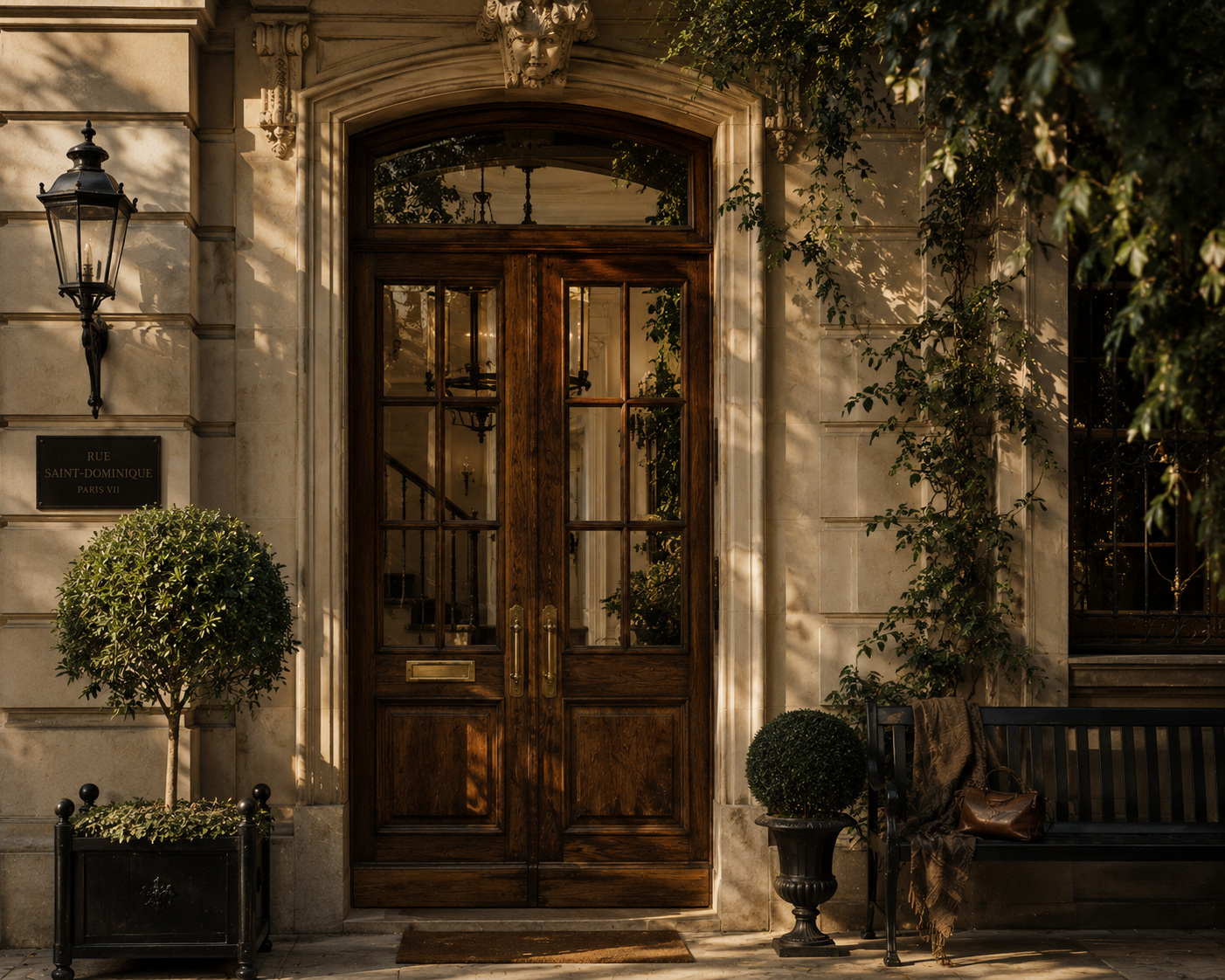
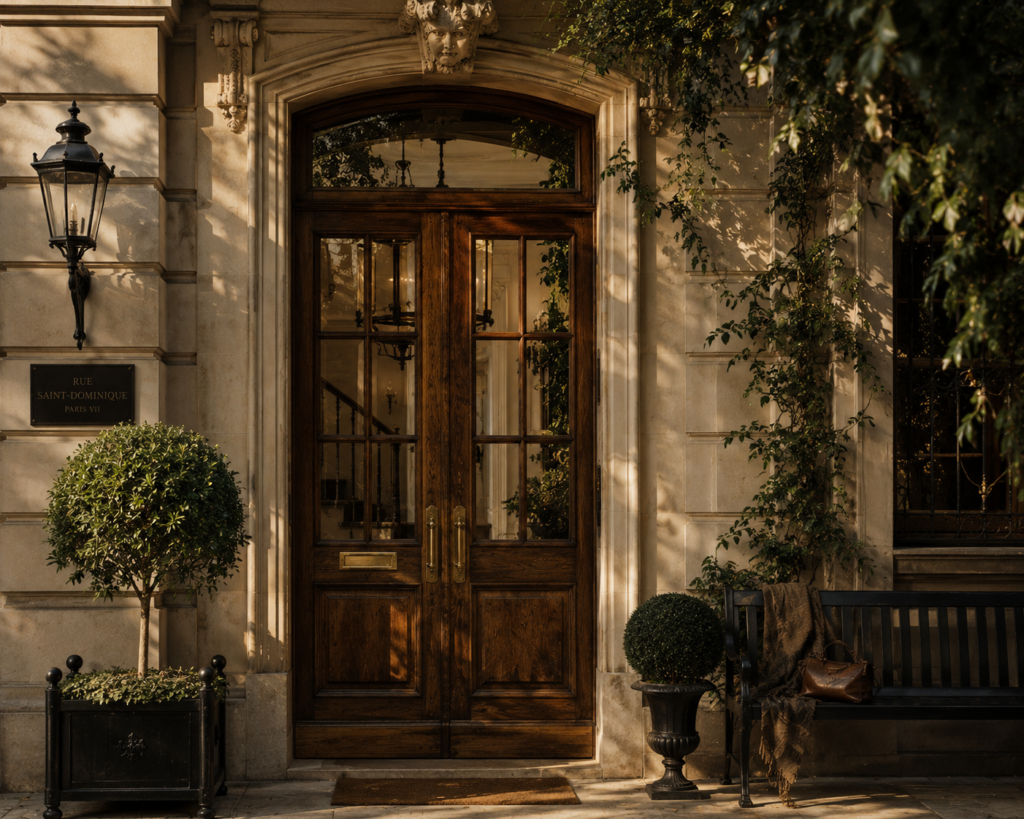
There is a reason designers keep coming back to the same combination when an entrance needs to feel both inviting and refined. Pair the grain and weight of real timber with a panel of glass, and you get an entry that delivers warmth and daylight in a single piece. A wooden front door with glass gives a home the solid, handcrafted character buyers love while opening the entry up to the light, and a solid slab keeps out. For homeowners planning an upgrade, it is one of the most rewarding choices on the table.
This guide covers what makes the pairing work, how to choose the right glass, and what to look for so the door performs as well as it looks.
Why Wood and Glass Belong Together
Timber brings everything people love about a real wood entrance: density you feel in your hand, grain that reads as custom rather than mass produced, and a finish that can be sanded and restored instead of replaced. It anchors the facade with a sense of permanence that synthetic doors struggle to match.
Glass solves the one drawback of a solid timber slab, which is that it blocks light. A foyer that felt dark and closed off suddenly fills with daylight when even a modest panel is worked into the design. That extra brightness changes how the whole entry feels, making it more welcoming the moment the door swings open. The two materials balance each other: the wood grounds the look, and the glass lifts it.
The combination also reads as deliberate and high-end. A flat, featureless slab says builder-grade, while a timber door with a thoughtfully placed glass panel says the entrance was designed, not just installed. That impression carries weight with guests and prospective buyers alike.
There is a resale angle worth noting, too. An entry door upgrade consistently ranks among the better returns in home improvement, and a timber-and-glass door sits at the premium end of that range. Buyers respond to the warmth of real wood and the brightness the glass brings to the foyer, and appraisers notice quality construction. Beyond the numbers, there is the daily payoff of an entrance that simply feels better to walk through, one that greets you with light instead of a dark, closed-in hallway.
Choosing the Right Glass for Privacy and Light
The glass you choose controls the trade-off between brightness and privacy, and there is no single right answer. The goal is to match the glazing to how the entry is positioned and how exposed it feels.
Clear glass maximizes light and suits doors that open onto a private porch or a yard set back from the street. Obscured and textured glass lets daylight through while blurring the view, which keeps a foyer bright without putting it on display, ideal for entries that face the sidewalk. Patterned and seeded glass adds a decorative layer on top of the privacy, giving the door a custom, old-world feel. Divided-lite designs break a larger pane into smaller sections framed by timber, delivering a classic look that works on craftsman and traditional homes alike.
Placement matters as much as the glass type. A full-lite panel floods the entry with light, while a narrow vertical lite or a row of small lites near the top brings in brightness while keeping the lower half of the door solid and private. The right configuration depends on the home, the exposure, and how much of the outside world you want to see, and be seen by. Sidelites and a transom widen the options further, framing the door with extra glass that brightens the whole entry without touching the privacy of the slab itself. For larger openings, that combination turns a simple doorway into a true architectural focal point.
Style Options That Suit Any Home
One of the strengths of the wood-and-glass pairing is how easily it adapts across architectural styles. The same basic idea flexes to fit almost any facade.
Craftsman builds with substantial stiles and rails that pair beautifully with divided-lite glass for bungalows and modern farmhouses. Contemporary designs lean on clean lines and a single large pane for newer, minimal homes. Traditional entries suit arched or seeded glass that nods to old-world craftsmanship. And for buyers chasing real drama, wrought-iron detailing set behind or within the glass turns the entrance into a genuine statement piece. Knockety offers the full spread of these profiles, so matching the door to the house rarely means compromising on either the wood or the glass.

Hardware ties it all together. A handsome timber-and-glass slab paired with thin, builder-grade levers always looks half finished, so match the door with substantial handlesets that suit its weight and style. The hardware should feel like part of the design, not an accessory clipped on after the fact.
Performance, Durability, and What to Check
A common worry is that adding glass weakens the door or hurts its efficiency. With a quality build, neither is true. Modern insulated glass units and proper sealing mean a well-made timber-and-glass door performs nearly as well as a solid one, while still delivering the light that makes it worth choosing.
A few things separate a quality door from a disappointing one. Look for insulated, energy-efficient glass rather than a single thin pane, since the glazing is where a cheap door loses its thermal advantage. Check that the timber is built to resist warping and that the finish is applied to handle the sun and weather. And treat the entrance as a system: good weatherstripping, a properly fitted threshold, and an overhang that shields the slab from driving rain all extend the life of the door dramatically. Get those details right, and the door looks and performs the same in twenty years as it did on day one.
Maintenance is straightforward. Inspect the finish once a year, touch up thin spots before they spread, reseal when water stops beading, and keep the glass clean. That modest routine is the difference between an entrance that looks tired in five years and one that still turns heads in twenty.
Final Thoughts
A timber entrance with glass is one of the few upgrades that improves a home on every front at once: it adds curb appeal, brings natural light into the foyer, and reads as the kind of custom, considered detail that lifts the value of the whole property. Pair the right glass with quality construction and a sensible maintenance habit, and you have an entrance built to reward you for decades.
Homeowners ready to make the change should explore the range at Knockety and find the configuration that fits their facade. Browse a curated selection of wooden front door with glass options, or step back and compare the broader glass door collection to see every style side by side. Get the door right, and the entrance does the rest.