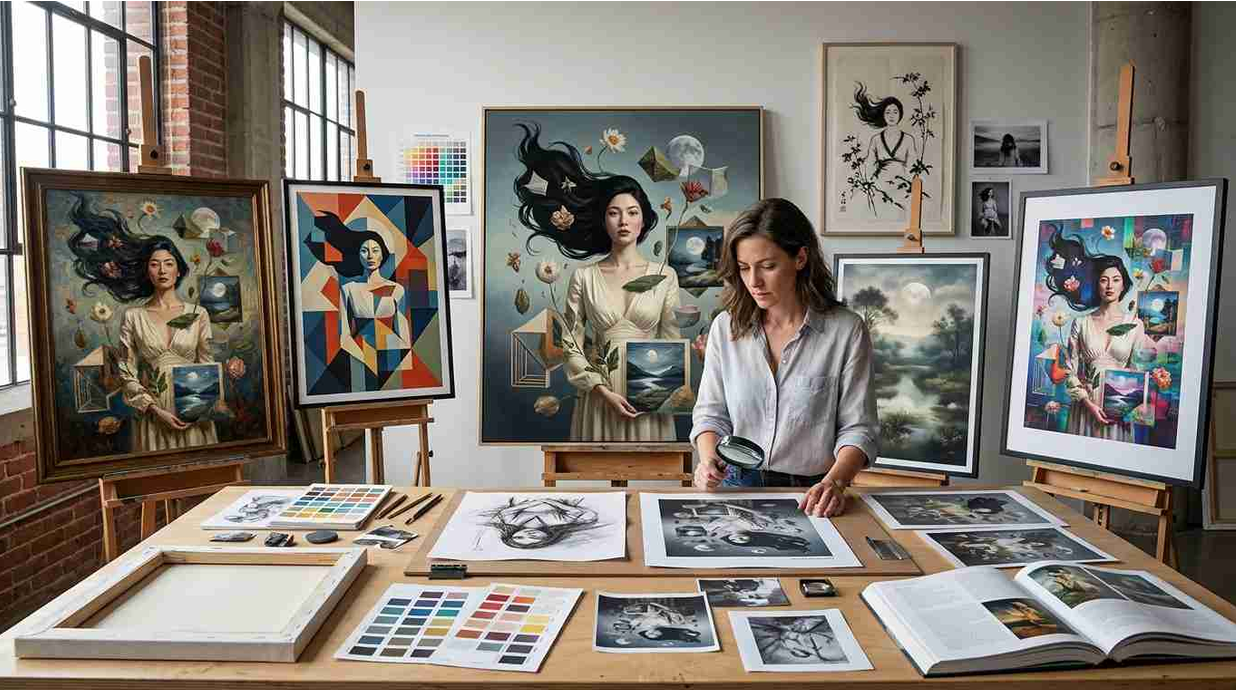
Digital art has always evolved alongside the tools artists use. Paint, photography, editing software, digital tablets and 3D programs have each changed how visual ideas are created and experienced. Now, generative artificial intelligence is introducing another significant shift, allowing written descriptions, references and creative directions to become visual concepts in moments.
An AI Image Generator a faster way to make pictures within Higgsfield supporting creative exploration and visual experimentation. It changes the starting point of the creative process. Instead of opening a blank document and constructing every detail manually, an artist can begin with an idea, describe it through language and explore different interpretations of that concept.
This development has created an interesting conversation around authorship, originality and artistic control. As generative technology becomes easier to access, the important question is no longer whether machines can produce compelling images. The more interesting question is how artists choose to work with these systems and what happens when human imagination meets algorithmic interpretation.
From Digital Tools to Generative Possibilities
The history of digital art is filled with moments when technology changed creative habits. Early computer artists experimented with limited graphics and basic systems. Digital photography changed how images could be captured and manipulated. Image editing software introduced layers, filters and compositing into everyday creative workflows.
Generative systems continue that progression while adding something new: interpretation.
An AI Image Generator can transform the written description into a visual image and make language a an essential part to the creation process. A writer could write about a tranquil street after a rainstorm or an imagined architectural structure, an improbable portrait or a landscape that would never be seen in the real world.
The resultant image doesn’t necessarily need to be an artwork. It may serve as an idea to discuss, play with or even refinement.
That distinction is important. The technology may produce the visual material, but the creator still decides what the image means, whether it works and how it should develop.
When Words Become Visual Material
Traditional art often begins with a sketch, photograph, physical material or visual reference. Generative image creation can begin with a sentence.
That makes language an unexpectedly important creative instrument. The creator must decide which details matter most: composition, lighting, texture, atmosphere, perspective, colour or the relationship between objects.
The prompt effectively becomes a creative brief. Higgsfield approaches this space as part of a broader AI creative workflow, allowing creators to explore visual ideas and develop different directions from an initial concept.
For an artist, this can mean testing several compositions before committing to one. A designer can explore a visual direction before beginning a campaign. An illustrator can experiment with combinations that might not have emerged through a conventional brainstorming session.
The system produces possibilities, but the creative decision remains with the person directing it.
The Changing Role of the Artist
The rise of generative imagery naturally raises questions about what it means to be an artist when software can create sophisticated visuals.
However, artistic practice has never depended only on manual execution. Artists make choices about subject, framing, references, materials, context and meaning. Photography did not eliminate painting, while digital editing did not eliminate photography. New tools often change the skills involved in creative work rather than making creativity unnecessary.
An AI Image Generator can therefore be understood as another instrument within a much larger creative practice.
The person who is using it determines what is to be made and what results should be discarded and what needs to be altered. An impressive technical image could nevertheless fail if it serves no meaning or fails to convey the idea.
Artistic value and visual polish aren’t necessarily the same.
Experimentation Becomes Part of the Process
A major and intriguing aspect of generative imagery is the possibility for experimentation.
One idea can be explored in a variety of styles, moods, and compositions as well as visual languages. The same topic could be minimalist and surreal, atmospheric or abstract, or cinematic based on the direction of creativity.
This makes early stage experiments less daunting. Instead of trying for hours to imagine what an original idea might appear the artist could create many possibilities, and then respond to these ideas.
Higgsfield AI creative suits can fit naturally into this exploratory process, giving creators a space to develop concepts, compare visual directions and move from an initial thought toward a more considered image.
The first result does not have to be the destination. Generation can instead become a conversation between an idea and an image, with every new version helping clarify what the creator actually wants.
Why Digital Artists Are Paying Attention
Digital artists work in an environment where experimentation and visual identity are increasingly important. Social platforms have also changed how artwork is discovered. A distinctive image can move quickly between audiences, exposing creators to people who might never encounter their work in a traditional gallery.
An AI Image Generator can support this environment by making visual exploration more accessible.
A creator might experiment with unusual colour relationships, imagine an unfamiliar environment or develop references for a future series. Generated visuals can also help communicate an idea that would otherwise be difficult to explain through words alone.
A rough image may provide a clearer starting point for an installation, character, environment or visual project than a written description.
Higgsfield is relevant to this changing process because it places image creation within a broader visual workflow rather than treating generation as an isolated technical experiment.
Beyond Imitation: Finding an Individual Visual Language
There is, however, a potential problem with widespread generative imagery. When creators use the same popular prompts, references and visual trends, images can begin to look remarkably similar.
That makes individual direction more important.
Artists can develop stronger work by introducing personal references, recurring subjects, unusual combinations and deliberate limitations. Instead of asking for an image simply because it looks impressive, the creator can begin with a reason for making it.
An AI Image Generator becomes more interesting when it supports an individual visual language instead of replacing one.
For example, an artist might combine architectural photography with hand drawn textures, historical references and unexpected colour relationships. Another creator might use generated imagery only as a background before adding original characters or physical materials.
The technology then becomes one element of a wider artistic practice.
Art, Photography and the Question of Authenticity
Generative imagery also complicates the familiar relationship between photographs and reality.
A photograph traditionally suggests that something existed in front of a camera. A generated image may look photographic even though the scene, person or location never existed.
That difference matters.
When synthetic imagery is used in editorial, commercial or cultural work, audiences may need context to understand how the image was produced. Clear disclosure can distinguish an artistic experiment from documentary evidence.
The issue becomes particularly important when generated imagery depicts real people, historical events or recognizable places. A fictional visual should not be presented in a way that makes viewers believe they are looking at an authentic record.
An AI Image Generator can therefore be creatively powerful while still requiring responsible use.
The technology creates the possibility. The creator remains responsible for how that possibility is presented.
Human Judgment Still Shapes the Final Image
Generative systems can produce attractive results, but they can also introduce awkward details, inconsistent objects, incorrect proportions or visual elements that do not belong in the composition.
Human review remains essential.
A creator may need to reject several results before finding one with the right atmosphere and structure. Further editing might be necessary to correct details, typography or proportions. In some cases, the generated image may only serve as a reference for a final artwork produced through another method.
An AI Image Generator can accelerate exploration, but it does not automatically understand the cultural, emotional or practical reason behind an image.
That is where human judgment becomes particularly valuable.
Higgsfield can support an iterative approach in which generation is followed by selection, refinement and further creative development instead of immediate publication.
A New Relationship Between Artist and Tool
The most useful way to view generative imagery may be as a relationship between creator and tool.
The artist provides intention, references and constraints. The system responds with possibilities. The artist evaluates those possibilities, changes the direction and tries again.
This is different from traditional production, but the foundation remains familiar: making choices.
An AI Image Generator shortens the distance between imagination and visual experimentation. More ideas can be tested without requiring every experiment to become a finished artwork.

For emerging artists, that accessibility can encourage exploration. For experienced artists, it can provide another layer of ideation within an established practice.
The technology does not need to control the entire process to be useful. Sometimes its greatest value is simply giving an artist something unexpected to react to.
Where AI and Contemporary Art Meet
The relationship between artificial intelligence and contemporary art is becoming increasingly visible. Artists are exploring synthetic photography, algorithmic compositions, surreal environments and hybrid forms that combine generated elements with traditional techniques.
Recent Art Sheep coverage itself reflects this growing intersection between algorithms and visual practice. Its feature on Gizem Akdag describes work occupying the space between photography, design and speculative imagery, while discussing algorithms as part of an evolving creative process.
That development fits naturally within the wider history of artists adopting unfamiliar tools.
The interesting part is not simply that software can create an image. It is what artists do with unexpected results.
A strange composition can become inspiration. An imperfect detail can be transformed manually. A generated atmosphere can become the foundation for an entirely different work.
This makes generative technology less interesting as an automatic production machine and more interesting as a source of creative friction.
What Could Come Next?
Generative image technology is increasingly connected with editing, animation, video and other creative formats. A concept might begin as text, become an image, develop into a sequence and eventually form part of a larger production.
Higgsfield sits within this broader movement toward connected AI creative workflows. As the boundaries between image, video and design tools continue to soften, creators may spend less time moving between isolated applications and more time refining ideas.
That does not mean technology will automatically produce better art.
More powerful systems simply provide more possibilities. The difficult part remains deciding which possibilities deserve attention.
The future of creative technology may therefore be less about replacing established artistic processes and more about expanding the number of ways an idea can be explored.
Looking Beyond the First Result
One common mistake with generative tools is accepting the first attractive result.
Creative development often becomes more interesting after the first idea has been questioned. What happens if the composition becomes quieter? What if the colours are reduced? What if an unexpected historical reference is introduced? What happens when an apparently perfect image is deliberately made imperfect?
An AI Image Generator makes these questions easier to explore because another variation can be produced without rebuilding an entire concept manually.
Higgsfield can be part of that iterative mindset, where each generation provides information about what works, what feels predictable and what needs another direction.
The result is not simply a larger collection of images. It is a faster feedback loop between imagination and visual decision making.
The Future of Digital Art Is Still Human
Artificial intelligence is changing the tools available to visual creators, but technology has never been the entire story of art.
What matters is what people do with those tools.
An AI Image Generator can turn a few words into an image, but it cannot decide why that image should matter to a particular audience. It can suggest an atmosphere, but meaning comes from context. It can combine visual elements, but artistic direction comes from choices.
That is why the rise of generative imagery is better understood as another chapter in the evolution of digital creativity.
Higgsfield provides one example of how creators can experiment within this changing visual landscape. Its value is strongest when technology encourages curiosity instead of replacing it.
Digital art has always changed as its tools have changed. Generative systems simply make the relationship between language, imagination and visual expression more visible.
The artists who explore that relationship thoughtfully may discover that the most interesting possibilities are not found in asking machines to create everything. They are found in deciding what deserves to be created, why it should exist and what human meaning can be added after the algorithm has done its part.
That is where the real creative opportunity lies: not in choosing between human imagination and artificial intelligence, but in discovering what becomes possible when the two are allowed to work together.