When choosing a handrail for your staircase, have you considered what keeps it securely in place? Most homeowners focus on the railing material, color, and design but overlook the brackets supporting it.
However, these small fittings influence how stable the handrail feels, how much space you have to grip it, and how well it complements your interior. Choosing an unsuitable bracket can create installation challenges, especially if your staircase has decorative wall panels or unusual mounting requirements.
With so many designs and finishes available, knowing where to start can be difficult. The right bracket should balance support, compatibility, and appearance. Whether you are upgrading an existing staircase or planning a new installation, understanding your options will help you make a confident choice.
So, before selecting your staircase hardware, let’s explore seven types of handrail brackets and how each can suit your home’s needs.
1. Standard Wall-Mounted Handrail Brackets
Looking for a simple, practical way to secure your staircase railing?
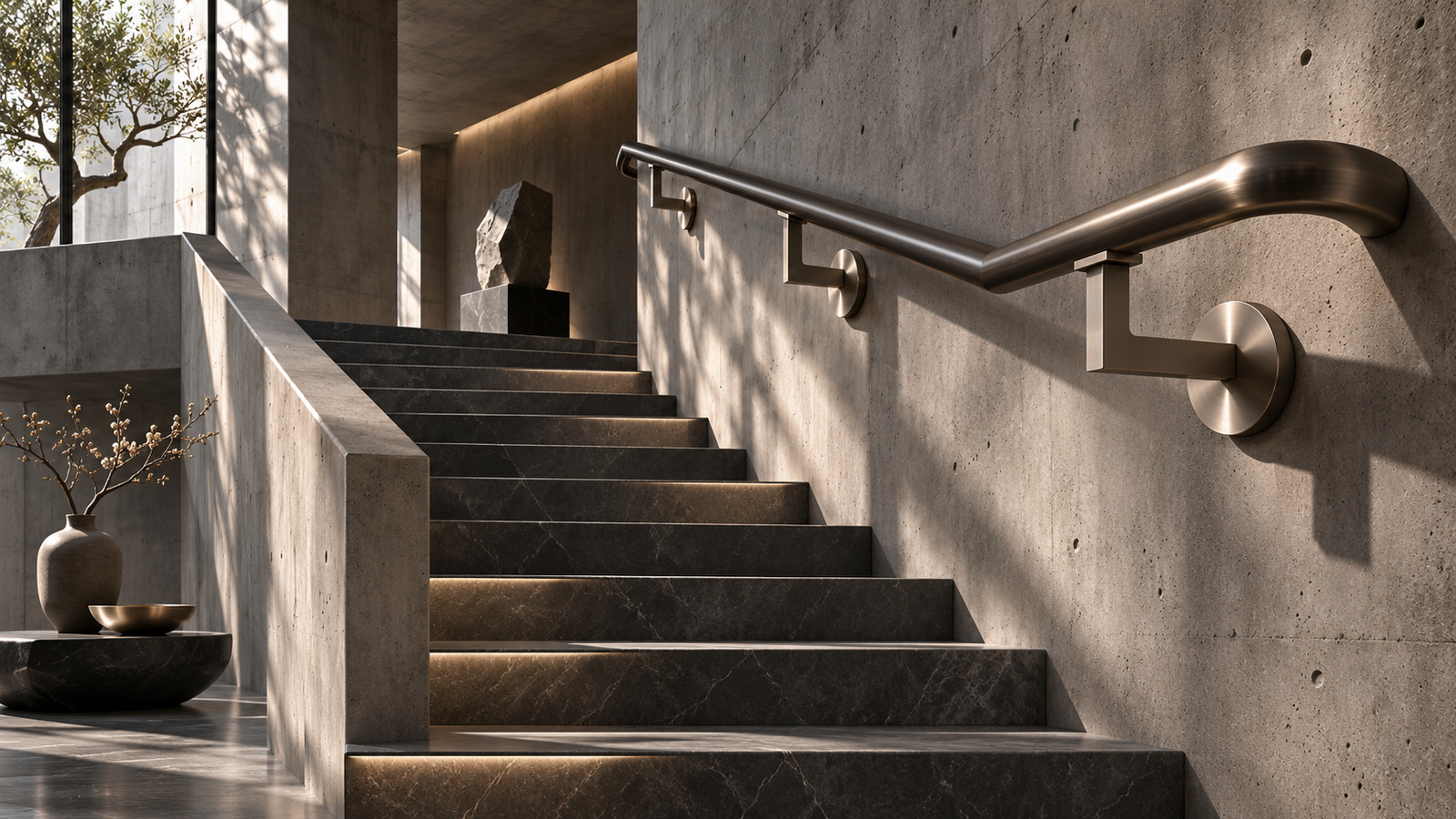
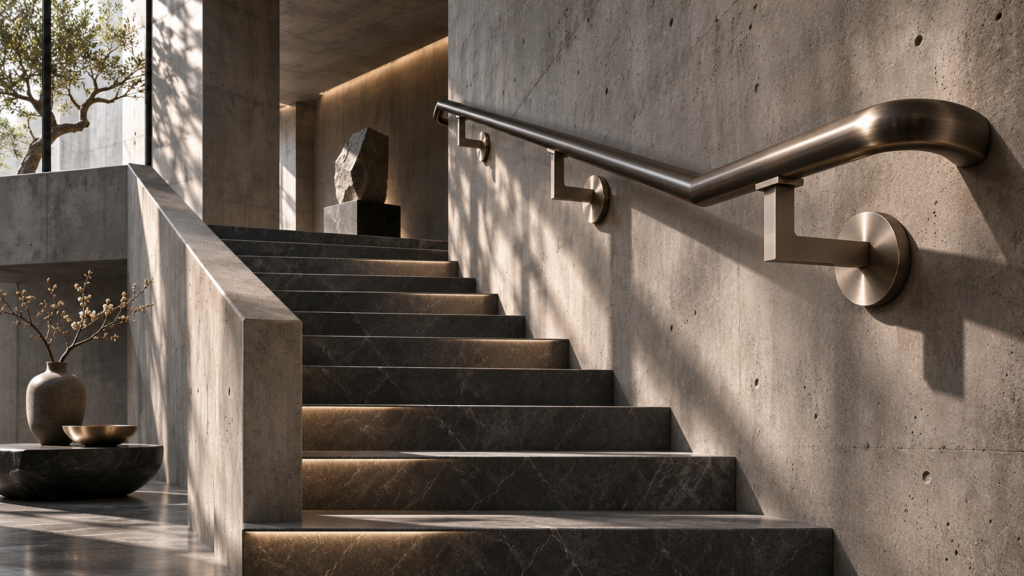
Handrail brackets are essential fittings that connect the handrail to the wall and provide the support needed for everyday use. Standard wall-mounted designs are a reliable starting point for most residential staircases. They hold the handrail at a suitable distance, providing stability without taking up unnecessary space.
Their straightforward design also makes them easy to coordinate with different interiors. You can choose finishes such as chrome, satin nickel, brass, or oil-rubbed bronze to complement your existing staircase hardware.
Before purchasing, check the bracket’s projection, mounting arrangement, and compatibility with your handrail. These measurements help ensure a comfortable grip and proper positioning.
2. Long-Arm Handrail Brackets
Does your staircase have raised wall panels, decorative molding, or a wider handrail?
A typical bracket might not offer sufficient space between the wall and railing. Long-arm handrail brackets overcome this problem by using a long support arm.
The additional projection allows you to position the handrail farther from the wall, making it easier to grip. It can also prevent the railing from interfering with decorative wall features.
However, measure your available space before choosing this design. The aim is to provide a comfortable clearance without extending the handrail through the staircase.
3. Heavy-Duty Handrail Brackets
If your staircase sees frequent daily use, bracket strength deserves particular attention. The brackets of the heavy-duty handrail are used in applications that need a stronger support system.
Such brackets may be practical in busy homes and communal areas where individuals frequently use the handrail whilst traveling between the floors. They are designed to be constructed and mounted in such a way that they can be used in demanding applications.
Still, a strong bracket alone cannot guarantee a secure installation. Test the suggested fasteners and ensure that the wall can support the mounting setup. Attach brackets to appropriate structural framing, whenever feasible, as opposed to just using the drywall.
4. Heavy-Wall Handrail Brackets
Are you replacing the staircase hardware in an older house, or dealing with unusual wall construction?
Heavy-wall handrail brackets can be considered in such instances. This bracket category addresses particular mounting requirements, making compatibility an important consideration. Look at the mounting plate, screw points, and product specifications, and then choose a model.
In addition, check your current wall and mounting locations, in case you are replacing old brackets. Installation can be impacted by variations in dimensions or fastening fittings. If you are in doubt about the wall structure, consult a professional.
5. Cast-Iron Handrail Brackets
Want your staircase hardware to make a design statement?
Cast-iron handrail brackets can bring a distinctive traditional appearance to your interior. They are especially well suited with their large appearance and wooden handrails, farmhouse decor and old-fashioned staircases.
The dark iron finishes may be used as a nice contrast to the lighter walls and natural wood. Some designs also feature decorative detailing that complements traditional balusters and other staircase components.
Nevertheless, do not select a bracket based on its appearance. Check its dimensions, mounting points, and compatibility with your handrail to ensure it meets your installation requirements.
6. Decorative Brass and Metal-Finish Brackets
At times, organizing small hardware details can make the difference in the overall look of your staircase. Ornamental metal-finish and brass-finished brackets provide additional choices to match your railing with the existing interior ornamentation.
With solid-brass designs, they have a classic look, and polished chrome and satin nickel suit a cleaner, contemporary interior. If you prefer a bold contrast, satin black is another option. Oil-rubbed bronze gets along with warmer, traditional decor.
Before deciding, compare the material, finish, projection, and mounting dimensions. Think about your handrail and nearby fixtures, too. This will assist you in choosing brackets that do not make the staircase appear to be out of place with the rest of the interior.
7. Adjustable Handrail Brackets
What if your staircase requires a handrail angle or positioning that a fixed bracket cannot accommodate?
Adjustable handrail brackets can provide greater flexibility during installation. The design enables the position or support angle to be adjusted within the range specified by the manufacturer.
This versatility may be of especially good use when dealing with oddly laid staircases or angles of handrails. Instead of relying on a fixed positioning arrangement, you can make adjustments to achieve a better fit.
Before choosing this option, check its adjustment range, compatibility with your handrail, and mounting requirements. Also, follow the manufacturer’s installation instructions to ensure the bracket remains securely positioned.
Choose Handrail Brackets That Suit Your Staircase
The right handrail bracket depends on your staircase design and what you expect from its railing. Standard and heavy-duty models are used to meet support needs, and the long-arm and heavy-wall models meet the needs of special installation conditions.
Meanwhile, the cast-iron, ornamented metal-decorative finish and adjustable brackets also provide more design and location options. Before purchasing, compare dimensions, materials, finishes, and mounting requirements.
Most importantly, make sure that the brackets are suitable for your handrail and wall construction. Now that you have all this information, you are able to design a staircase that is both reliable and supportive, as well as comfortable in everyday life, and has a nice finish.