There is a specific kind of content that defeats language every time: the process that has too many steps, the concept that is too abstract, the relationship between variables that defies a clean sentence, the system that behaves differently depending on context. In all of these cases, the writer labors over an explanation, produces something technically accurate, and still watches the reader miss the point.
The visual version of the same idea, presented with the same care, would have landed in seconds.
This is not a new observation. Decades of information design work have established that certain categories of information transfer more effectively through visual means than through text. What is new is that the production of those visual aids — which previously required a graphic designer, a technical illustrator, or an infographic specialist — is now significantly more accessible through AI image generation.
Why Some Ideas Are Easier to Understand Visually Than Verbally
The cognitive explanation is straightforward: visual processing is parallel, while reading is sequential. When you look at a diagram, your brain processes spatial relationships, hierarchy, and connection simultaneously. When you read an explanation, you process it word by word, building a mental model incrementally. If the mental model you are trying to build is spatial or relational in nature, the visual path is faster and more reliable.
Consider the difference between explaining a funnel — from awareness to consideration to conversion — in a paragraph versus in a simple diagram. The paragraph requires the reader to track the steps, hold each one in working memory, and assemble them into a spatial mental model that the diagram just shows directly. The diagram is not the lazy option. In many cases it is the more effective one.
The challenge has always been producing the visual in the first place. Commissioning a professional infographic for every section of a white paper or every concept in an online course is expensive and slow. Using generic stock imagery that approximates the concept produces visual content that technically covers the requirement but does not actually aid understanding.
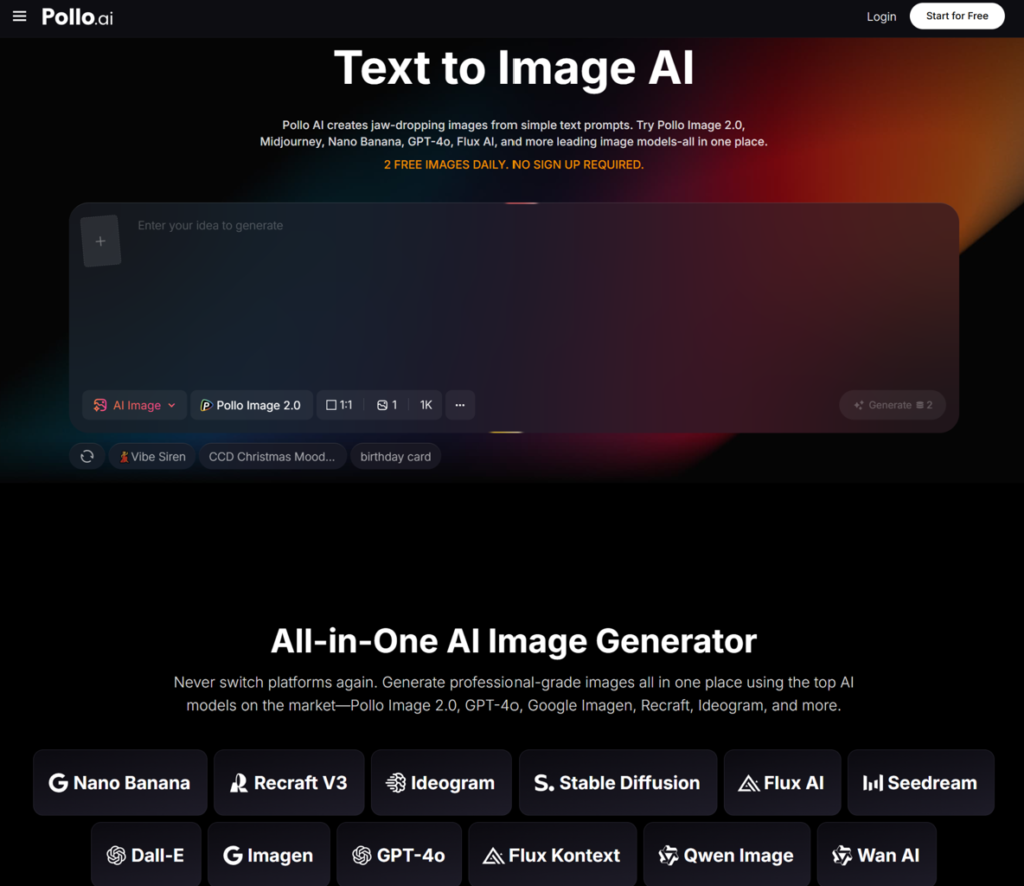
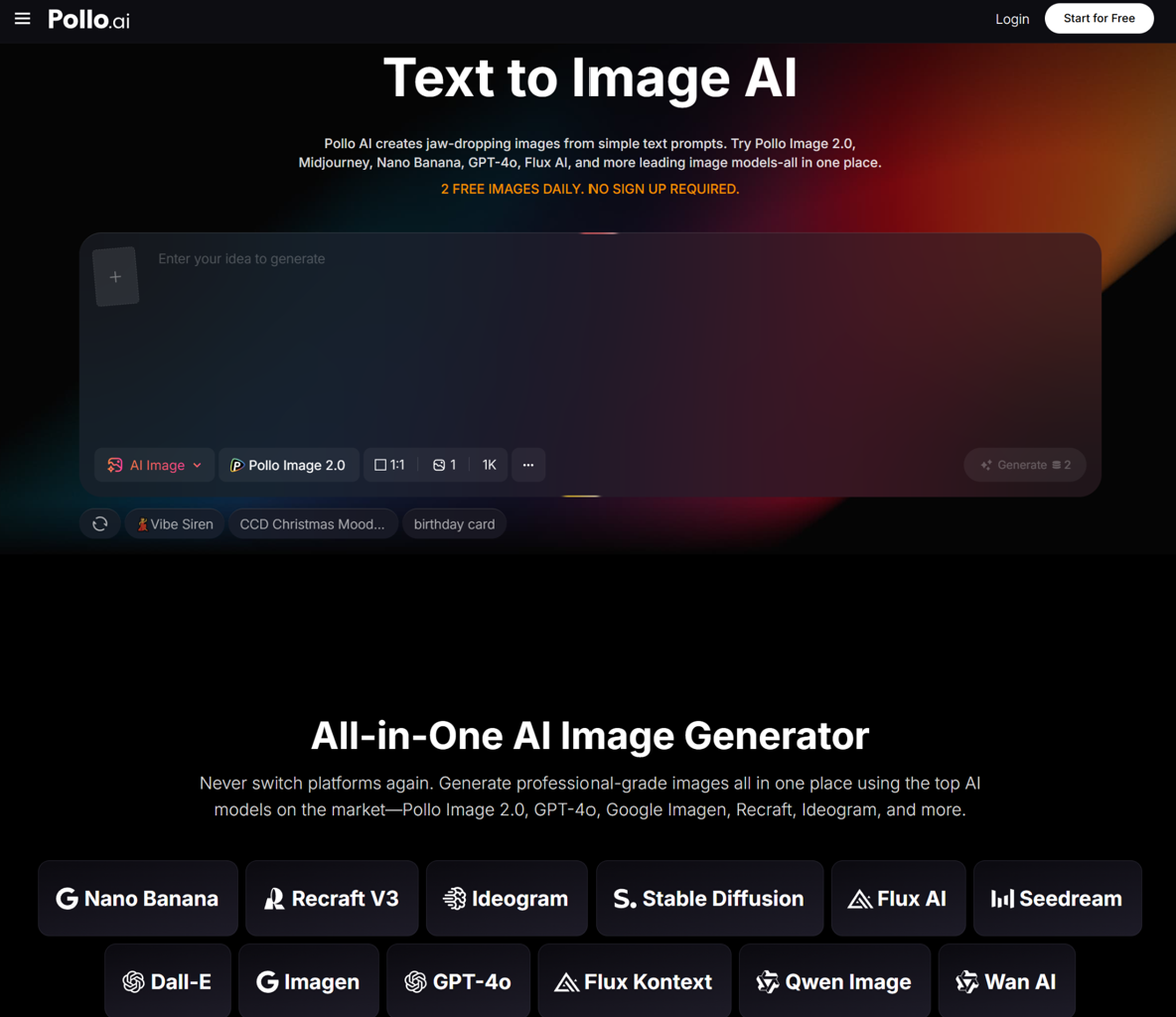
Pollo AI’s AI image generator opens up a middle path: generating explanatory visuals that are specific enough to be useful rather than generic, at a speed and cost that makes it practical to produce one for every concept that needs it rather than only for the highest-priority sections.
The platform supports models including Pollo Image 2.0, FLUX, Stable Diffusion, and GPT-4o, with over 2,000 LoRAs covering a wide range of visual styles. For explanatory and educational content, the ability to select an illustrative or diagrammatic style — rather than a photorealistic one — is particularly relevant. Pollo AI makes this style flexibility accessible without requiring advanced technical knowledge. The right visual register for a conceptual illustration is not a photograph; it is something cleaner and more deliberately constructed.
How an AI Image Generator Helps with Concept Visualization
The applications for explanatory image generation cluster around a few high-value categories:
Process visualization. Any workflow with more than three steps benefits from a visual representation. Whether it is a user onboarding flow, a manufacturing process, a compliance procedure, or a service delivery model, showing the steps rather than only listing them reduces the cognitive load of understanding and following the process. A generated illustration of the process — even a simplified, abstracted one — serves this function where a photograph cannot.
Relationship and hierarchy diagrams. Organizational structures, system architectures, decision trees, and cause-and-effect relationships all communicate more efficiently as visuals than as text. AI image generation is most effective for generating conceptual backgrounds and scene compositions that frame these kinds of diagrammatic explanations, rather than generating the diagrams themselves, which are better handled by dedicated diagramming tools.
Abstract concept representation. Concepts like “trust,” “scalability,” “distributed decision-making,” or “creative block” resist literal illustration but can be represented through carefully chosen visual metaphors. A prompt that describes the metaphorical equivalent of the concept — “a single lit lantern in a vast dark space, warm golden light, calm stillness, strong contrast” for a concept about clarity in uncertainty — produces images that carry the right emotional and conceptual resonance without requiring a literal depiction.
Contextual scene-setting. Long-form content — white papers, research summaries, online course content — benefits from visual scene-setting that anchors the reader in the context being discussed. An explanatory article about remote team dynamics becomes more immediately understandable when the header image shows a recognizable representation of the context, rather than generic stock photography.
What to Focus on When Generating Explanatory Illustrations
Explanatory image generation is more constrained than creative image generation, because the goal is understanding rather than aesthetic pleasure or emotional impact. The wrong kind of visual — too decorative, too complex, too ambiguous — can actually work against comprehension rather than for it.
Several principles apply:
Simplicity serves understanding. An explanatory visual should have fewer elements than a creative visual. Each element should be there because it contributes to understanding the concept, not because it makes the image more visually interesting. A prompt for an explanatory image should actively restrict unnecessary visual complexity: “minimal elements, clear focal hierarchy, uncluttered background, no decorative details.”
Literal over stylized, for most cases. When the goal is communication rather than aesthetic experience, the visual should stay close to the literal meaning of the concept. Highly stylized or abstract visuals require the viewer to decode two layers: the concept and the stylistic treatment. For most explanatory contexts, the stylistic layer should be light enough that it does not compete with the conceptual layer.
Consistency within a piece. If a single article or course uses AI-generated images throughout, maintaining a consistent visual register across all of them makes the content feel organized and intentional. Selecting the same model and LoRA for all images within a piece, and using a consistent prompt structure, produces this consistency without additional effort.
Appropriate visual metaphors. The most common failure mode in explanatory illustration is using a visual metaphor that is familiar to the creator but unfamiliar or misleading to the audience. Test your visual metaphor by asking whether a reader who does not already understand the concept would understand it better or worse after seeing the image.
Making Images Serve Understanding, Not Just Aesthetics
The distinction between a decorative image and an explanatory image is intent. A decorative image makes content more visually engaging. An explanatory image makes content more understandable. Both are valid goals, but they require different prompt strategies.
For explanatory images, the guiding question at every step is: does this visual element help the reader understand the concept? If the answer is no — if a particular stylistic choice or compositional element is there because it looks interesting rather than because it aids comprehension — it should be removed from the prompt or replaced with something that contributes more directly.
This is a stricter standard than creative image generation, and it produces visuals that are intentionally more restrained. The restraint is the point. When an image is designed to make an idea clearer, visual noise is always a liability.
For teams that create a high volume of this kind of explanatory content and are thinking about how those visual assets might extend into video-format explanations — explainer videos, animated summaries, narrated walkthroughs — Lumen5 is a Pollo AI reference resource worth exploring as a connected option in the visual content pipeline.
Practical Applications for SaaS, Education, and Consulting Content
The content categories that benefit most from AI-assisted explanatory illustration are those where the subject matter is inherently complex and the audience needs to understand it at a working level, not just a surface level.
SaaS content frequently needs to explain product workflows, integration architectures, use-case scenarios, and technical concepts in terms that non-technical buyers can evaluate. AI-generated illustrative visuals — workflow diagrams, contextual scenes, abstract concept representations — reduce the friction between the product explanation and the reader’s ability to evaluate it.
Educational content — online courses, learning modules, explainer articles — benefits from visual aids at every level of complexity. From foundational concepts to advanced applications, the right visual at the right moment in a learning sequence can replace paragraphs of explanation and reduce the time-to-understanding significantly.
Consulting and advisory content — proposals, strategy documents, client presentations — benefits from visual communication that makes complex analytical frameworks, market maps, and strategic options more immediately comprehensible. AI-generated conceptual illustrations serve this function without requiring a designer to be involved in every document.
The underlying principle is consistent: if your audience would understand the idea better from a visual than from a description, the visual is not supplementary — it is the clearest version of the communication. Building the habit of generating that visual, rather than defaulting to text for everything, is where the practical value of AI image generation for explanatory content lies.