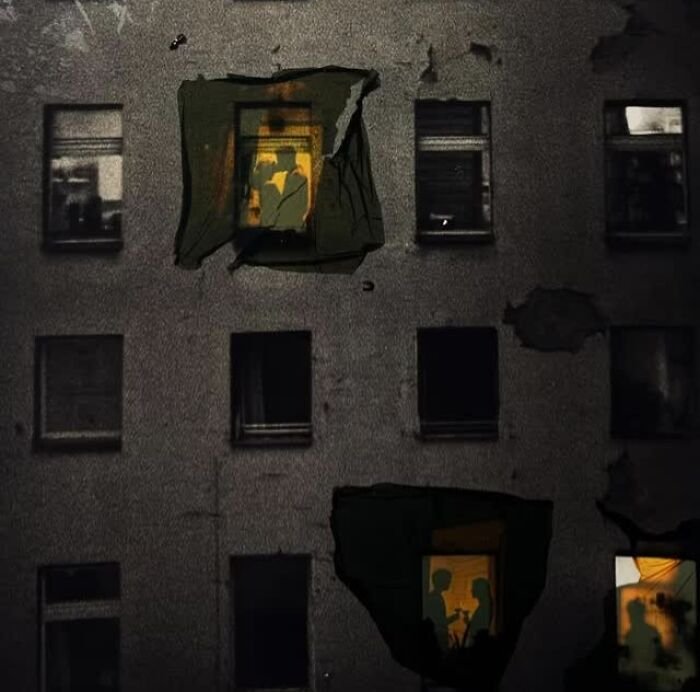
There is something strangely unsettling about a Polaroid camera photograph. Not because it captures reality, but because it captures it too quickly. Instant photography has always existed in a peculiar space between memory and object — immediate enough to feel alive, fragile enough to feel temporary.
Russian mixed-media artist Anastasia Mez understands this instinctively.
Rather than treating the photograph as fixed, she dismantles it. Or more precisely, she loosens it from itself.
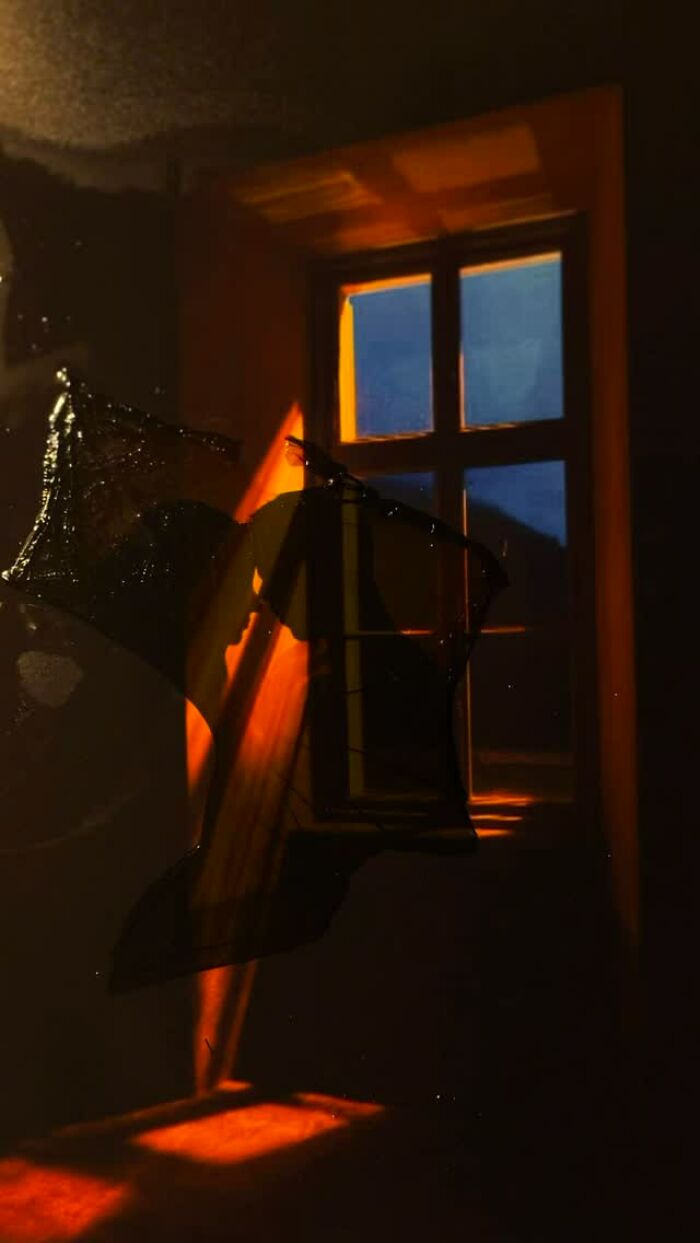
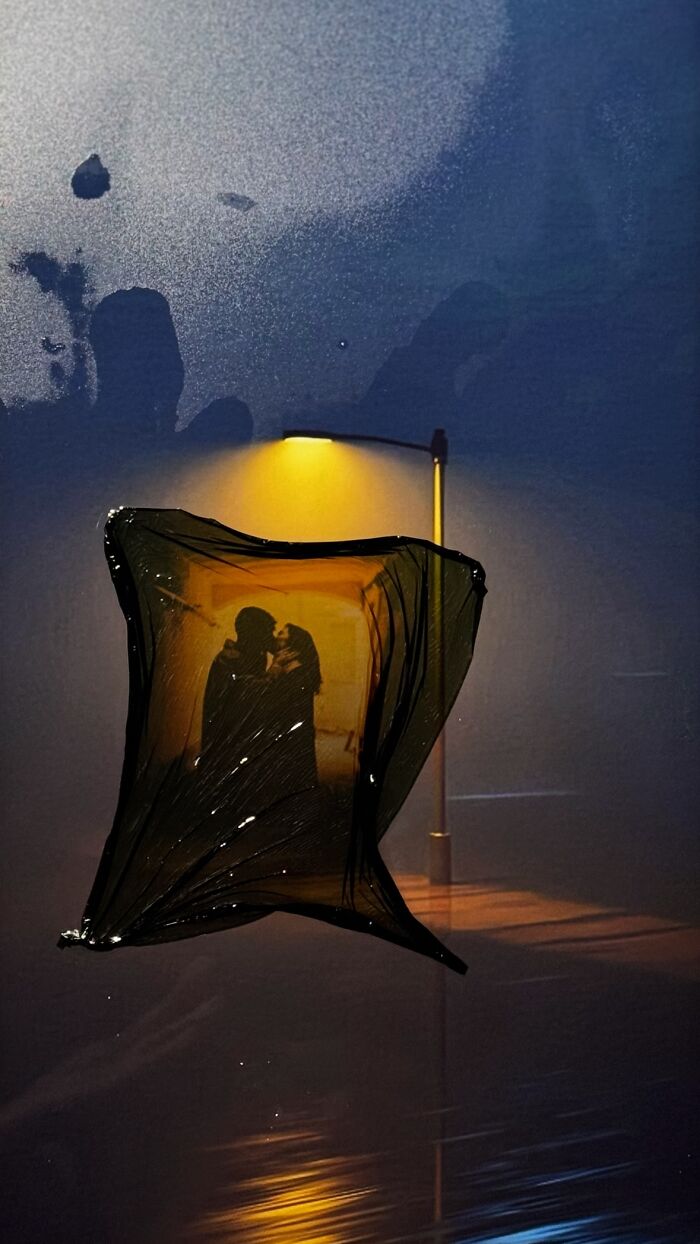
Through the delicate process of Polaroid emulsion lifting, Mez peels the photographic skin away from its original surface and transfers it onto another image entirely. The result is neither collage nor photography in the traditional sense. It feels closer to a memory attempting — and partially failing — to stabilize.
And that partial failure is precisely where the work becomes beautiful.
The artist’s process and works gained broader attention through features.
The Photograph as Skin
Traditional photography pretends permanence. Even digital photography, despite its instability, performs certainty through endless reproducibility. A file can be copied infinitely without visible degradation.
View this post on Instagram
Polaroid emulsions resist this logic.
They wrinkle. Tear. Warp. Float unpredictably in water like fragments of biological material. The image becomes tactile, unstable, vulnerable to handling.
Mez embraces this instability completely.
Using emulsion transfer techniques, she lifts the gelatin image layer from developed Polaroids and places it onto entirely different photographic surfaces, creating compositions that appear partially dissolved, partially remembered.
The effect is extraordinary because it refuses photographic certainty.
Nothing sits perfectly in place.
What Is an Emulsion Lift?
The process itself is deceptively physical.
In Polaroid emulsion lifting, the photographic emulsion — essentially the delicate image-bearing layer — is separated from its original backing using warm water. Once detached, the floating image can be manipulated and repositioned onto another material or photograph.
This creates distortions:
- wrinkles
- folds
- stretching
- fragmentation
The photograph ceases to behave like documentation. It begins to behave like memory.
And memory, unlike photography, is never perfectly aligned.
The Beauty of Misalignment
What makes Mez’s work particularly compelling is that the distortions are not decorative accidents. They function conceptually.
Faces blur into landscapes. Eyes drift slightly out of proportion. Bodies appear suspended between emergence and disappearance.
The images feel emotionally unstable in the most productive way possible.
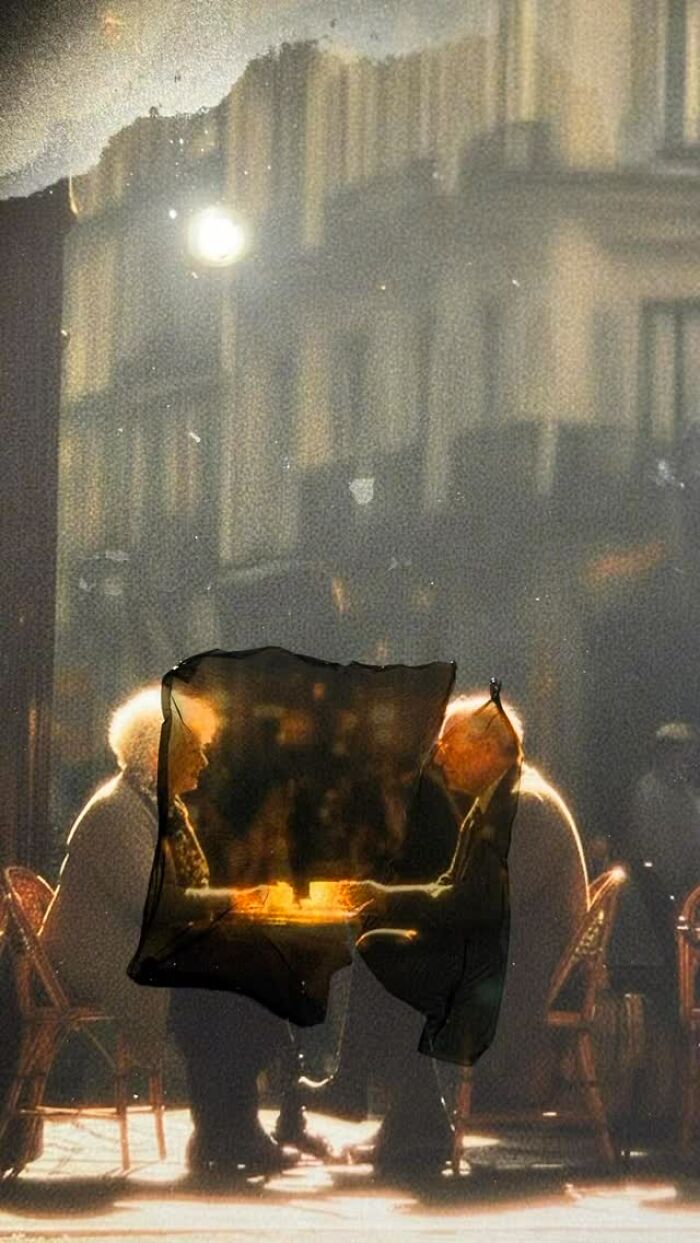
One could easily imagine these works as visualizations of recollection itself — fragments attempting to reconstruct identity after time has already altered it.
A similar relationship between fragmentation and emotional recognition appears in the experimental portrait practices of Alma Haser, whose folded photographic manipulations likewise transform portraiture into something sculptural and psychologically unsettled.
But Mez’s work is softer. Less architectural. More spectral.
The Return of Material Photography
Contemporary photography increasingly exists without material presence. Images circulate endlessly through phones, feeds, and compressed digital archives, detached from physical surfaces.
Mez’s process quietly resists this dematerialization.
Her works remind the viewer that photography once possessed weight, chemistry, fragility. The image could wrinkle because it physically existed.
And perhaps this is partly why her work resonates now. It restores vulnerability to photography at a moment when digital imagery increasingly feels frictionless.
Texture as Emotion
One of the most striking aspects of Mez’s compositions is their texture.
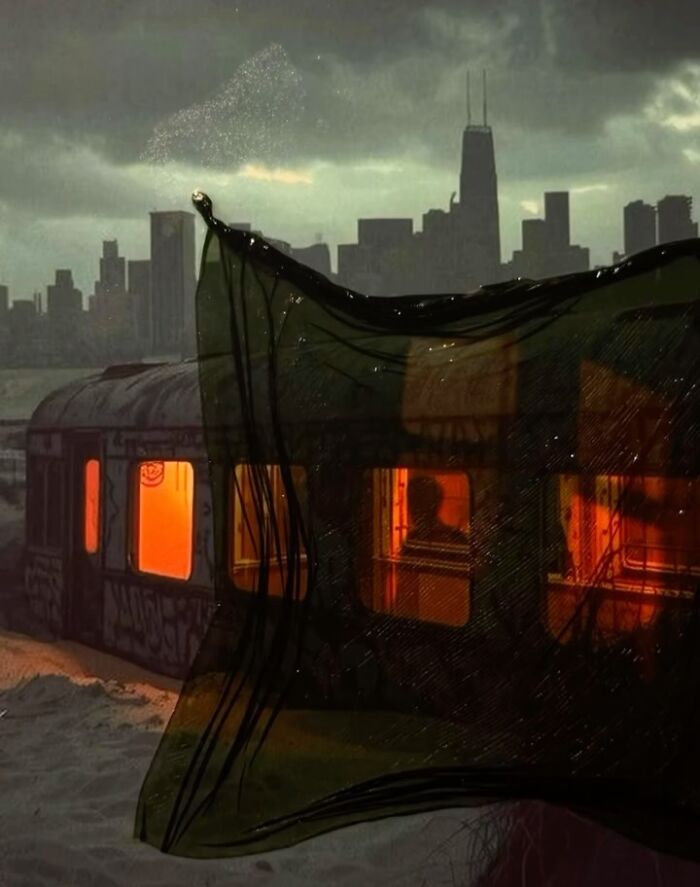
The lifted emulsions create folds and translucent distortions that resemble:
- aging film
- damaged skin
- water-dissolved paintings
- half-preserved relics
The photograph no longer appears mechanically produced. It appears weathered by experience.
This creates a subtle but powerful emotional effect: the images feel touched by time even when newly created.
Beyond Photography, Beyond Collage
Categorizing Mez’s work becomes difficult very quickly.
It is not purely photography.
Not entirely collage.
Not painting.
Not object-making.
It exists between mediums.
This hybridity reflects a broader tendency within contemporary image culture, where rigid distinctions between artistic disciplines increasingly dissolve. Photography absorbs sculpture. Painting absorbs digital manipulation. Collage absorbs cinematic composition.
Mez’s work sits precisely within this unstable territory.
The Controlled Failure of the Image
There is also something deeply contemporary in her willingness to allow images to fail gracefully.
Modern image culture is obsessed with optimization:
- higher resolution
- cleaner surfaces
- sharper rendering
- algorithmic perfection
Mez moves in the opposite direction.
Her works gain emotional depth precisely because they resist technical perfection. The distortions are not flaws to correct; they are conditions of meaning.
In this sense, her practice belongs to a larger artistic tradition of process-oriented photography explored by experimental artists such as Ellen Carey, whose Polaroid-based works likewise foreground chemical instability, process, and material transformation over photographic clarity.
The Fragility of Memory
Perhaps the most compelling aspect of Anastasia Mez’s work is that it never feels nostalgic in a simplistic sense.
These are not sentimental recreations of the past.
They feel closer to what memory actually is:
- incomplete
- distorted
- emotionally selective
- unstable under pressure
The lifted emulsion becomes a perfect metaphor for recollection itself — an image detached from its original structure, surviving only through careful handling.
The Image That Refuses Completion
Many contemporary artworks attempt resolution. They seek coherence, closure, conceptual neatness.
Mez’s images resist this entirely.
Edges remain uneven. Surfaces refuse full alignment. Parts of the composition appear perpetually in transition.
This unfinished quality is essential.
Because the works are not about stable identity or fixed narrative. They are about transformation — the continuous reshaping of image, memory, and emotional perception.
Final Reflection: Photography After Certainty
Anastasia Mez’s work quietly exposes something contemporary photography often tries to conceal: images are fragile.
Not only materially, but psychologically.
The more aggressively modern culture pursues flawless visual clarity, the more emotionally distant images tend to become. Mez reverses this equation.
Her distortions create intimacy.
Her imperfections create atmosphere.
Her unstable surfaces create recognition.
And perhaps this is why her work lingers.
Not because it captures reality perfectly — but because it understands that reality itself is rarely experienced that way.