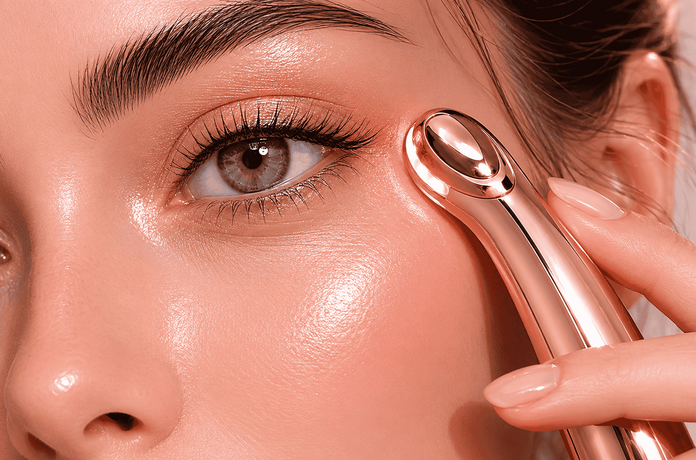
The eyes have long been called the windows to the soul — but they’re also, unfortunately, among the first places the face reveals the passage of time. Fine lines, drooping lids, puffiness, and dark hollows can appear seemingly overnight, and no amount of concealer truly erases them. That’s why a growing number of beauty enthusiasts are turning to at-home technology to reclaim the firmness and brightness of their eye area.
If you’ve been following the intersection of art, aesthetics, and self-expression — which has always been central to what Art-Sheep is about — you know that how we present ourselves is a form of visual language. Caring for the skin around your eyes isn’t vanity; it’s intention. And the tools available today make that intention more effective than ever before.
Enter the Eyelid Anti-Aging Device — a category of at-home skincare technology engineered specifically for the most delicate zone on your face. These compact, precision tools use clinically-proven energy modalities to firm, lift, and rejuvenate the skin around the eyes without needles, downtime, or the price tag of an in-office procedure.
The Skin Around Your Eyes: Why It’s Different
The periorbital zone — the area encircling your eyes — is anatomically unique. The eyelid skin is among the thinnest on the entire body, measuring roughly 0.5 mm compared to 2 mm on other areas of the face. It has fewer sebaceous (oil) glands, less subcutaneous fat for structural support, and is subject to constant mechanical stress from blinking (an average of 15,000 times per day).
This combination of factors means that collagen and elastin in this region break down faster than anywhere else. The result: crow’s feet, horizontal lid creases, undereye hollows, and the dreaded hooded-lid effect that can make a face look tired even after eight hours of sleep.
Topical creams and serums help — but they operate primarily at the surface level. Without a delivery mechanism that penetrates deeper layers of the dermis, the active ingredients may never reach the fibroblasts responsible for producing new collagen. This is precisely the gap that eyelid anti-aging devices are designed to close.
How Eyelid Anti-Aging Devices Actually Work
Modern devices designed for eyelid rejuvenation typically combine several therapeutic technologies. Understanding each one helps you make an informed decision rather than simply buying into marketing language.
Radio Frequency (RF) Energy
Radiofrequency technology delivers controlled thermal energy into the deeper layers of the skin — specifically the dermis and subdermis — without damaging the outer epidermis. This heat triggers two key responses: immediate contraction of existing collagen fibers (providing a near-instant tightening effect) and a longer-term wound-healing cascade that signals fibroblasts to produce new collagen and elastin over the following weeks and months.
RF energy is particularly well-suited to the delicate eyelid area because it can be calibrated to very low power levels, making it safe for thin skin. Many premium at-home devices feature impedance sensing that automatically adjusts energy output based on the skin’s unique electrical resistance — ensuring consistent delivery without hotspots.
Microcurrent Stimulation
Microcurrent is a form of bioelectrical stimulation that mimics the body’s own electrical currents. At extremely low amperage (measured in microamperes), these currents stimulate the facial muscles beneath the skin, improving tone and lift while simultaneously boosting adenosine triphosphate (ATP) production within skin cells. More ATP means more energy for cellular repair, protein synthesis, and the production of collagen and elastin.
For the eye area, microcurrent is particularly effective at addressing early-stage hooding and puffiness, as well as improving lymphatic drainage that contributes to undereye bags.
LED Photobiomodulation
Light-emitting diode (LED) therapy uses specific wavelengths of light to trigger photochemical reactions within skin cells. Red light (typically 630–660 nm) penetrates into the dermis to stimulate collagen production and reduce inflammation, while near-infrared light (800–850 nm) reaches deeper into tissue to enhance cellular metabolism and accelerate healing. Some devices also incorporate amber light wavelengths shown to improve skin radiance and reduce the appearance of fine lines.
When used consistently, LED therapy has been shown in peer-reviewed studies to measurably improve skin elasticity and reduce the depth of periorbital wrinkles over a 12-week period.
The most sophisticated at-home devices no longer ask you to choose between one technology and another — they deliver a synergistic combination in a single, precision-engineered tool.
Ultrasonic Vibration and EMS
Some advanced eyelid anti-aging devices also incorporate ultrasonic vibration — high-frequency sound waves that create a micro-massage effect beneath the skin surface, improving circulation, reducing fluid retention, and enhancing the absorption of serums applied before treatment. Electrical Muscle Stimulation (EMS), related to but distinct from microcurrent, can further improve the structural tone of underlying muscles.
What to Look For in a Quality Eyelid Anti-Aging Device
The consumer market now offers a wide range of devices at varying price points, and the quality differential is significant. Here’s what separates a genuinely effective tool from a gadget that merely feels luxurious:
- Multiple energy modalities: Multiple energy modalities combined (e.g., RF with microcurrent or LED) deliver more complete results than single-technology devices.
- Eyelid-specific design: The ergonomics matter. A treatment head engineered specifically for the periorbital contour will deliver energy more precisely than a repurposed facial device.
- Clinically validated technology: Look for brands that publish clinical studies or partner with dermatologists. Marketing language like “professional-grade” should be backed by verifiable data.
- Safety certifications: For any device used near the eyes, FDA clearance or CE certification is essential.
- Adjustable intensity levels: A device with multiple settings allows you to start conservatively and build up as your skin acclimates to the treatment.
A Brand Worth Knowing: Evenskyn
Among the brands that have gained serious traction in the at-home device space, Evenskyn stands out for its commitment to combining clinical-grade technology with intuitive, consumer-friendly design. The brand’s approach is grounded in the principle that professional skincare results shouldn’t require professional appointments — and their device engineering reflects that belief with multi-modal energy systems, thoughtful ergonomics, and transparent communication about the science behind each feature.
For those specifically interested in the eye area, their Venus Eye device has attracted a loyal following among users who report visible improvements in lid firmness, crow’s feet, and undereye texture with consistent use over 8–12 weeks.
Building an Effective At-Home Eye Treatment Routine
Owning a quality device is only half the equation. To see meaningful results, treatment needs to be consistent and correctly integrated into your broader skincare practice. Here’s a framework that dermatology professionals generally endorse:
Cleanse and Prep
Always begin with a clean, dry face. Remove all makeup and apply a thin layer of a water-based conductive gel or serum — many devices come with their own formulation. Avoid heavy oils before treatment, as these can interfere with energy conductivity.
Treat in Gentle, Deliberate Strokes
Move the treatment head slowly along the orbital bone, from the inner corner outward. Avoid direct contact with the eyeball. Most recommended protocols involve 2–3 passes per area per session, with each session lasting 5–10 minutes for the full eye area.
Follow With Targeted Actives
Immediately post-treatment, when blood flow is elevated and cellular receptivity is heightened, apply your most potent eye actives — peptide serums, retinol formulations (if your skin tolerates them in this area), or growth factor products. The treatment window immediately following device use is when topical ingredients are most bioavailable.

Frequency and Consistency
Most at-home RF and microcurrent protocols recommend 3–5 sessions per week for an initial 8-week period, then a maintenance schedule of 2–3 times per week thereafter. Results are cumulative — don’t expect overnight transformation, but do expect a measurable improvement in skin quality, firmness, and overall radiance over time.
Managing Expectations: What These Devices Can and Cannot Do
Honesty is important here. At-home eyelid anti-aging devices are powerful tools, but they operate within the constraints of energy levels deemed safe for consumer use — which means they’re less intensive than in-office treatments like surgical RF, focused ultrasound (HIFU), or laser resurfacing.
What they can meaningfully address:
- Early to moderate crow’s feet and fine lines
- Mild to moderate skin laxity and early hooding
- General skin quality — texture, luminosity, firmness
- Puffiness and undereye fluid retention
- Gradual improvement in dark circle appearance (where caused by poor circulation)
What they cannot replace:
- Surgical blepharoplasty for significant structural hooding
- Filler for deep volume loss
- In-office laser resurfacing for severe texture concerns
Used consistently and with appropriate expectations, however, an eyelid anti-aging device can produce results that are genuinely visible — and that delay or reduce the need for more invasive interventions down the line.
— ✦ —
The Bigger Picture: Technology as Self-Expression
There’s something quietly profound about the intersection of aesthetics and technology — a theme not entirely foreign to the conversations happening here on Art-Sheep, where beauty in all its forms is taken seriously. The decision to invest in your skin’s health and appearance is, at its core, an act of self-authorship. You’re deciding how your story looks. You’re making a deliberate choice about how time marks your face.
At-home devices like the eyelid anti-aging category represent a democratization of that choice. What was once available only to those who could afford professional treatments — or who were willing to endure significant downtime — is now accessible on a Tuesday evening between dinner and a book. That shift matters, both practically and philosophically.
The eyes remain the most expressive feature of the human face. Caring for them well isn’t about erasure — it’s about preservation. Keeping the canvas vibrant so the expression it carries comes through as clearly as possible, for as long as possible.
And for that, the right tool makes all the difference.