The World After Reality
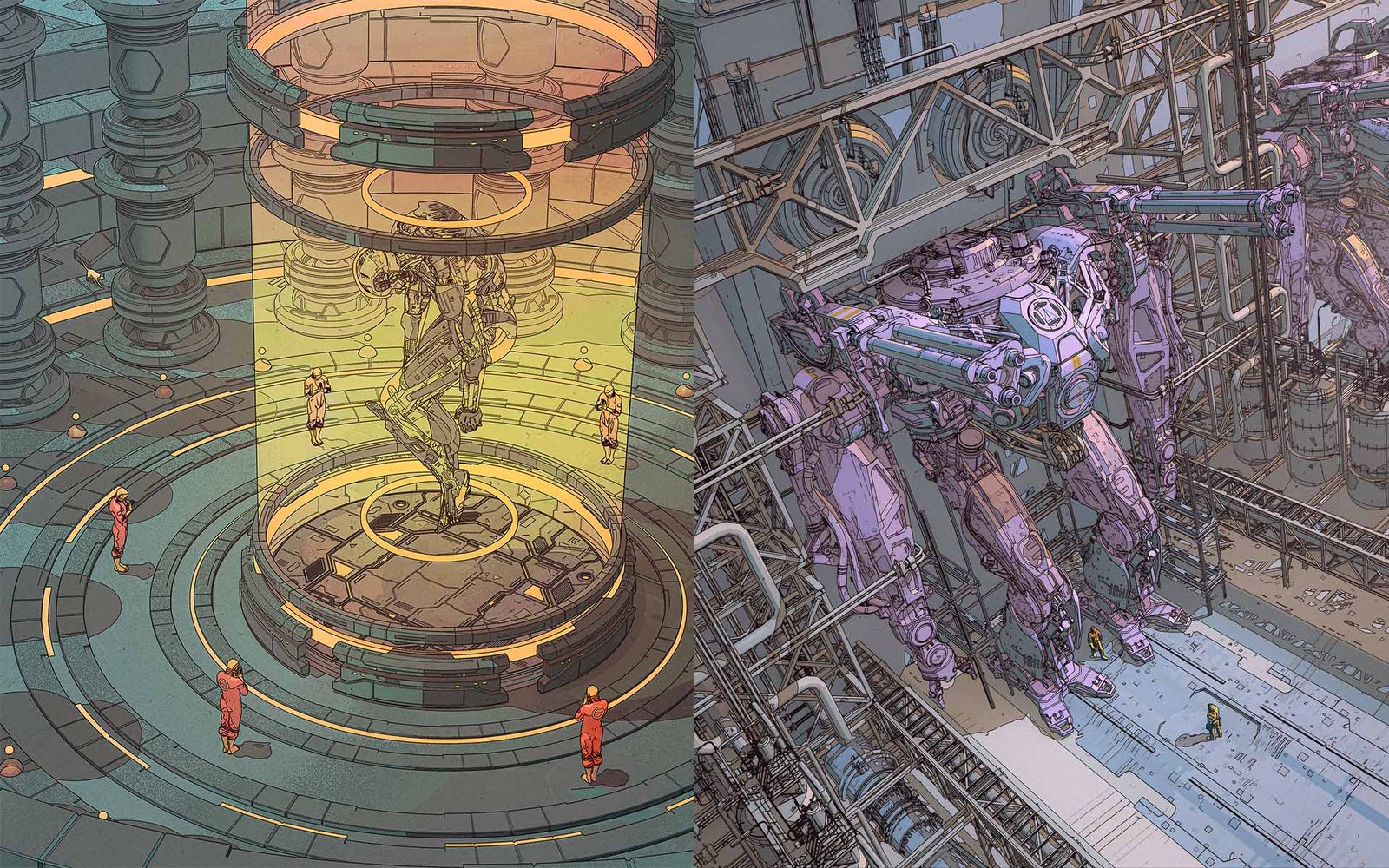
There is something deeply revealing about the worlds created by digital artist BakaArts — or more precisely, by the German-based artist Darius Puia. They do not attempt to imitate reality. They do not even pretend to improve it. Instead, they quietly replace it.
At first glance, the work feels familiar: neon lights, vast architectures, futuristic cities, fragments of dystopia softened by color. But this familiarity is misleading. What Puia constructs is not a future we expect — it is a future we have already begun to recognize.
You can explore his universe directly through his official platform, Bartsy — a curated portal where his digital environments unfold as a coherent, evolving vision.
Puia describes his work as a blend of surreal, futuristic, and colorful digital design, often rooted in cyberpunk and science fiction aesthetics . But definitions like these, while accurate, remain insufficient. His work is not simply genre-based. It is atmospheric.
The Architecture of Isolation
BakaArts operates within a visual language that feels at once expansive and deeply enclosed. His cities stretch endlessly, yet they rarely feel inhabited. His environments glow, but they do not comfort. His compositions invite the viewer in — only to remind them that there is nowhere to go.
This paradox is central to his work.
Unlike traditional landscape painting, which situates the viewer within a world, Puia’s environments create a sense of distance within immersion. You are inside the image, but not part of it. A spectator without agency.
This aligns with his own artistic direction: exploring technology, isolation, and speculative futures through cinematic digital compositions
The Digital Sublime
Historically, the sublime was associated with nature — mountains, oceans, storms. Forces too vast to comprehend.
In BakaArts’ work, this has shifted.
The sublime is no longer natural. It is engineered.
Skyscrapers replace mountains. Neon replaces sunlight. Algorithms replace weather. The overwhelming force is no longer nature, but infrastructure.
And yet, the emotional response remains similar: awe, disorientation, and a subtle discomfort.
Color as Resistance
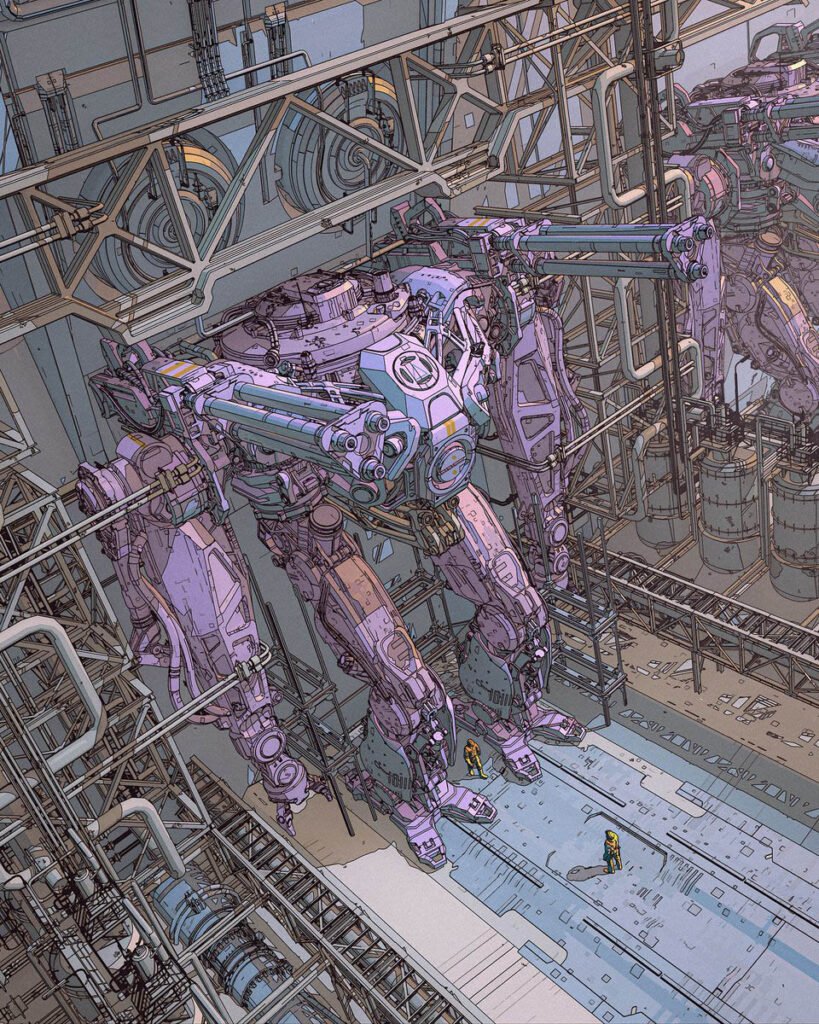
One of the most striking aspects of BakaArts’ work is its use of color. In a genre often dominated by darkness and decay, his compositions introduce vibrant, almost defiant palettes.
Neon pinks, electric blues, artificial greens — these are not merely aesthetic choices. They function as interruptions.
If dystopia traditionally presents itself as bleak, Puia’s version is strangely luminous. It suggests that even within collapse, there is still spectacle. Still beauty. Perhaps even something dangerously close to attraction.
This creates a subtle tension: are these worlds warnings, or invitations?
The Loop of Influence
It would be easy to situate BakaArts within the lineage of cyberpunk — Blade Runner, Akira, the visual language of late 20th-century speculative fiction. And indeed, those influences are present.
But something has shifted.
Cyberpunk once imagined the future. Artists like Puia now work within a culture where the future is continuously simulated, circulated, and aestheticized.
His work does not predict. It reflects.
View this post on Instagram
The Image as System
BakaArts does not create isolated artworks. He creates systems of imagery.
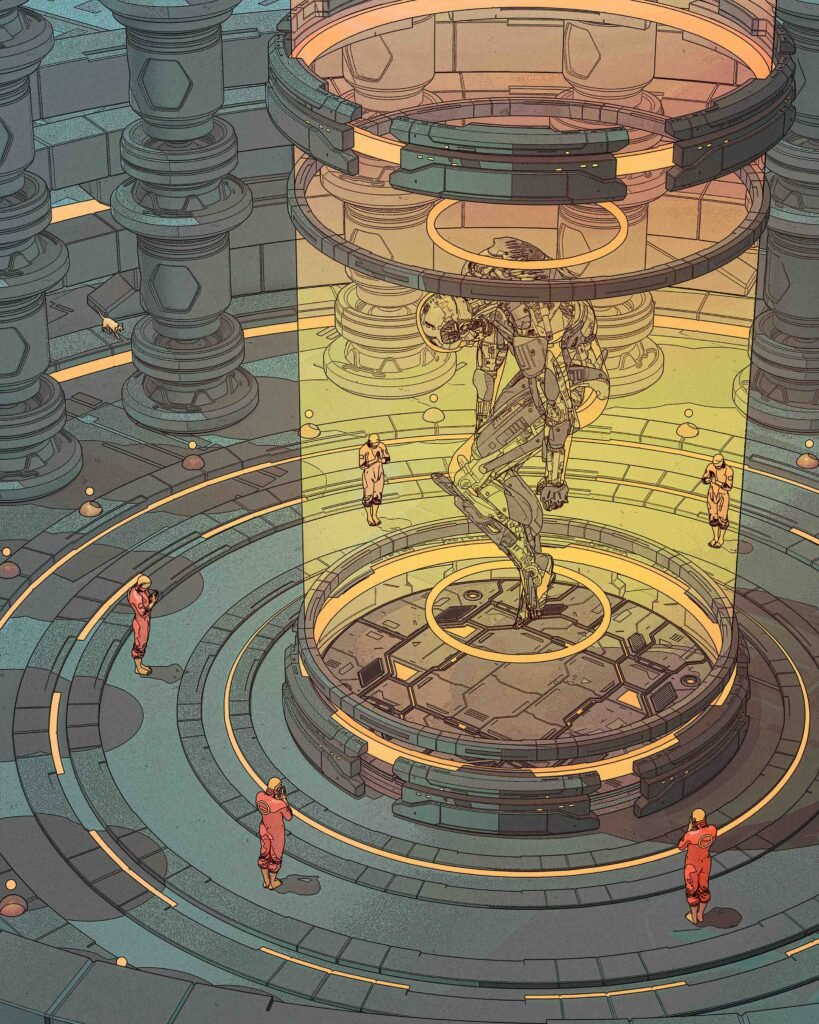
Each piece feels connected to another — variations within a broader visual ecosystem. Themes recur: verticality, neon light, human absence, architectural density.
This repetition is not accidental. It is structural.
Much like earlier decorative systems (one might think of historical precedents where imagery becomes environment), Puia’s work operates through accumulation. The more you see, the more coherent the universe becomes.
View this post on Instagram
The Artist as Environment Builder
Unlike traditional painters, Puia works primarily in 3D digital environments, often using tools like Cinema 4D and advanced rendering engines .
This changes the role of the artist.
He is not simply composing an image. He is constructing a space — one that can be explored, modified, extended.
In this sense, BakaArts operates closer to an architect than a painter.
The Economy of Attention
With nearly half a million followers on Instagram, BakaArts exists within the contemporary ecosystem of digital visibility .
But his work resists the speed typically associated with that environment.
While social media rewards immediacy, his images demand duration. They are dense, layered, often overwhelming in detail. They resist quick consumption.

This tension — between platform and practice — is where much of their power lies.
The Illusion of Control
Perhaps the most unsettling aspect of BakaArts’ work is its sense of control.
Everything is designed. Everything is placed. Nothing is accidental.
And yet, the worlds he constructs feel on the verge of collapse.
This contradiction — total control within unstable environments — mirrors something fundamental about contemporary digital life. Systems that appear stable, but are constantly shifting beneath the surface.
Beyond Cyberpunk
To reduce BakaArts to “cyberpunk” is to miss the point.
His work is not about genre. It is about condition.
A condition in which:
- environments replace experiences
- images replace memory
- simulation replaces presence
And within this condition, his work does something rare.
It does not resolve the tension. It sustains it.
Final Observation: The Future That Watches Us
BakaArts does not offer solutions. He does not critique explicitly. He does not explain.
Instead, he constructs.
Worlds that feel inevitable. Environments that feel familiar. Futures that seem less like speculation and more like continuation.
And perhaps that is what makes his work so compelling — and slightly unsettling.
It does not ask what the future will be.
It suggests that we are already inside it.