
The Painter of Rooms That Never End
There are artists who paint people, and then there are artists who paint the space between people. Edward Hopper belonged almost entirely to the second category.
His paintings are filled with diners, hotel rooms, offices, apartments, gas stations, windows glowing softly against the darkness of early evening. Yet despite their apparent familiarity, these places rarely feel inhabited in the ordinary sense. They feel paused. Suspended. As though human presence itself has become uncertain.
Which is perhaps why Hopper feels so contemporary now.
Long before smartphones, social media, and digital alienation, Hopper understood something essential about modern life: loneliness is not always dramatic. More often, it is architectural.
It exists in fluorescent lighting. In late-night windows. In the arrangement of chairs around a table where nobody speaks.
And few artists have ever painted that silence more precisely.
America After Intimacy
Hopper’s America is often described as quiet, but quietness is not the same as peace.
The figures in his paintings are rarely interacting. They coexist. A woman sits beside a window. A man reads beneath artificial light. Couples occupy the same room while appearing emotionally separated by impossible distance.
This emotional detachment became one of Hopper’s defining visual signatures.
Importantly, Hopper was not painting loneliness as tragedy. He painted it as condition.
Modern urban life, his work suggests, reorganizes intimacy. It places individuals near one another physically while gradually separating them psychologically.
A phenomenon that feels disturbingly recognizable today.
For a broader overview of Hopper’s life and artistic development, see this detailed entry from the Encyclopaedia Britannica.
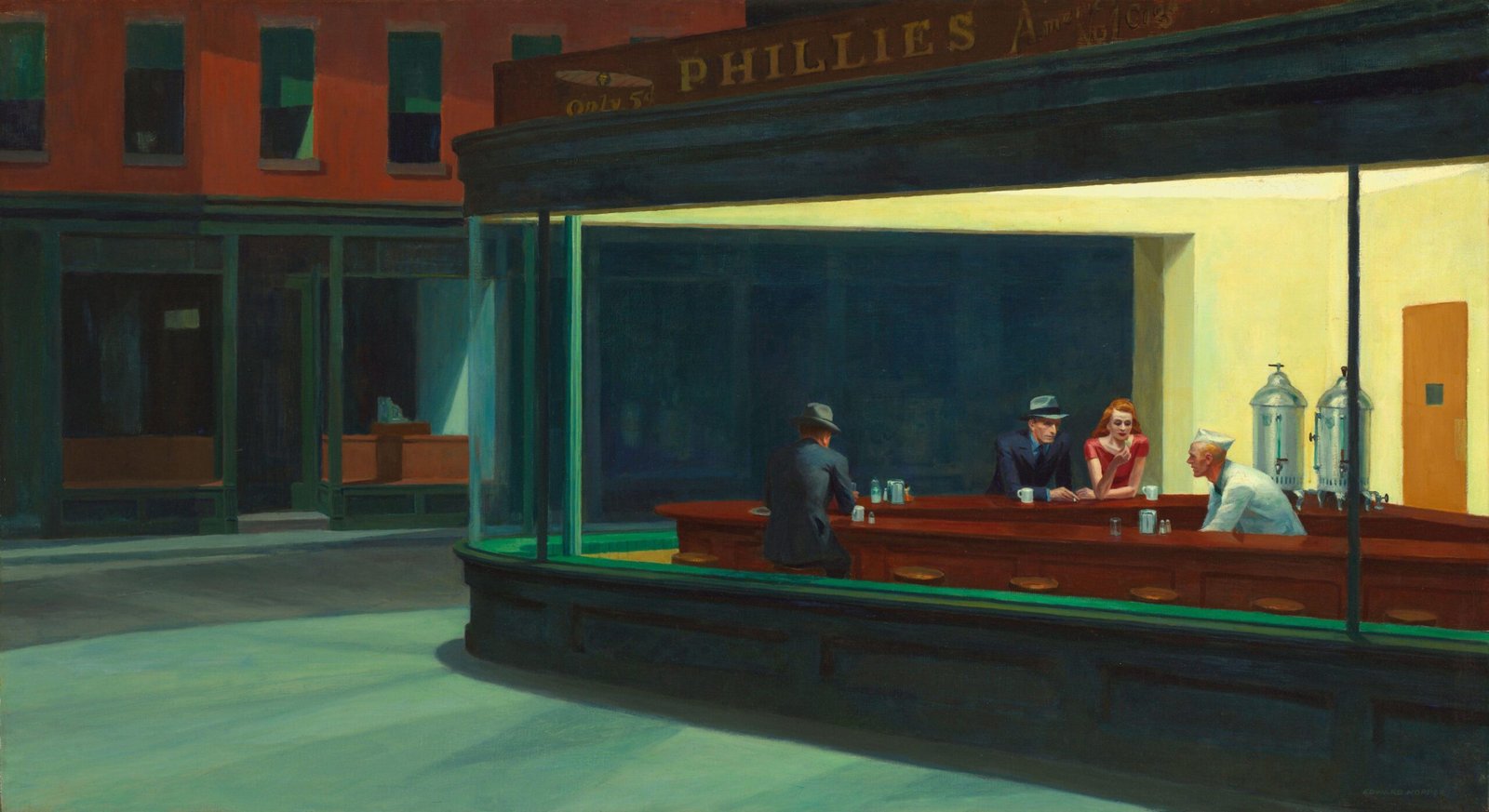
Nighthawks and the Myth of Connection
No Hopper painting embodies this better than Nighthawks.

The image has become so culturally absorbed that it risks invisibility: the late-night diner, fluorescent light spilling onto empty streets, four isolated figures occupying the same artificial refuge.
At first glance, the painting appears cinematic. But cinema usually promises narrative resolution. Hopper refuses this entirely.
Who are these people?
Why are they there?
Are they together?
Do they know each other?
The painting offers no answers because the uncertainty itself is the subject.
What Hopper captures is not social interaction, but the performance of proximity.
The Window as Psychological Device
Windows recur obsessively throughout Hopper’s work.
They separate:
- interior from exterior
- private from public
- observer from observed
But they also create a strange ambiguity. Looking through a Hopper window never feels entirely permitted. The viewer becomes aware of themselves as spectator.
This subtle discomfort is crucial.
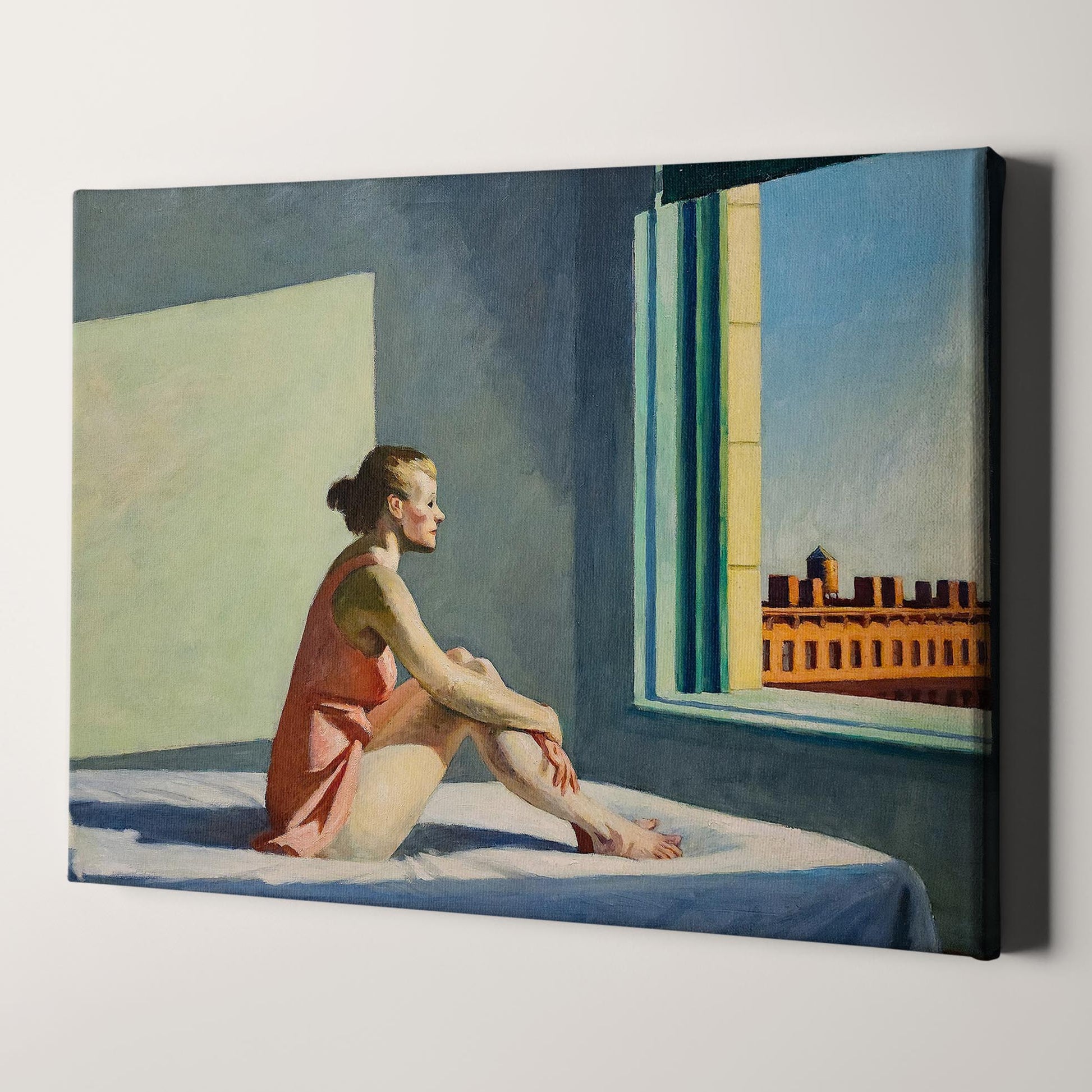
Hopper transforms ordinary urban architecture into emotional machinery. Walls isolate. Windows expose. Doorways suggest movement that never occurs.
The buildings themselves begin to behave psychologically.
Light Without Warmth
Few painters understood artificial light the way Hopper did.
Streetlights, hotel lamps, fluorescent interiors — his paintings are illuminated constantly, yet warmth remains elusive. Light reveals, but it does not comfort.
This distinction matters.
Traditional painting often used light symbolically:
- divine revelation
- spiritual transcendence
- emotional clarity
Hopper’s light feels modern. Functional. Commercial. It belongs to gas stations, apartments, theaters, diners.
It extends visibility while intensifying isolation.
The Cinema Hidden Inside the Paintings
Hopper’s work has profoundly influenced cinema, though perhaps influence is too weak a word. Entire visual languages in film seem constructed from Hopper’s atmosphere.
Directors such as Alfred Hitchcock, David Lynch, and Wim Wenders have all echoed his compositions:
- isolated interiors
- suspended tension
- emotionally vacant urban environments
The famous house in Hitchcock’s Psycho, for example, bears unmistakable Hopper DNA.
https://www.pomegranate.com/cdn/shop/files/9897_05.jpg?v=1758784813&width=1600
This cinematic quality emerges because Hopper paints not moments, but anticipations. Something always feels about to happen — even when nothing does.
Hopper and the Violence of Stillness
There is a subtle violence in Hopper’s stillness.
Not physical violence. Psychological violence.
His paintings deny emotional release. They trap the viewer inside unresolved moments:
- waiting
- thinking
- staring
- remaining
This restraint creates tension far more effectively than overt drama.

A similar relationship between stillness and emotional unease appears in The Danish Golden Age: When Painting Learned to Be Quiet, where silence itself becomes the structure of the image rather than merely its atmosphere.
But Hopper’s silence is colder. More urban. More aware of distance.
The Loneliness of American Space
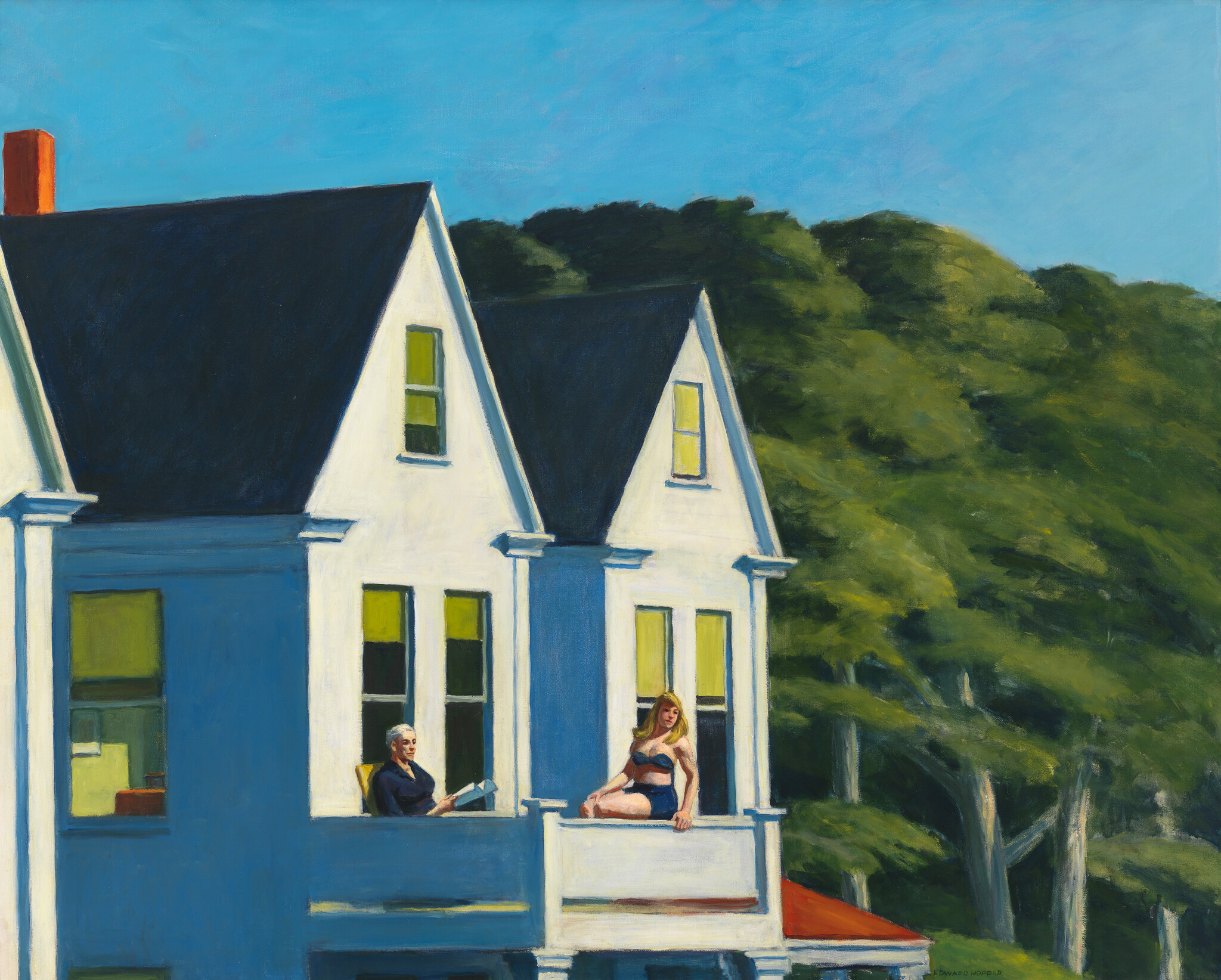
Hopper’s work is inseparable from American architecture.
Gas stations beside empty roads. Motel rooms. Office interiors. Railroad hotels. Diners open too late into the night.
These are transitional spaces — places people pass through rather than truly inhabit.
And that transience becomes existential.
The American dream, in Hopper’s hands, appears strangely emptied out. Expansion produces isolation rather than freedom. Mobility creates emotional drift.
The landscapes are not hostile. They are indifferent.
Why Hopper Feels More Relevant Than Ever
Contemporary audiences often interpret Hopper through the lens of modern isolation:
- remote life
- digital alienation
- urban anonymity
And while these readings are valid, Hopper’s relevance extends beyond technology.
He understood something more fundamental:
human beings are capable of becoming emotionally distant even while surrounded by systems designed to connect them.
The diner is open.
The city is illuminated.
The rooms are occupied.
And still, something essential remains unreachable.
The Myth of Simplicity
Hopper’s paintings appear simple.
This simplicity is deceptive.
His compositions are obsessively controlled:
- geometry
- light direction
- architectural balance
- emotional pacing
Nothing accidental survives within the frame.
This precision is partly why the paintings feel so psychologically stable — and simultaneously so emotionally unstable.
Everything is visually ordered.
Nothing feels emotionally resolved.
The Refusal of Explanation
Perhaps the most radical aspect of Hopper’s work is his refusal to explain.
Modern audiences are conditioned to expect narrative clarity. Psychological motives. Emotional transparency.
Hopper offers none of this.
He leaves the viewer inside uncertainty.
And uncertainty, unlike narrative, lingers.
Final Reflection: Loneliness as Environment
Edward Hopper did not simply paint lonely people.
He painted environments that produce loneliness.
Rooms structured around distance. Cities organized through emotional separation. Architecture functioning as psychological condition.
And perhaps this is why his paintings remain so haunting.
Because they do not depict extraordinary suffering.
They depict ordinary modern existence — illuminated softly enough that most people barely notice it happening.