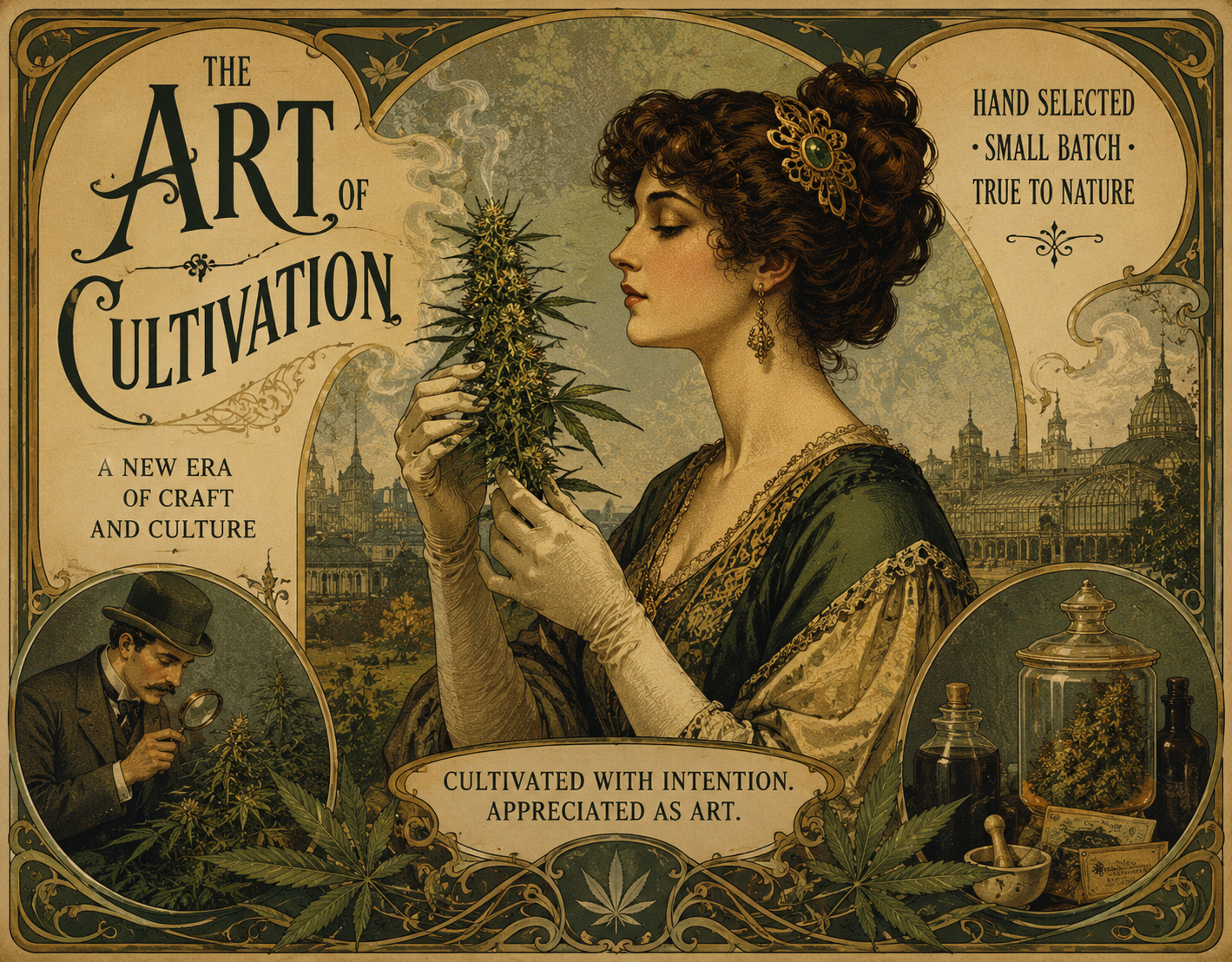
Culture has a habit of elevating the everyday into something worth appreciating. Coffee became a craft, beer embraced small-batch production, and in legal markets, botanical cultivation is following a remarkably similar path. What was once anonymous is now grown, cured, and presented with the care usually associated with artisanship.
This is a cultural look, not a sales pitch, and it concerns only adults in places where cannabis is legal. In Canada, for instance, a curated top shelf weed selection is presented much like a gallery introduces its artists. This guide explores how craftsmanship entered the modern cannabis world.
What Does Craft Really Mean Here?
The answer is the same as it is for any handcrafted discipline. Craft values small batches, experienced hands, and a refusal to rush the process.
Craft cannabis refers to plants grown in carefully managed, limited batches rather than produced at industrial scale. Growers often describe their work the way a ceramic artist speaks about clay or a winemaker speaks about grapes—placing patience, observation, and refinement above sheer output. That philosophy mirrors the fine craftsmanship celebrated throughout the art world, where the maker’s attention is often the work’s greatest asset.
The comparison is surprisingly natural. Someone tending fifty plants by hand has far more in common with a studio artist than with a factory production line. The intentionally limited scale allows every stage of cultivation to receive personal attention, producing results that simply cannot be replicated through volume alone.
How Is Cannabis Cultivation Like an Art Practice?
More than many people expect. Both reward patience, close observation, and an acceptance that meaningful results rarely happen quickly.
Terroir describes the way an environment influences what grows within it. Originally associated with wine, the concept increasingly appears in conversations surrounding cannabis as well. Light, humidity, nutrients, genetics, harvesting, trimming, and curing all contribute to the final result over an eight-to-twelve-week cycle. It takes the same obsession with detail as any small-scale artistry.
The hallmarks of a craft approach include:
- Small batches. Quality over sheer volume.
- Hand-trimming. Careful finishing by hand.
- Slow curing. Time given, never rushed.
- Thoughtful strain selection. Character over yield.
- Transparency. Growers who openly describe their methods.
Every one of these decisions sacrifices efficiency in favour of personality and quality. That willingness to value character over speed is precisely what separates craftsmanship from commodity production.
Why Is Cannabis Culture Drawn to the Arts?
Because the relationship has existed for decades. Music, cinema, literature, photography, and contemporary visual art have all referenced cannabis in different cultural moments.
Cannabis is a plant used recreationally and medically where law permits, with a long presence across creative communities. Its imagery has appeared on album covers, within gallery installations, throughout cinema, and across countless visual movements. As legalization expands, these cultural connections are simply becoming easier to discuss openly and with greater nuance.
| Craft world | Cannabis parallel |
|---|---|
| Studio and kiln | Grow room and cure |
| The maker’s hand | The grower’s hand |
| Provenance | Strain and origin |
| Limited editions | Small-batch drops |
| Curation | Curated collections |
The comparison is genuine rather than symbolic. In both worlds, the story behind the maker often becomes inseparable from the value of the finished work.
What Should a Curious Adult Keep In Mind?
Context and responsibility should always come first. Appreciating craftsmanship is not the same as encouraging irresponsible consumption.
Cannabis is legal only in specific jurisdictions and only for adults, with a minimum age of 18 or 19 in Canada depending on the province. Anyone interested in understanding both the effects and the associated risks should begin with the CDC cannabis basics page.

Regulatory nuance is equally important and is outlined within the FDA cannabis regulation overview. Appreciating craftsmanship also means respecting legislation, scientific evidence, and moderation. Responsible curiosity and critical thinking belong together.
What to Remember
- Cannabis is following coffee and beer into craft culture.
- Craft cannabis emphasizes small batches and skilled hands.
- Cultivation shares many values with artistic practice.
- Cannabis and the arts have intersected throughout modern culture.
- It remains legal only for adults where legislation permits.
- Appreciating craftsmanship also means respecting both science and regulation.
Craft, Culture, and Context
The emergence of craft cannabis represents a genuine cultural development. It reflects a growing appreciation for patience, provenance, and the individuals behind the finished product—qualities long celebrated in food, wine, design, and the visual arts.
Viewed through that lens, this is ultimately less a story about a plant than about craftsmanship itself. Wherever it is legal, and only for informed adults, it demonstrates how careful making continues to find new forms of expression. Like every meaningful craft tradition, its value lies not simply in the finished product, but in the thought, discipline, and artistry invested throughout the process.
Frequently Asked Questions
What Is Craft Cannabis?
Craft cannabis refers to cannabis grown in small, carefully managed batches rather than mass-produced at industrial scale. Growers emphasize hand-trimming, slow curing, and thoughtful strain selection, prioritizing character and quality over sheer volume. The term borrows directly from craft beer and specialty coffee culture. It reflects a maker’s mindset, where patience and attention to detail matter more than efficiency, much like any traditional artisan practice.
Why Is Cannabis Compared to Art?
The comparison comes from their shared emphasis on craftsmanship, patience, and provenance. Small-scale growers carefully manage every stage of cultivation over several weeks before finishing each harvest by hand, much like an artist refining a work over time. Cannabis has also maintained a long presence within music, cinema, photography, and visual art, strengthening the cultural relationship between these creative worlds.
Is Craft Cannabis Legal?
Only where local law allows it, and only for adults. In Canada, adult recreational cannabis has been legal since 2018, with a minimum age of 18 or 19 depending on the province, and regulated sellers operate there. In many other places it remains prohibited. Legality depends entirely on jurisdiction, so any interest should be limited to legal-age adults in markets where it is clearly permitted.
How Is Craft Cannabis Different From Mass-Market Cannabis?
The principal difference lies in philosophy and scale. Industrial cultivation focuses on efficiency and volume, while craft producers prioritize technique, careful handling, and distinctive character. Hand-trimming, slower curing, and thoughtful strain selection are common practices. The result is treated much like any other premium handcrafted product—closer in spirit to craft beer than mass-produced lager.