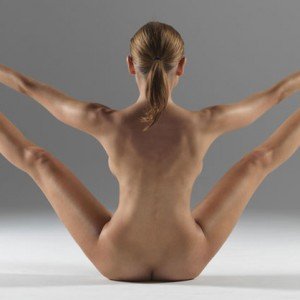

There are images of the nude body that ask only to be looked at, and there are images that ask to be read.
Nude yoga photography belongs, at its best, to the second category. It is not simply a matter of exposure, provocation, or the old exhausted spectacle of skin. Something more disciplined is happening. The body becomes line, counterweight, structure, rhythm, pressure, and breath. It enters the frame not merely as an object of desire, but as a temporary piece of architecture.
This is what makes the genre more interesting than its easiest reputation. Nude yoga photography sits at a strange intersection: part erotic image, part athletic study, part sculpture, part meditation, part performance. It turns stillness into tension. It turns flexibility into composition. It turns the human figure into a kind of living geometry.
That is also why photographers such as Petter Hegre have returned to this visual territory. The nude body has always been one of art history’s most charged subjects, but yoga changes its grammar. The body is no longer simply posed. It is performing control.
1. Before the Camera, the Body Was Already a Line

Long before photography, the nude body was already understood as a problem of structure. Classical sculpture did not merely represent bodies; it organized them. The curve of the torso, the pressure of one foot against the ground, the angle of an arm, the distribution of weight through the hips and spine — all of these became ways of turning flesh into visual order.
This is why the history of the nude is never only a history of beauty. It is also a history of composition. A body in art is rarely just a body. It is a decision about balance, proportion, vulnerability, power, and how much distance should exist between the viewer and the viewed.
Nude yoga photography inherits this tradition, even when it appears to belong entirely to the internet age. The extended limb, the inverted pose, the compressed abdomen, the controlled hand, the grounded foot — these are not simply signs of flexibility. They are visual events. They divide space. They create rhythm. They draw the eye the way architecture does: through support, tension, and direction.
The difference is that sculpture freezes an imagined ideal, while photography captures a body in a real moment of strain. The pose may look serene, but serenity is only the surface. Beneath it is muscle, breath, pressure, and the quiet threat of collapse. That hidden effort gives the image its charge.
2. Yoga and the Performance of Control

Yoga is often photographed badly because it is often misunderstood visually. The practice is reduced to impressive poses, sunset silhouettes, expensive mats, and the cheerful tyranny of wellness branding. But yoga, at least as an image, becomes interesting when it is not treated merely as lifestyle. It becomes interesting when it reveals the body as a site of control.
Every asana contains a paradox. It must appear still, but it is never passive. The body holds itself in place through a chain of invisible negotiations: muscle against gravity, breath against effort, concentration against discomfort. The camera sees only the arrangement. The body experiences the duration.
This distinction matters. A yoga pose may look effortless, but the apparent calm is usually manufactured through discipline. In photography, that becomes visually powerful. The image records not motion, but the successful suspension of motion. It shows the instant in which effort has been made quiet.
When nudity enters this equation, the image becomes even more exposed — not only sexually or aesthetically, but structurally. Clothing can disguise tension. The nude body cannot. It reveals where strength is held, where balance depends, where the spine curves, where the skin tightens, where pressure gathers. The body becomes legible.
That legibility is the reason nude yoga photography can move beyond simple provocation. It is not only about what the body shows. It is about what the body is doing.
3. The Nude, Between Art History and Internet Culture

The nude has always lived between seriousness and scandal. Museums make it marble. Advertising makes it commodity. Social media makes it algorithmic trouble. The same body can be called classical, erotic, obscene, liberating, exploitative, formal, cheap, sacred, or profitable depending on who is looking and which institution is doing the framing.
This instability is not new. The nude has never been neutral. It has always carried arguments about beauty, power, gender, desire, vulnerability, and control. What has changed is speed. Images that once circulated through salons, books, galleries, or private collections now move instantly through feeds, archives, screenshots, and search results. The nude body is no longer only viewed. It is indexed.
That creates a peculiar tension for contemporary nude photography. On one hand, the internet can flatten everything into consumption. On the other, it can also give certain images an afterlife far beyond their original context. A photograph becomes a search term. A model becomes a visual archetype. A series becomes a fragment of online memory.
Nude yoga photography exists inside that contradiction. It draws from the old prestige of the artistic nude, but it circulates through a digital culture that is rarely patient. It asks for slow looking in an environment built for fast consumption. That friction is part of its fascination.
The viewer may arrive expecting erotic spectacle. The stronger images ask for something slightly more complicated: attention to form, discipline, stillness, and the distance between the body as image and the body as lived experience.
4. Photography Turns Stillness Into Evidence

Photography has always had a special relationship with the body because it can make physical facts feel undeniable. A painting interprets. A sculpture idealizes. A photograph appears to testify, even when it is carefully staged. That testimonial quality is especially important in images of balance, flexibility, and bodily control.
A yoga pose in a photograph says: this happened. This body held this form. This extension, this pressure, this equilibrium existed long enough for the camera to record it. The image may be aestheticized, edited, lit, cropped, and selected, but the central physical claim remains powerful. The body became that shape.
This is one reason nude yoga photography often feels more immediate than classical representations of the nude. It is not only about proportion or beauty. It is about evidence of ability. The pose carries proof of practice. It shows the viewer that grace is not merely an appearance, but an achievement.
Of course, photography can also deceive. It can flatter, exaggerate, simplify, and turn complex practice into a single seductive surface. But even then, the still image has its own force. It transforms a passing physical event into an object of contemplation. The moment no longer disappears. It stays available.
That availability is both beautiful and dangerous. The body’s private effort becomes public image. The practice becomes spectacle. The breath disappears, while the pose remains. In that gap, photography creates its peculiar magic.
5. Petter Hegre, Luba Shumeyko, and the Clean Eroticism of Form

Petter Hegre’s work with Luba Shumeyko sits directly inside this larger conversation. His nude yoga series is often encountered online as a provocative gallery, but it becomes more interesting when understood as part of a longer visual history: the body as form, the pose as structure, the photograph as proof of controlled stillness.
In the Art-Sheep archive, our feature Petter Hegre Photographs Luba Shumeyko in Striking Naked Yoga Poses looks directly at that collaboration. What makes the images memorable is not only that they are nude, or that Shumeyko’s poses are physically demanding. It is that the erotic element is inseparable from the formal one. Desire and discipline occupy the same frame.
Shumeyko is not simply displayed. She is engaged in a practice. The body is exposed, but also active, concentrated, and visibly capable. That shifts the terms of looking. The viewer sees beauty, but also effort. Sensuality, but also athletic intelligence. Vulnerability, but also control.

This is where Hegre’s visual restraint matters. The images are not overloaded with theatrical symbolism. They rely on clarity: body, pose, light, frame. That clarity can feel severe, even cold, but it gives the photographs their graphic force. The body becomes a line drawing made of muscle and skin.
For more related material around Shumeyko’s recurring presence in visual culture and photography, the Luba Shumeyko archive offers a useful internal path through the subject.
6. Why Controlled Stillness Feels More Erotic Than Excess

Eroticism is often confused with excess. More exposure, more drama, more ornament, more intensity, more obviousness. But some of the most enduring erotic images work in the opposite direction. They withhold chaos. They control the frame. They allow tension to accumulate rather than explode.
Nude yoga photography understands this when it is done well. The pose creates suspense because the body is held at the edge of movement. A hand supports more weight than it seems able to support. A spine bends past ordinary comfort. A leg extends into space. The viewer senses the possibility of collapse, and the image becomes charged precisely because collapse does not happen.
This is very different from conventional erotic photography, which often depends on invitation, display, or fantasy. Nude yoga photography can still contain all of those things, but it adds another layer: restraint. The body is not only available to the gaze. It is busy maintaining itself.
That activity changes the power of the image. A passive nude may invite the viewer to complete the fantasy. An active body interrupts that fantasy with evidence of will. It reminds us that the subject has not dissolved into surface. She is holding the pose. She is producing the image with her own physical discipline.
This is why controlled stillness can feel more powerful than spectacle. It lets the viewer look, but it also makes the viewer aware of looking. The body becomes beautiful, but not empty. Erotic, but not merely decorative. Exposed, but not surrendered.
7. After the Pose

The most interesting thing about nude yoga photography is not that it reveals the body. Many images do that. Its real force lies in how it reveals the body as an instrument of concentration. The pose is not merely a shape; it is an event held still. The photograph is not merely a record; it is a pause made permanent.
This is why the genre can still hold the eye. It gathers several old visual traditions into one contemporary form: the classical nude, the athletic study, the studio photograph, the yoga image, the erotic portrait, the internet gallery. At its weakest, it collapses into spectacle. At its strongest, it becomes a study of embodied control.
The body, after all, is never only surface. It is weight, balance, breath, memory, training, desire, and resistance. A photograph may flatten it into an image, but the best photographs also remind us of what cannot be flattened: the effort required to inhabit a body at all.
That is why images of nude yoga can feel strangely durable. They show beauty, but also labor. Exposure, but also discipline. Stillness, but also the pressure of motion temporarily suspended. They turn the body into architecture, and then remind us that architecture made of flesh is always temporary.
The pose ends. The photograph stays.