In the autumn of 1906, the Swedish artist Hilma af Klint began a new painting. She did not start a familiar landscape or portrait. Instead, she allowed her hand to move in response to an internal prompting. She sensed that the work should unfold without being fully understood.
This marked the beginning of The Paintings for the Temple, a series of abstract works that would appear years before similar explorations by Kandinsky and Mondrian.
She continued to follow this inner direction, even as she believed her contemporaries were not intellectually or spiritually prepared to understand her work. Painted as mystic blueprints from the spiritual realm, she stipulated in her will that the works remain sealed and unshown for at least 20 years after her death.
Choosing gut feeling over external logic has often marked visionary artists. It suggests that enduring art can combine skill with engagement with non‑rational sources of meaning. The most enduring art isn’t just a product of skill but a dialogue with the invisible.
The Inner Signal and the Creative Process
Across art history, the most transformative creators have shared a conviction that logic alone is not enough. That authentic work demands trusting an inner feeling that precedes conscious understanding. The Surrealists called it the unconscious. Matisse talked about instinct. Kandinsky wrote extensively about inner necessity, the idea that a composition either requires itself or it doesn’t, and the artist’s job is to feel which one. As Kandinsky put it, artists should follow an ‘inner necessity’—a felt requirement that guides composition rather than formal rules.
This contemporary search for self-knowledge mirrors the same impulse that drove the artists above. Platforms like Ask Nebula help users look at intuition, self-reflection, spiritual guidance, and new ways to make decisions. Here, people can connect with advisors and use self-discovery tools to surface thoughts and instincts that routine daily life tends to drown out.
Inspiration as a Conversation Across Centuries
An important strain in Western aesthetics treats creative genius as beyond pure reason. In Ancient Greece, it appeared as ‘furor poeticus’, meaning divine poetic madness. Plato wrote that poets create when inspired and carried beyond ordinary sense—the Muse functioning as a channel for a higher force. This state was not viewed as a loss of control but as a heightened level of awareness.
By the 19th century, artists and thinkers started looking at this force differently. Romantics like Percy Bysshe Shelley described creation as a ‘fading coal’ briefly rekindled by an invisible influence; inspiration shifted from an external God to a private, often unconscious faculty.
William Blake is perhaps the most vivid example of an artist whose creative life was inseparable from visionary experience. Biographers have pointed out that Blake’s visions were not just poetic tools. Blake perceived them as real events that influenced how he created his art. For instance, when Blake described seeing a tree in Peckham Rye covered with angels, their wings shining like stars on every branch, he meant it literally. This theme appears throughout his later work. He even claimed that his brother Robert, after his death, appeared to him in a vision and showed him the printing method he used for The Marriage of Heaven and Hell.
What Science Says About Creative Intuition
Modern psychology offers a complementary perspective on these experiences—one that neither dismisses the mystical language nor uncritically accepts it.
What we call intuition is not necessarily mystical. In many cases, it reflects the brain’s ability to process enormous amounts of information below conscious awareness. Artists spend years studying forms, colors, emotions, and patterns. Over time, this knowledge becomes deeply internalized.
Many experienced creators report instinctively knowing a composition works before they can explain why. A writer may recognize the right ending to a story without consciously mapping every narrative decision. The answer arrives first; the explanation follows later.
Creative work combines the conscious with the subconscious. Graham Wallas called this ‘incubation’ in his book The Art of Thought (1926). The idea is that insights happen in the background, while you’re walking, resting, or thinking about something else.

Why Art Speaks Before Words
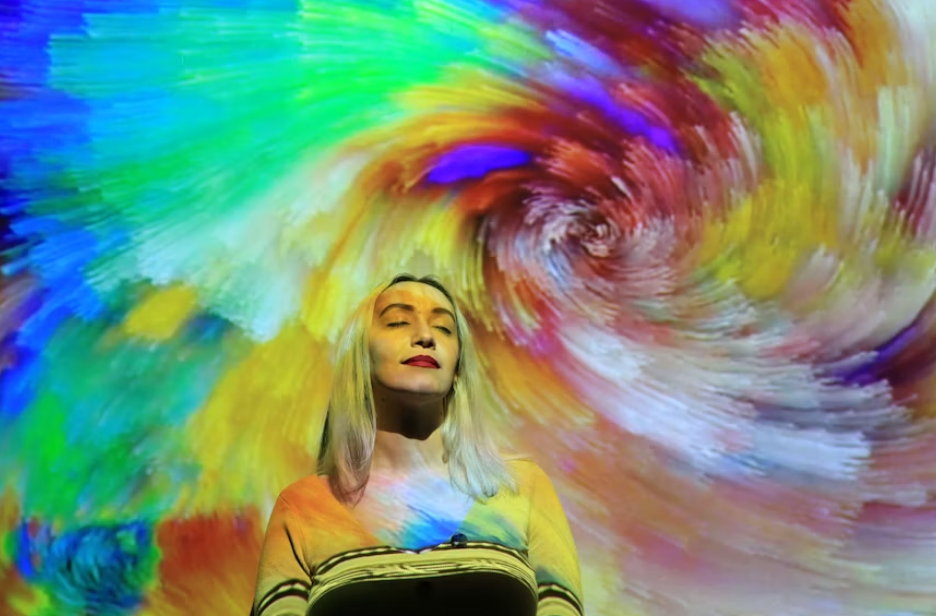
Art shows us complex things and expresses what we cannot put into words or simplify. That’s why Guernica, The Persistence of Memory, or Klint’s paintings are so impactful. They let us interpret them without telling us exactly what to think.
In this way, intuition is not only part of the creative process. It is also part of how we experience art as viewers—we mostly feel it. And it resonates with us, even if we cannot explain why.
Perhaps this feeling is the thread that links artists across generations. Artists often find themselves drawn toward the unknown, listening for signals that logic cannot explain. Sometimes creation begins with what is understood. Sometimes it begins with what is simply sensed.
Final Thoughts
Intuition is a skill you can develop. Try an incubation walk: step away from the screen and let your mind drift. Notice split‑second impulses before analysis overrides them, and adopt a reflective practice—journaling, sketching, or short mindful breaks—to observe your internal signals.