Laminate flooring consistently ranks among the most popular choices for residential interiors, and it is not difficult to understand why. It delivers the visual appeal of natural materials at a fraction of the cost, requires minimal maintenance and is robust enough to handle the demands of a busy household. For homeowners researching their options, flooring retailers like Allfloors Glasgow provide a wide selection of laminate products across different styles, thicknesses and performance grades to suit every room and every budget.
What Laminate Flooring Is Made Of
Understanding the construction of laminate flooring helps explain both its strengths and its limitations. A typical laminate board consists of four layers bonded together under high pressure. The base layer provides structural stability and moisture resistance from below. The core layer, typically made from high-density fibreboard, gives the board its rigidity and dimensional stability. The decorative layer is a photographic image that replicates the appearance of wood, stone or tile. The wear layer is a transparent, highly durable coating that protects the decorative layer from scratching, staining and fading. The quality of each layer determines the overall performance and longevity of the product.
Choosing the Right Thickness
Laminate flooring is available in thicknesses typically ranging from six to twelve millimetres, and the thickness you choose affects both the feel of the floor underfoot and its acoustic properties. Thinner boards feel less substantial and transmit more sound, which can be noticeable in upstairs rooms or apartment settings. Boards of eight millimetres and above offer a more solid feel and work better in conjunction with underfloor heating. Twelve millimetre boards provide the best performance in terms of stability, sound absorption and durability, making them the preferred choice for high-traffic areas and family living spaces.
Colour and Design: Getting the Tone Right
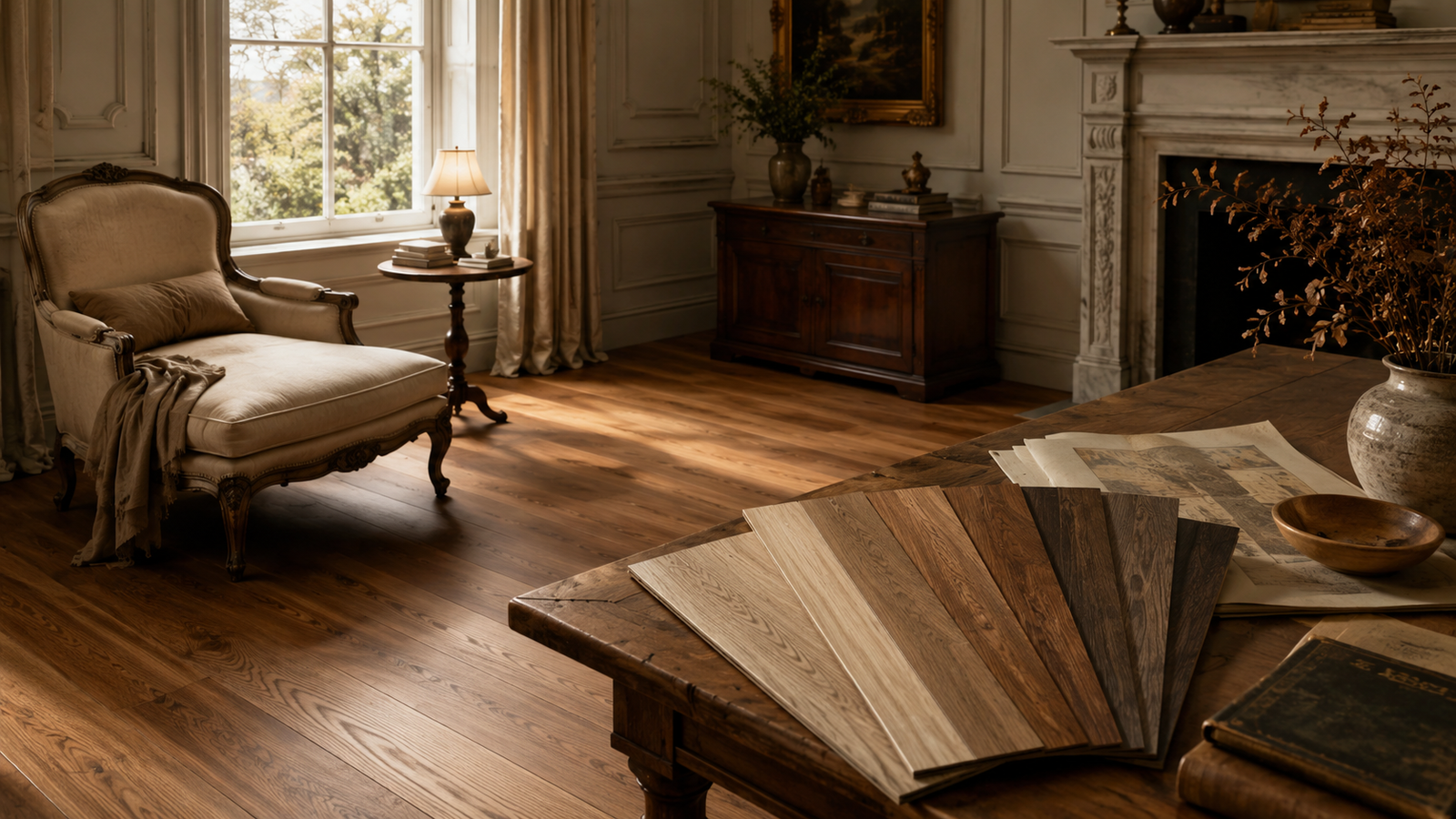
The design options available in laminate flooring have expanded significantly, with manufacturers offering realistic replications of oak, walnut, ash, pine and various stone and tile effects. Lighter-toned floors tend to make rooms feel more spacious and are particularly effective in smaller or north-facing rooms that receive less natural light. Darker tones create a more grounded, formal feel and work well in larger rooms or open-plan spaces where warmth and definition are the priority. Grey-toned designs have become a dominant trend in contemporary interiors and pair well with white and neutral wall colours that are popular in new builds and renovated properties.
Underfloor Heating and Laminate Flooring
Not all laminate flooring products are compatible with underfloor heating systems, and it is important to check the manufacturer specifications before purchasing if you have or intend to install underfloor heating. Boards that are too thick can act as an insulator and reduce the efficiency of the heating system. Products designed for use with underfloor heating are typically specified with a maximum thermal resistance value. Water-based underfloor heating systems should be run at temperatures compatible with the floor manufacturer’s recommendations to prevent excessive expansion and contraction of the boards during seasonal temperature changes.

Common Mistakes to Avoid
One of the most common mistakes homeowners make when buying laminate flooring is underestimating the amount of material needed. Most fitting guides recommend adding ten to fifteen percent to the measured floor area to account for cutting waste, particularly in rooms with multiple angles or obstacles. Another frequent error is failing to acclimatise the boards before installation, which means leaving them in the room where they will be fitted for at least forty-eight hours to allow the material to adjust to the ambient temperature and humidity. Rushing this step can lead to expansion after installation and gaps or buckling appearing in the finished floor.
The Value of Professional Installation
While laminate flooring is widely marketed as a DIY-friendly product, professional installation produces a noticeably better result in most cases. Experienced fitters can identify and address subfloor issues before they become problems, ensure correct expansion gaps are maintained around the perimeter of the room and achieve clean, precise cuts around obstacles such as pipes, door frames and fireplaces. A professionally fitted floor also typically comes with a fitting guarantee that provides recourse if problems develop as a result of the installation method. For larger projects or rooms with complex layouts, the cost of professional fitting is almost always worthwhile.