Horror has a home in literature and movies, although it’s arguably the interactive context of video games that provides the genre with its truest and most terrifying form of expression. Jump scares are just the beginning of what gaming can deliver in pursuit of scaring audiences, with the visual language developed across a range of boundary-pushing titles over the decades representing a stellar artistic achievement.
Level Design
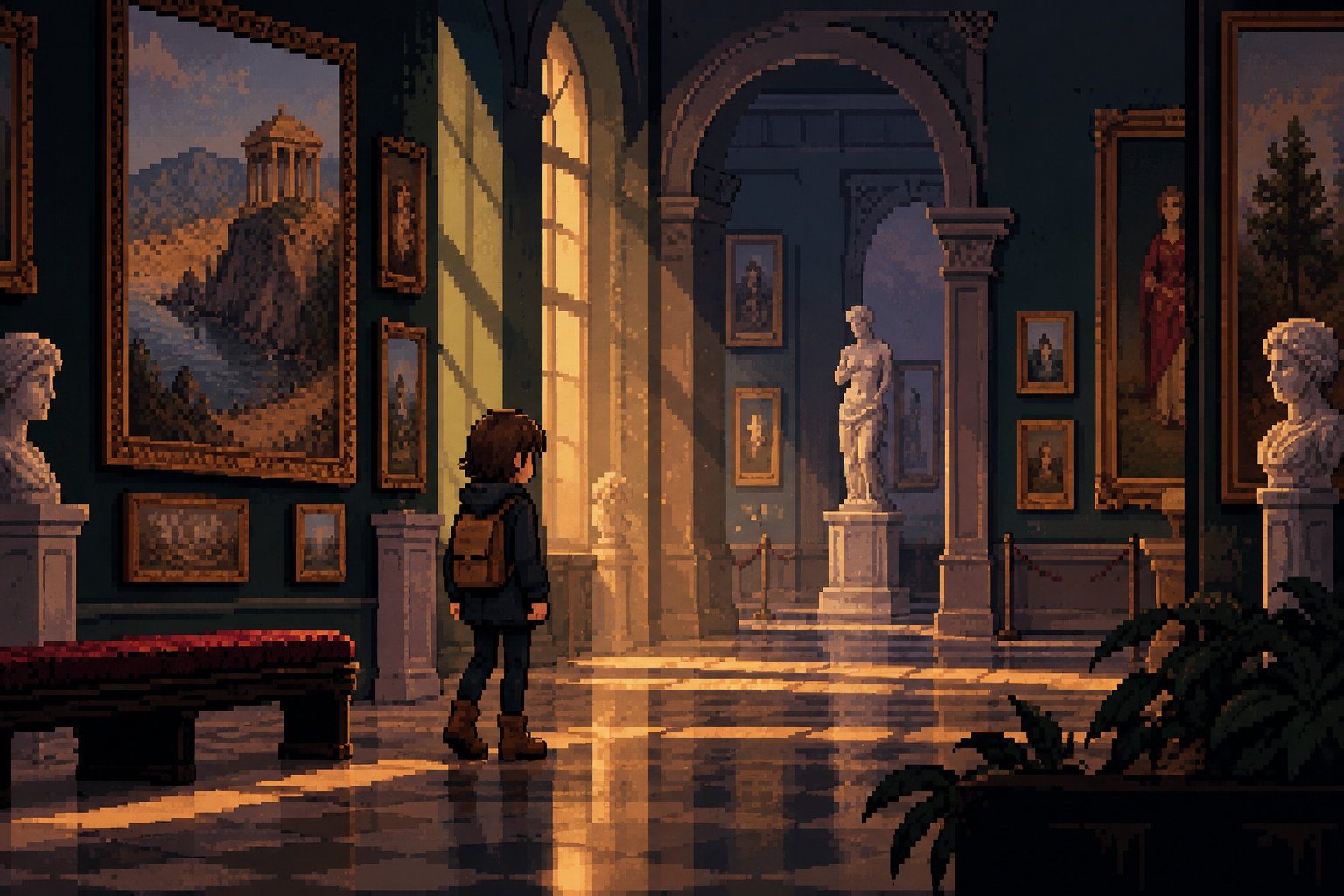
Horror games use level design in much the same way as art galleries use architecture. While the latter might mold space with a view to helping visitors encounter and experience works of art as the artist intended, the former emphasizes the impact that room layout and framing can achieve in the opposite direction; namely, spatial disorientation.
The likes of the Resident Evil and Silent Hill franchises do this especially well, with levels that funnel players down the critical path, using doorways and corridors to focus their view and give them little choice but to confront the empty spaces where something nefarious is likely lurking. Similarly, games have the benefit of being able to deliver architecture that’s impossible in real life, with the likes of Exit 8 creating liminal spaces that wrap around one another and can be explored like living M. C. Escher paintings, showcasing the power of level design and architecture to amplify the uncanny.
Aesthetics
Horror games as haunted galleries are not always metaphorical, nor confined to a single genre. For instance, if you play Big Bass Halloween slot, the symbols and sound effects are dripping with horror iconography, referencing other popular works and tropes within the genre. Similarly, a game like Layers of Fear takes this to its logical conclusion, literally letting the player take control of a painter who’s going insane within a mansion filled with artworks that hint at his troubled past.
Often, the visual language of horror and its aesthetics are part of the storytelling, as opposed to just being there for cheap scares. So in genre-defining games like PT, where a small-scale map is crammed with points of interest, the point of each aesthetic touch and object within the world of the game is to both encourage interaction and impart some small part of the wider narrative.

Modernism
Gothic horror is undeniably overrepresented in video games, as it is in other media formats. However, gaming is a large enough industry with a varied enough audience for a broader range of artistic styles and interpretations to exist within it.
The aforementioned Exit 8 is a good example of this, and there’s even the existential horror and modernism tied up in the satire of The Stanley Parable. The cosmic horror of Bloodborne, coming late in the game as it does, is another example of how gaming’s status as a place to find haunted galleries in various forms should be celebrated for its flexibility. Catering to casual players and hardcore gamers alike, the genre is thriving year by year, and its artistic credentials speak to its value beyond gaming.