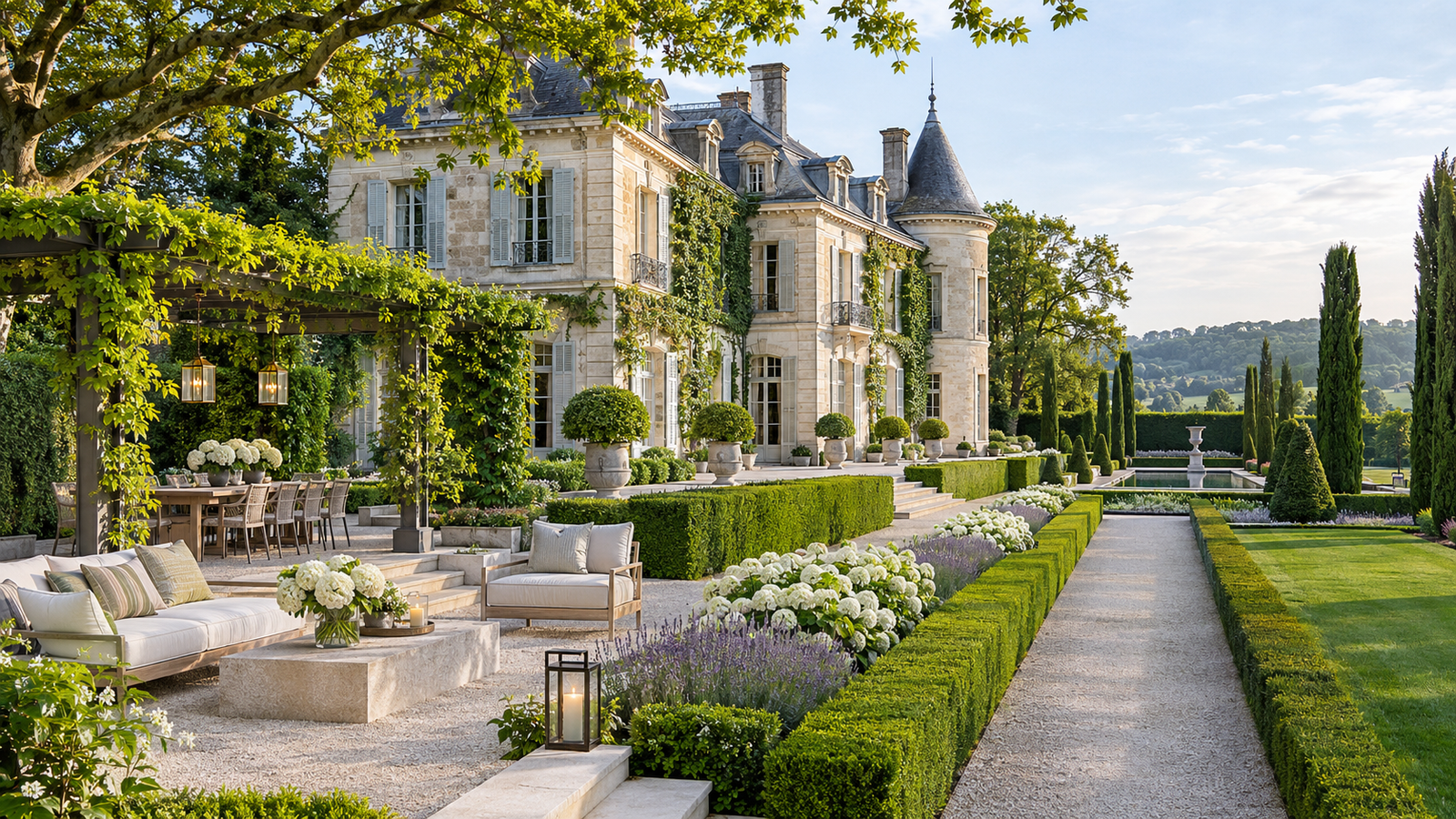
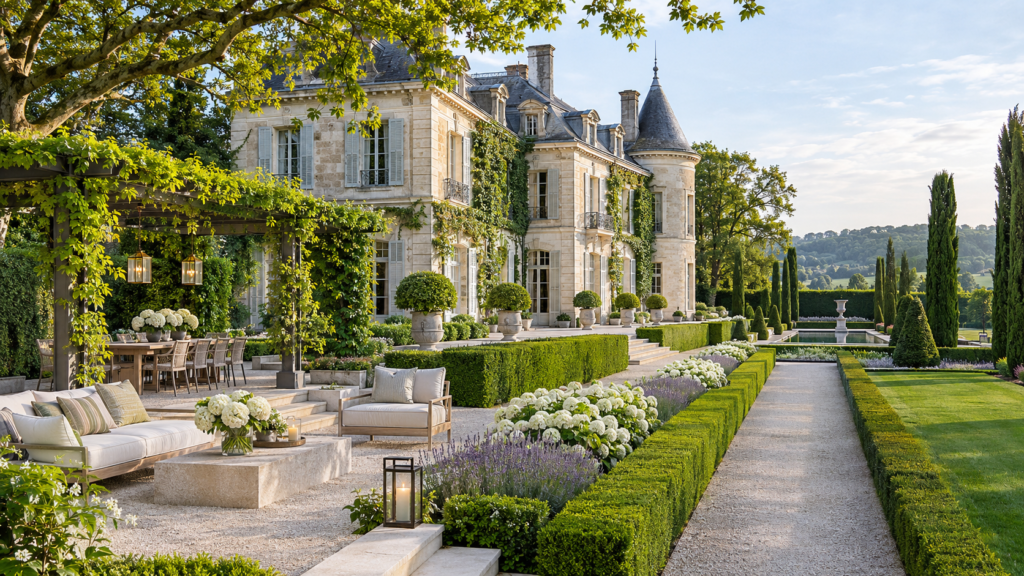
Minimalist landscape architecture increasingly relies on low-profile linear vessels to divide patios and walkways while preserving clean, open sightlines.
Walking onto an open courtyard, rooftop, or wide patio often leaves you wondering where one zone ends and another begins. Traditional opaque fences solve that problem by chopping your view into cramped boxes, ruining the airy feel you wanted.
You can guide movement and separate seating areas without solid walls. By treating narrow rows of greenery as architectural lines, you turn an empty expanse into a welcoming, structured living space.
https://www.pexels.com/photo/serene-green-hedge-pathway-at-urban-park-36713694/
Why Does Linear Geometry Keep Open Courtyards Calm?
Wide outdoor terraces feel chaotic when furniture floats across open paving without clear boundaries. Straight rows of greenery anchor your seating and dining zones so every square foot serves a purpose. Clean edges draw the eye smoothly from the back door to the far corner of your yard, making compact patios feel deeper.
Urban designers use this same principle to bring order to public spaces. Design publication Landezine highlights how linear green corridors like the Forêt Linéaire in Paris use continuous planted paths to connect distinct urban neighborhoods while maintaining open pedestrian trails.
How Do You Guide Foot Traffic Without Blocking Views?
Guests naturally follow clear visual cues when walking from an entry gate toward a lounge or outdoor kitchen. Placing long rectangular planters along the edge of a stone path creates an unmistakable border that keeps foot traffic off delicate paving joints and turf. Because the vessels sit low to the ground, seated guests still enjoy an unobstructed view across the courtyard.
You can use narrow planted borders to buffer an outdoor dining table from a poolside walkway. A continuous green edge defines the dining perimeter while letting breezes and conversation flow freely.
When Should You Layer Low Borders With Tall Botanical Screens?
Relying on 1 height across an entire patio can leave your seating area exposed to neighboring windows or street noise. Architectural magazine The Architect’s Diary notes that linear planting arrangements separate dining, lounge, and gathering zones cleanly without blocking natural light or open visibility. Mixing 2 vessel heights protects your privacy where needed while keeping central sightlines open.
Low-Profile Vessels for Open Sightlines
Choose vessels between 16 and 24 inches tall to outline walkways, frame fire pits, or edge a rooftop deck. Filling these low troughs with creeping thyme, dwarf grasses, or compact boxwood keeps mature foliage below eye level.
Screen-Height Dividers for Targeted Privacy
Step up to 30-to-36-inch-tall troughs along property lines or hot tub corners where you want a visual shield. Pairing tall vessels with upright bamboo or slender evergreens builds a living wall within a 14-inch footprint.
Choosing Plants That Hold Their Shape
Pick upright growers with tight root systems so stems stay vertical instead of flopping across narrow walkways.
Spacing Vessels to Prevent Visual Clutter
Leave 2 to 4 inches between adjacent planters, or butt them flush together, so your screen reads as 1 architectural line.
What Finishes Survive Harsh Sun and Seasonal Shifts?
Long outdoor runs expose every vessel to relentless ultraviolet rays, freeze-thaw cycles, and irrigation runoff. Cheap plastics fade and warp within 2 summers, leaving wavy edges that ruin your crisp layout. Commercial-grade materials protect both your visual alignment and your budget over 10 or more years.

- Select UV-stabilized composites: Fiberglass and fiberstone shells resist sun bleaching and surface cracking on south-facing rooftops.
- Verify internal wall bracing: Reinforced center ribs prevent long walls from bowing outward under wet soil.
- Match matte architectural finishes: Satin or matte textures hide water spots and dust better than high-gloss coatings.
- Confirm integrated drainage channels: Pre-drilled weep holes keep heavy rain from pooling around plant roots.
How Do You Keep Long Runs Aligned Across Large Patios?
Even well-built vessels look sloppy if slight grade changes create stair-steps down a long terrace. Before filling a single container with soil, snap a chalk line or stretch a mason’s string along your planned route. Checking the floor slope with a 4-foot level shows where you need hidden composite shims beneath the base.
Ordering every vessel from the same production batch prevents subtle color shifts or 0.25-inch height variations between neighboring units. Consistent dimensions let you run 6 or 8 planters end-to-end cleanly.
Turn Your Open Patio Into a Cohesive Outdoor Gallery
Viewing your vessels as architectural lines rather than simple flower pots changes how you design your exterior space. Each straight edge guides footsteps, anchors furniture groupings, and frames focal points like a sculpture or water feature. You gain the clean structure of masonry walls while keeping the freedom to reconfigure your layout.
https://www.pexels.com/photo/plants-growing-in-pots-outdoors-14771840/
Great outdoor rooms do not require heavy fences or permanent concrete partitions to feel complete. By pairing low linear borders with selective taller screens, you shape intuitive walkways and peaceful gathering zones that stay bright and connected. Start with 1 clean line along your busiest patio edge, and watch your open-air space come together.