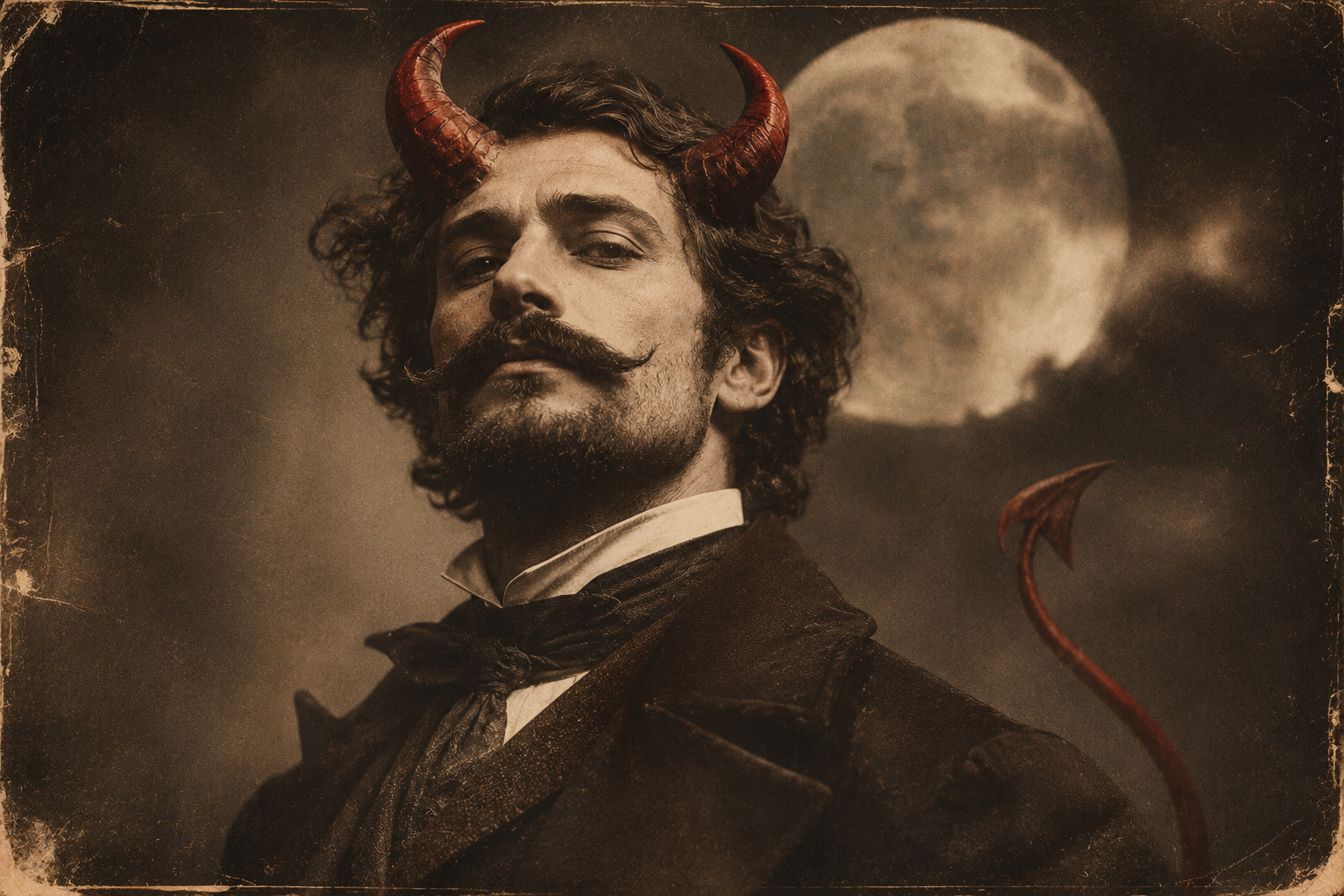
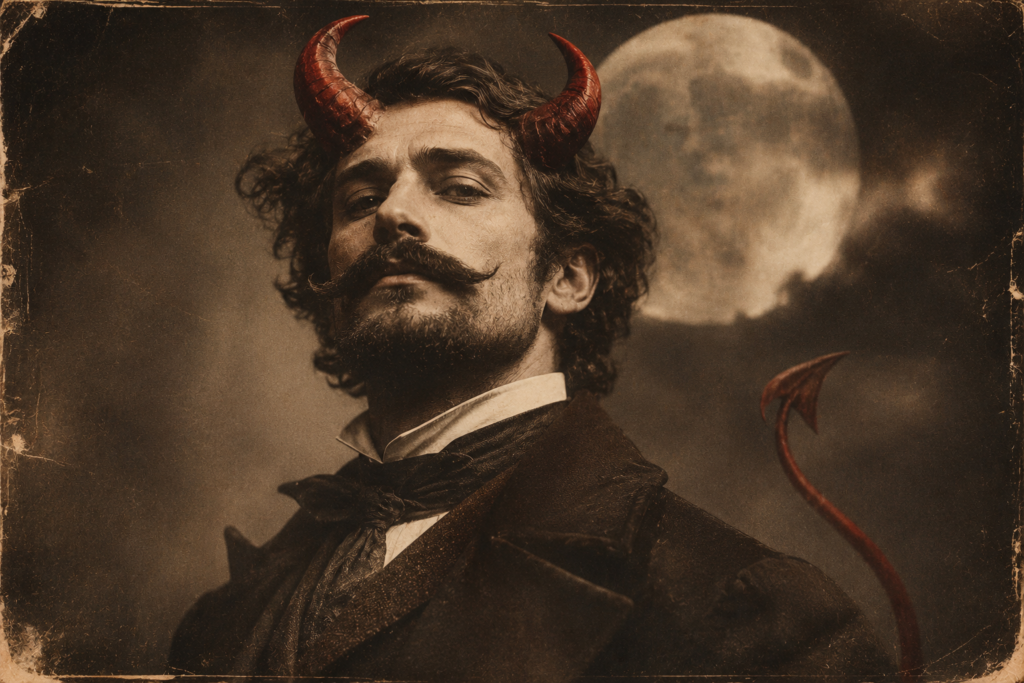
Leah, a graphic design student in Dundee, had a problem every October. Her flatmates insisted on a Halloween party, and every year they asked her to make the invitations. Every year she ran out of time. Last autumn, with a deadline essay looming and the party six days away, she took a selfie of each flatmate, gave them all a pair of wicked little horns and sent the invitations out before dinner. Her flatmate Callum said he’d never looked more like himself. Nobody was entirely sure whether that was a compliment.
Why Devil Horns Never Go Out of Fashion
There’s something irresistible about a pair of horns. They’re cheeky rather than frightening, instantly recognisable and they suit almost any face, from a grumpy grandad to a smug cat. Devil horns have been a staple of fancy dress for generations, and in the age of social media they’ve simply moved from plastic headbands to photo edits.
Part of the appeal is the contrast. A sweet, smiling portrait with a small pair of red horns tells a joke without a single word. That’s why the effect turns up everywhere, from Halloween posts and party invitations to reaction memes in office group chats.
How the Edit Works
Adding horns used to mean an evening in a heavy editing program, carefully cutting out a horn shape, rotating it, shading it and praying it didn’t look like a sticker. Online tools have made it far simpler. CapCut’s tool to add devil horns to photo portraits is one option, and its page describes a playful fantasy edit built around a portrait or selfie. The suggested process is straightforward: start with a clean source image, align the horns to the head using the face and hairline as guides, preview the result, match the light and colour, then export the version that fits the project.
For Leah, the step that made the biggest difference was matching the light. Her first attempt on Callum’s photo looked oddly flat, because the horns were lit from the left and his face from the right. Once the shadows matched, the whole thing suddenly looked believable, or at least as believable as horns on a third-year engineering student ever could.
Choosing the Right Photo
Not every photo makes a good base. CapCut notes that front-facing portraits with visible hair and forehead make placement easier to judge. A photo taken in profile, or one where a beanie hat covers half the head, leaves the horns nowhere sensible to sit. Good, even lighting helps too. A selfie taken under a single harsh kitchen bulb tends to produce deep shadows that make any added element look out of place.
It’s worth picking two or three candidates and testing each one quickly. Sometimes the photo that seems best at first glance turns out to be the hardest to edit, while a slightly less flattering shot sits the horns perfectly.
Getting Size and Style Right
Horns come in more shapes than most people realise. CapCut’s page mentions trying curved, short or oversized styles and comparing them on a copy of the original. Small, neat horns tend to look mischievous and charming, while huge curling ones lean towards dramatic fantasy art. Neither is wrong. It depends entirely on the mood.
The page also advises working from a duplicate and comparing several sizes before settling. That’s sensible advice. Horns that look subtle on a phone screen can seem enormous once printed on an invitation, and the reverse is often true too.
Angle and Shadow
The detail that separates a convincing edit from a clumsy one is usually the angle. Heads tilt, and horns need to tilt with them. CapCut suggests checking position, scale, lighting and angle before sharing. A slight shadow where the horn meets the hair makes a surprising difference, grounding it on the head rather than leaving it floating just above.
Popular Uses for Horned Portraits
Halloween is the obvious one. CapCut lists Halloween selfies for costumes, invitations and seasonal posts among its uses, and that’s exactly where most people start. Small businesses join in too. A bakery might post a horned photo of its head baker next to a tray of “devilishly good” chocolate brownies, and a gym might share a cheeky horned portrait of its toughest trainer before a gruelling class.

Memes are another big use. The page mentions meme edits that add punch to a reaction image, and anyone who has spent time in a group chat knows how quickly a well-timed horned photo of a friend can liven things up. There’s also a creative side. CapCut mentions character concepts, such as testing a demon or fantasy idea, which suits illustrators, tabletop gamers and writers trying to picture a character before committing to a full drawing.
A Word on Good Manners
Playful edits are only fun when everyone’s in on the joke. Adding horns to a friend’s photo for a private group chat is one thing. Posting it publicly without asking can feel rather different, especially for people who are shy about their image. Leah asked each flatmate before using their selfie on the invitations, and one of them requested larger horns. Asking first rarely spoils the surprise and often improves the result.
The same goes for photos of strangers or public figures. Turning someone else’s image into a joke without permission can easily cross a line, however harmless it seems. Keeping edits to friends, family and willing volunteers keeps the fun light.
Small Habits for Better Results
A few simple habits help every edit. Keeping the original photo safe means there’s always a clean version to return to. CapCut also recommends reviewing the original and edited versions side by side before saving, which is the quickest way to spot horns that are slightly too big, oddly coloured or wrongly angled. Looking at the image on both a phone and a larger screen helps too, since edits can look quite different at different sizes.
Final Thoughts
Adding devil horns to a photo is one of the simplest ways to make a portrait playful, whether for a Halloween invitation, a cheeky meme or an early character sketch. A clear, front-facing photo, careful attention to size and angle, matched lighting and a quick side-by-side check usually produce a convincing result. Leah’s invitations were such a hit that her flatmates now want a Christmas version. She’s suggested reindeer antlers. Callum is holding out for horns.