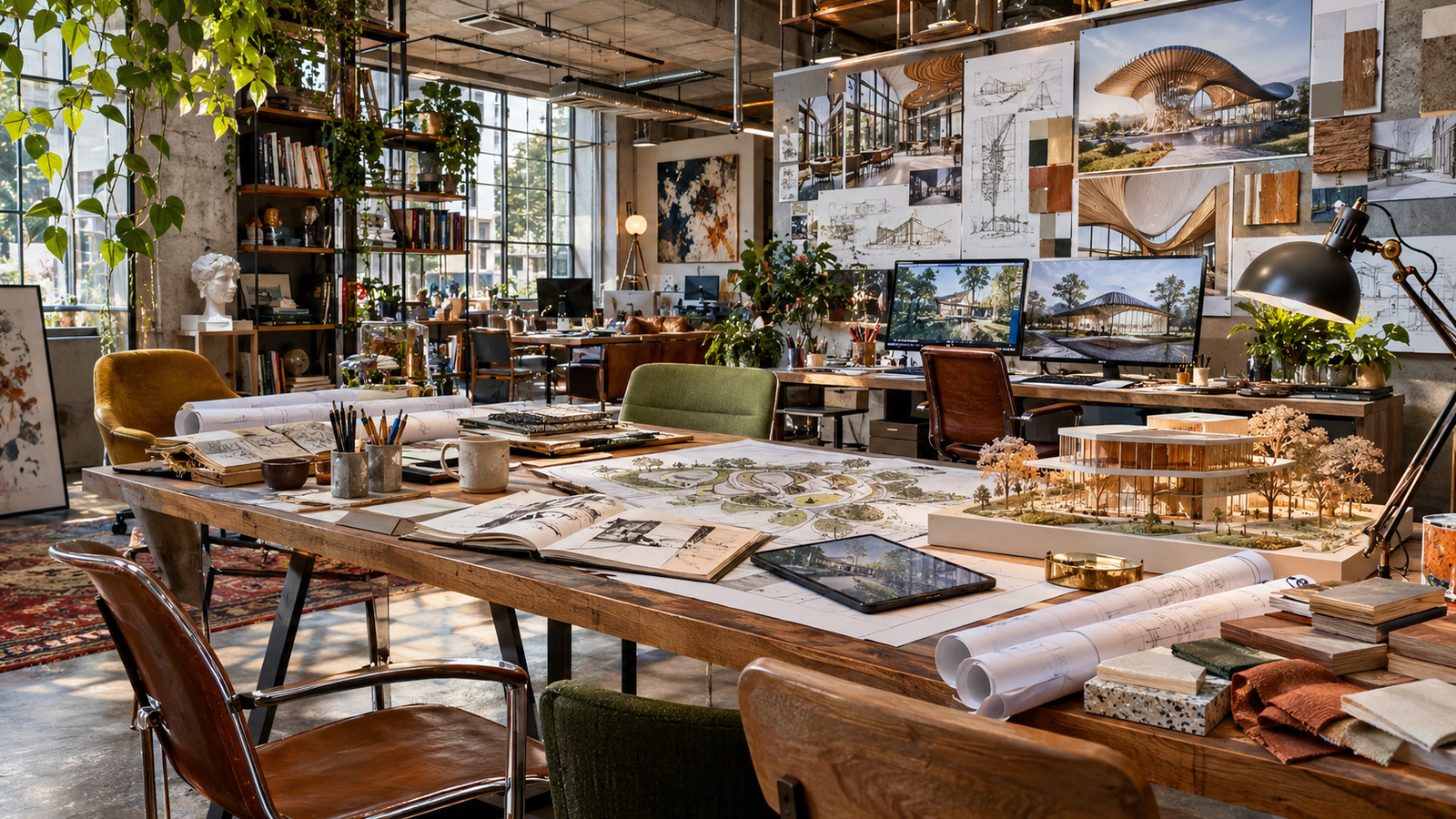
Visualizations are an essential part of architectural design. Although visualizations for architecture have changed dramatically since their inception, some of the images made for past projects have outlived the buildings they showed.
Nowadays, visualizations are created using computers. Software allows realistic visualizations using light, glass and masonry. However, despite the development in tools and techniques used, the purpose of these visualizations is the same as it was in previous years: to make people feel a place in their mind.
Artistic visualization
Giovanni Battista Piranesi’s etchings in the 18th century gave a very atmospheric interpretation of ruined Roman architecture, and of fictional prisons. The grand vaults, infinite staircases, and extreme shading in his work influenced many architects and artists. His work can still be found in collections and displays today.
Similarly, in the 20th century, Hugh Ferriss created images of skyscrapers in New York in the 1920s. Drawn in charcoal, the buildings seem to rise from darkness, giving the appearance of large set designs. Many of the buildings in these images were speculative, however they contributed to how the public perceived the future modern city.
As with Piranesi’s work, these visualizations display an understanding that visualizations for architecture should be more than simply accurate. Decisions in composition, lighting, atmosphere and emphasis contribute to telling a story.
Presentation drawings
Throughout much of the last century, presentation drawings in architecture were manually drawn. Artists would use watercolor, gouache, ink and colored pencils. Skilled artists were sought after, however the process was slow and expensive. If changes were made to the design, a new drawing would need to be created.
From the 1980s, computer software began to be used in this process. Visualizations did not look very realistic at first, appearing flat and artificial. However, improvements in rendering software allowed light to be realistically bounced around surfaces, for material to reflect/absorb light appropriately, and for the perspective of the camera to be accurately simulated.
Now visualizations can look extremely realistic. This can be very beneficial for clients/investors/planning authorities. However for those looking at art in architectural visualizations, it is interesting to consider where the skill lies.
The human choices
Although there is an element of automation, many decisions are still made by people. Where the camera is placed, the time of day, the feeling of the weather and what elements to focus on will all be decided by the artist. Depending on these choices, the visualization can appear very welcoming, or very daunting. The image could appear very calm, or very lively.
Look through any studio’s 3D visualization portfolio and you will see how heavily photography and painting influence this work. Interior spaces often use the same lighting techniques as still-life paintings, with soft natural light illuminating surfaces such as tables and sofas. Exterior scenes often have the same influence from landscapes, with buildings set in a scene containing trees, bodies of water and skies. In evening scenes, warm lighting from interiors contrasts with cool blues in the sky, just as it has in painting for centuries.

Between document and art
It is an unusual position for architectural visualization to be in. Although it is a form of commercial design (to sell properties, win competitions and gain approval), the best visualizations have many characteristics commonly associated with art. They have a specific perspective, carefully composed scenes, and evoke a feeling in the viewer.
Some practices/artists take this even further and create visualizations that focus on evoking certain feelings in the viewer, over precise accuracy. Alternatively, some artists focus on making highly accurate visualizations to provide a guarantee of what will be built. Both approaches follow from a long tradition of architectural visualization, from Piranesi’s ruined structures to Ferriss’ glowing buildings.
Technology will continue to develop in architectural visualizations. However, the need to give people a vision of a place in their minds that they care about will remain consistent. Whether using an etching tool, charcoal or rendering software, creating imaginative visualizations is an extremely interesting crossover between architecture and art.