High-brightness modular video panels and custom stage rigging are helping concert producers and visual artists build immersive live environments indoors and out. Pair crisp visual storytelling with rock-solid stage engineering to hold your audience’s attention from the first note.
Live concerts and music festivals now ask far more from stage design than a row of spotlights and a backdrop banner. You want your stage visuals to feel alive, match the energy of every song, and stay sharp whether your crowd stands inside a dark arena or under a bright afternoon sun.
Modular LED video walls give you a flexible canvas that turns technical hardware into shared visual art. When you combine smart cabinet layouts, bright display specs, and careful rigging, you can shape how fans experience every moment of the show.
How Does Full-Service Engineering Keep Shows Running Smoothly?
Even the sharpest LED wall means little if a power circuit trips mid-chorus or a video processor drops signal during an encore. Full-service production engineering ties structural rigging, clean power distribution, redundant signal paths, and trained operators into one reliable workflow.
When you plan technical specs and regional gear logistics for live shows in western Canada, coordinating local delivery and on-site support early saves major headaches before load-in day. Working with a specialist team on renting an LED screen for a concert helps you match cabinet specs to your venue. It also keeps timelines steady across multi-stop routes.
Coordinating On-Site Crew and Show Cues
Experienced technicians map out spare modules, test signal routing before doors open, and stay ready during the set to handle live switching. You get to focus on pacing, artist cues, and crowd energy while your technical crew handles the nuts and bolts behind the scenes.
Pre-Show Readiness Checklist
- Run full signal tests: Check every processor feed, backup line, and media server cue during rehearsal.
- Confirm power redundancy: Split circuits cleanly so one tripped breaker never blanks the whole stage.
- Stage spare tiles: Keep extra matched LED modules and power supplies backstage for rapid swaps.
How Do Modular LED Cabinets Shape Custom Stages?
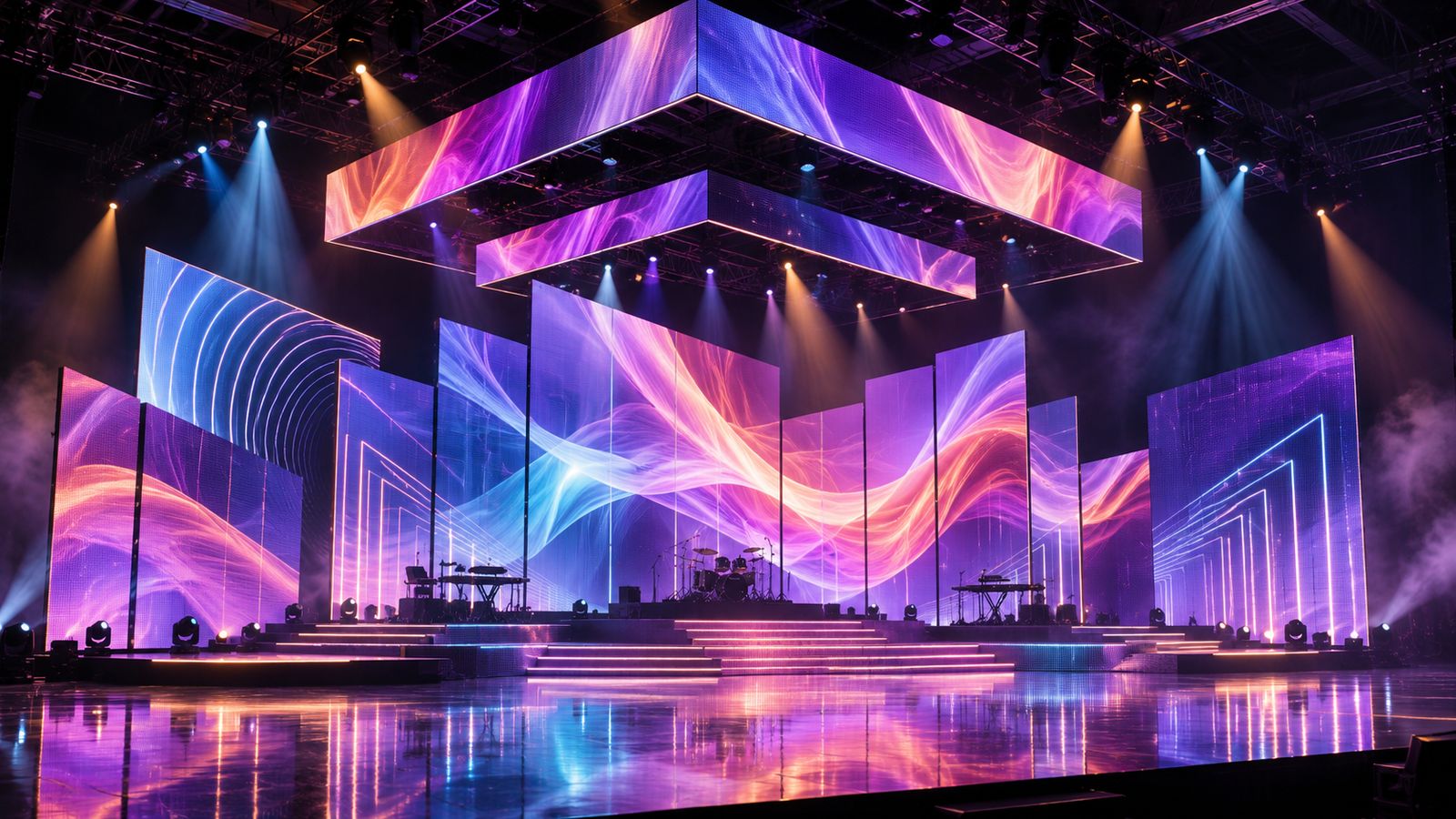
Standard rectangular screens can feel stiff when you design a stage around live musicians and shifting setlists. Modular LED cabinets snap together like precision building blocks, so you can build wide panoramic walls, curved wings, or floating overhead shapes that fit your exact sightlines.
Matrix Visual highlights how versatile display walls let you blend live camera feeds, pre-rendered graphics, and interactive cues to match a performer’s creative direction. Instead of forcing every act onto the same flat box, you can adjust screen geometry between headliners or scale the rig up and down for different rooms.
Shaping Canvases With Curves and Hanging Arrays
Curved stage wings wrap side visuals gently toward the outer sections of a room, giving fans on the edges a clearer view of the action. You can also suspend modular panels from overhead trusses to frame the band without blocking stage lighting or sightlines.
XOBLED notes that suspending a large circular display above center stage creates a natural focal point that pulls eyes from across a stadium toward the artist. Hanging shapes also open up floor space behind the performers for risers, amplifiers, or dramatic pyrotechnics.
Quick Checks Before Locking Cabinet Shapes
- Check sightline angles: Walk the side seating blocks and back rows to confirm that curves or suspended panels don’t block sightlines.
- Verify load limits: Confirm that venue rigging points handle the combined weight of cabinets, frames, and cables with a safety margin.
- Plan backstage access: Leave enough clearance behind modular walls for crew technicians, power runs, and quick swap-outs.
What Technical Specs Keep Live Visuals Crisp?
Great stage art falls flat if fans squint through glare or see blocky pixels up close. Picking the right display specs starts with matching screen resolution to how close your audience sits and how bright the venue gets.

Pixel pitch measures the distance between LED clusters, and tighter spacing gives sharper detail when fans stand near the barricade. Brightness ratings, measured in nits, tell you whether your screen punches through ambient light or washes out during outdoor daytime sets.
Balancing Pixel Pitch and Viewing Distance
Tight pixel pitch shines on indoor club stages, press risers, and camera-heavy broadcasts where viewers sit close to the wall. Wider pitch often works better on large outdoor festival fields where most fans watch from dozens of yards back, and budget goes further across a bigger footprint.
Planning Outdoor Brightness and Weather Protection
Open-air concerts bring shifting clouds, harsh glare, and sudden rain or wind across the stage deck. High-nit panels keep colors vivid when sunlight hits the screen directly, while weather-sealed cabinets and covered power distribution protect your investment when skies turn gray.
When you bring modular LED panels, thoughtful display specs, and hands-on stage engineering together, your concert visuals stop feeling like a backdrop and start feeling part of the music. You give every crowd member a vivid, cohesive show while keeping your crew confident from load-in to final bow.