Some figures become famous because they perform loudly. Others become recognizable because an image keeps returning to them.
Luba Shumeyko belongs to the second category. Her presence in contemporary nude photography is not built around theatrical excess, scandal, or the obvious machinery of celebrity. It is built around something quieter and more persistent: the body as form, the face as memory, the pose as signature, the image as a circulating object that refuses to disappear.
Known widely through her long collaboration with Norwegian photographer Petter Hegre, Shumeyko has occupied a peculiar place in internet visual culture. She is often introduced as muse, model, wife, yoga practitioner, photographer, or erotic icon, depending on who is doing the looking and what kind of looking they are trying to justify. But none of those labels are quite enough. Her image became recognizable because it sits at the meeting point of several visual languages at once: nude photography, yoga, soft eroticism, bodily discipline, studio minimalism, and the digital archive.
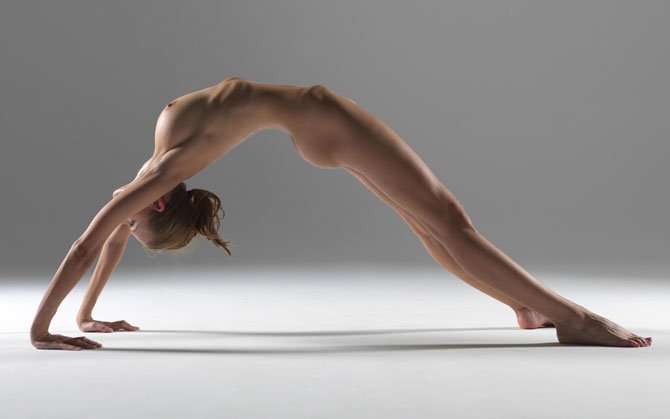
That combination matters. Shumeyko’s visual afterlife is not simply the result of nudity. The internet has never lacked nude images. What makes her presence more durable is the way her body often appears not merely exposed, but arranged: controlled, extended, balanced, concentrated, almost architectural. In those images, the nude is not only a subject. It becomes a structure.
This is why Shumeyko deserves a more careful reading. Not as a cheap search term, not as a footnote to Hegre, and not as another example of online erotic spectacle, but as one of the most recognizable figures in the language of soft nude photography.
1. The Model as Image, Not Decoration
One of the laziest ways to discuss nude photography is to treat the model as a decorative object and the photographer as the only author of the image. The camera matters, of course. So do light, framing, staging, and the visual intelligence of the person behind the lens. But a photograph of the body is never made by the photographer alone.
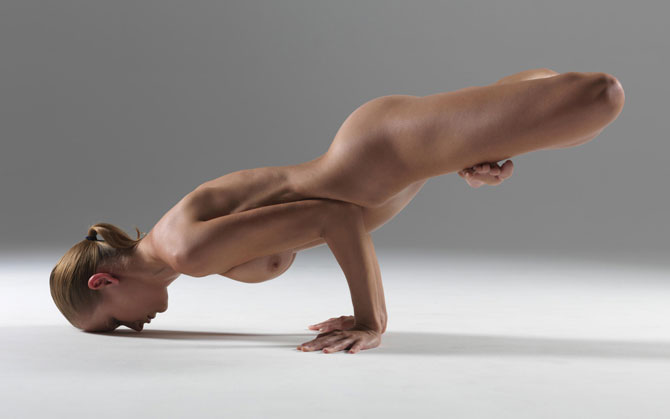
The model does not simply “appear” in the image. She produces it physically. She understands posture, tension, balance, expression, exposure, stillness, and the emotional temperature of the pose. In Shumeyko’s case, this becomes especially important because many of her most recognizable images are not passive portraits. They are images of bodily control.
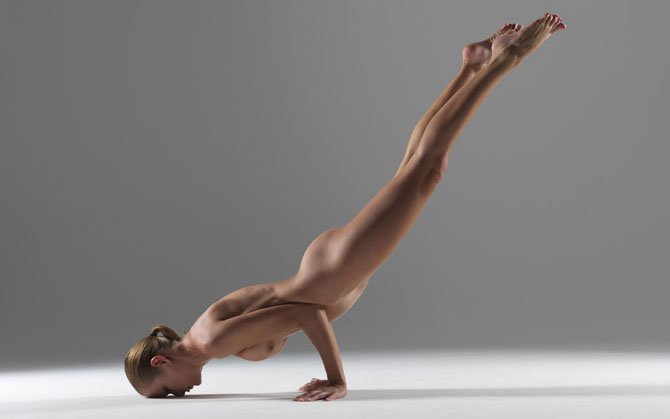
Her presence depends on the ability to hold form. A limb extends, the torso bends, the spine curves, the weight shifts, and suddenly the body is doing more than occupying the frame. It is organizing it. This is the point at which the model stops being merely the subject of the photograph and becomes one of its structural forces.
That is what gives Shumeyko’s images their strange authority. She is visible, but not visually weak. Exposed, but not surrendered. The body is open to the camera, yet the pose insists on concentration. It refuses the pure passivity that so often haunts the history of the nude.
2. Petter Hegre and the Clean Erotic Frame
Petter Hegre’s photography is often described through its clarity: minimal staging, controlled light, clean composition, and a strong emphasis on the human figure as form. His work can be provocative, certainly, but its visual power frequently depends less on theatrical shock than on restraint. The eroticism is usually direct, but the image itself is often polished, still, and almost severe.
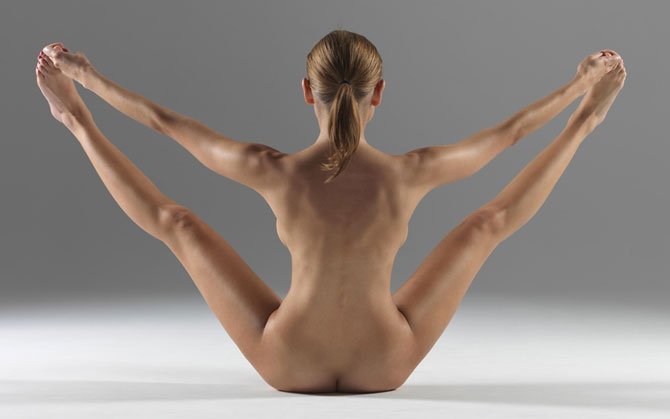
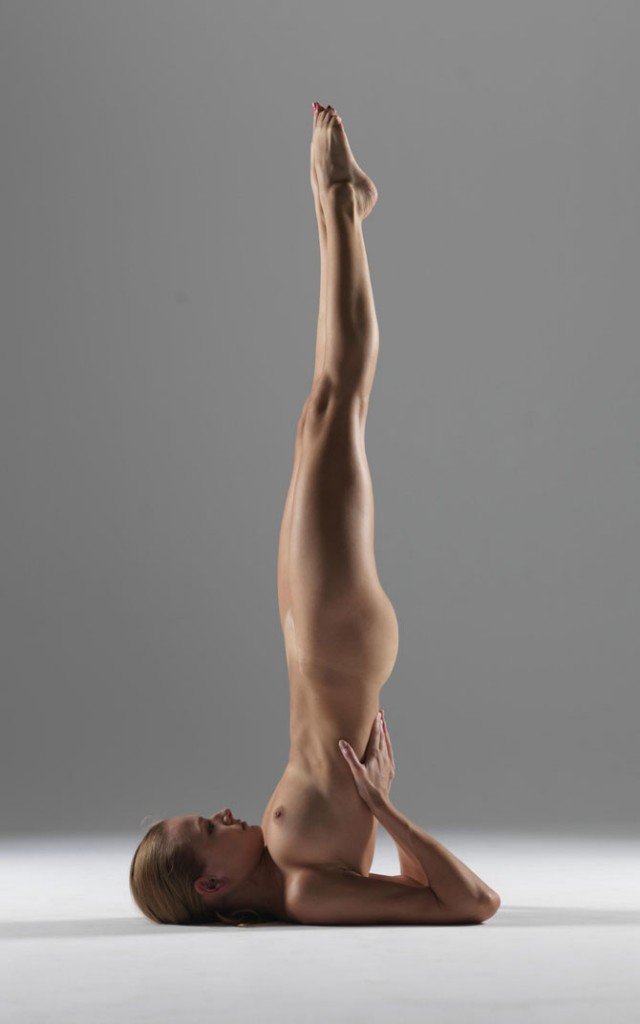
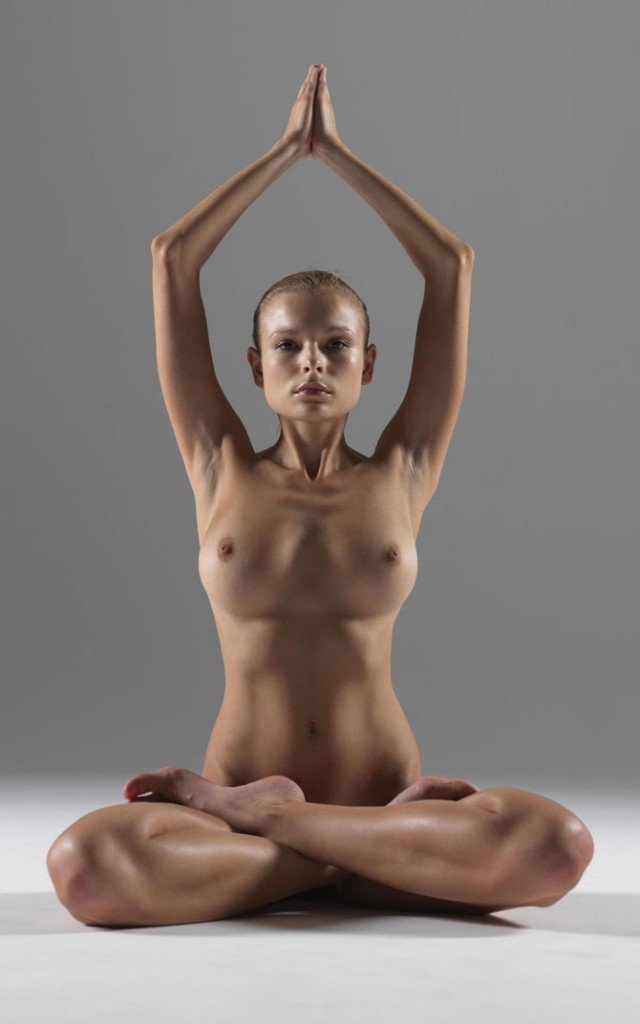
That severity is important when discussing Shumeyko. In the better-known images from their collaboration, especially the yoga series, the frame is stripped of unnecessary distraction. There is no elaborate narrative. No heavy symbolic clutter. No attempt to hide the body inside costume or décor. The image reduces itself to a small set of essentials: body, light, pose, surface, camera.
This reduction gives Shumeyko’s presence unusual force. She is not lost inside the photograph’s atmosphere. She becomes the atmosphere. The body’s alignment, flexibility, and physical intelligence become the central visual event. The photograph does not merely present her as beautiful; it presents beauty as something constructed through effort.
That is why our earlier Art-Sheep feature, Petter Hegre Photographs Luba Shumeyko in Striking Naked Yoga Poses, remains central to this conversation. The series works because it makes the nude body feel active rather than inert. Shumeyko is not simply looked at. She is holding the image together.
3. The Soft Power of the Nude Body
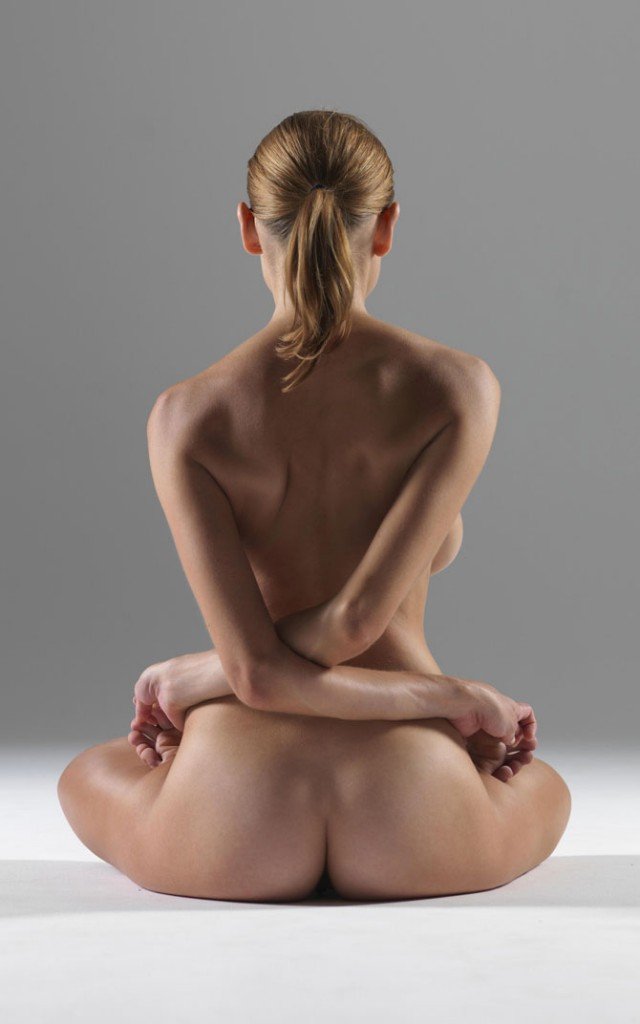
The phrase “soft nude photography” can sound almost too gentle for the subject it describes. But softness here should not be confused with weakness. In Shumeyko’s case, softness is a kind of power: the refusal to rely on obvious aggression, the ability to hold the viewer’s attention through atmosphere, balance, and restraint rather than spectacle alone.
That kind of image does not shout. It lingers.
There is a difference between an image that demands immediate consumption and one that produces a slower, more complicated act of looking. Shumeyko’s most effective photographs belong to the second category. They can be read as erotic, but they are not exhausted by that reading. They also function as studies of posture, discipline, line, surface, and visual control.
This is why her image became so durable online. The internet is exceptionally good at reducing the body to quick desire. But certain images resist total flattening. They return because they contain more than one kind of appeal. Shumeyko’s photographs are sensual, but also graphic. Intimate, but also composed. Exposed, but also controlled.
The body is not presented as chaos. It is presented as order. And in a culture where erotic imagery often collapses into excess, that order becomes strangely memorable.
4. Yoga, Stillness, and the Body as Architecture
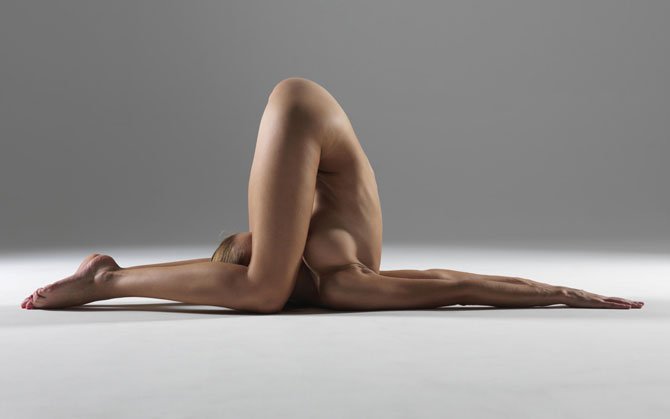
Yoga changes the meaning of the nude photograph because it gives the body a task. The body is no longer simply present. It must balance, extend, fold, support, breathe, and hold. A pose may look serene, but serenity is only the surface. Beneath it is effort, repetition, pressure, and control.
This is why Shumeyko’s yoga images remain more interesting than ordinary nude portraiture. The pose gives the viewer something to read beyond exposure. It asks us to see how the body distributes weight, how one limb supports another, how the torso becomes an axis, how the curve of the spine creates rhythm, how stillness can contain enormous physical labor.
In our supporting essay The Body as Architecture: Why Nude Yoga Photography Still Holds the Eye, we explored this idea more broadly: nude yoga photography turns the body into line, balance, and temporary structure. Shumeyko is one of the clearest examples of why that visual language works.
Her body in these photographs does not read as decorative softness alone. It reads as construction. The image asks not only, “Is this beautiful?” but also, “How is this being held?” That question changes the act of looking. It shifts the viewer from passive desire toward attention.
And attention is precisely what gives the images their lasting force.
5. The Internet Gaze and the Making of an Icon
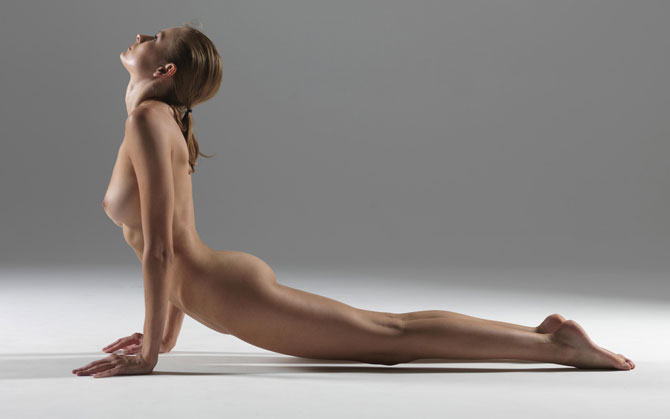
The internet does strange things to bodies. It turns people into names, names into tags, tags into search terms, search terms into archives, and archives into something that can begin to resemble mythology if one is tired enough and has spent too much time scrolling.
Shumeyko’s online presence belongs to this process. Her image has circulated for years not only as glamour, but as a recognizable visual pattern. Viewers know the elements: the clean studio space, the nude body, the controlled pose, the calm surface, the association with Hegre’s purist erotic photography, the tension between intimacy and formal distance.
This repetition can be flattening, of course. The internet is not kind to complexity. It likes categories more than people. A model becomes a keyword. A body becomes a thumbnail. A photograph becomes one more image moving through a system built to accelerate desire and forget context.
But repetition can also create recognition. Certain images become iconic not because they are endlessly explained, but because they are instantly remembered. Shumeyko’s visual identity online became unusually strong because it is simple enough to register quickly and complex enough to sustain return. The body as line. The pose as discipline. The erotic image as controlled stillness.
That is what separates her from thousands of other online nude models whose images circulated without acquiring the same cultural weight. Shumeyko became recognizable because the photographs did not merely show her. They created a visual grammar around her.
6. Muse, Collaborator, Author
The word “muse” is beautiful, but it can also be lazy. It often makes the woman sound decorative and the man sound inspired, as if one person simply radiates and the other does all the difficult work of meaning. That old arrangement is convenient, but rarely accurate.
Shumeyko is frequently discussed through her relationship with Hegre, and that relationship is undeniably central to her public image. But the more interesting reading does not stop at musehood. It asks what kind of authorship belongs to the photographed body.
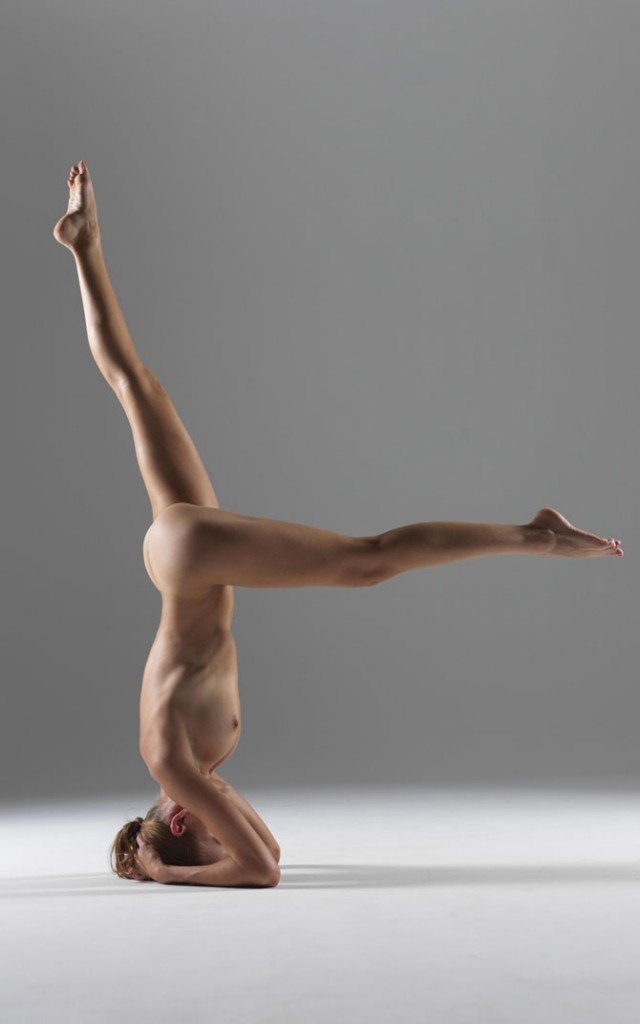
In a nude yoga image, authorship cannot belong only to the camera. The body must produce the pose. The model must understand how stillness will translate into image. She must trust the frame, but also construct the frame physically from within. The pose is not an accessory to the photograph. It is one of its engines.
This is especially important in Shumeyko’s case because the photographs often depend on her bodily discipline more than on elaborate photographic intervention. A simpler image can make the model’s contribution more visible, not less. When the room is empty and the lighting is clean, the body has nowhere to hide — and neither does the photographer.

To call Shumeyko only a muse is therefore to miss the point. She is not merely the reason the image exists. She is part of how the image is made.
7. Beauty Without the Cheapness of Excess
One of the reasons Shumeyko’s images still work is that they do not always behave like obvious erotic images, even when they are undeniably erotic. They are not crowded with fantasy. They do not rely on heavy theatrical atmosphere. They often avoid the clutter that makes sensual photography feel cheap: costume, narrative overstatement, exaggerated seduction, visual noise.
Instead, the images usually choose a cleaner grammar. Neutral space. Controlled light. Clear body line. Minimal context. The erotic charge comes not from abundance, but from reduction. That reduction gives the photographs a strange polish. They become less like scenes and more like visual statements.
This is dangerous territory, because minimalism can also become cold, clinical, even objectifying. But in Shumeyko’s best-known images, that coldness is part of the aesthetic. The viewer is not wrapped in atmosphere. The viewer is confronted with form.
That confrontation gives the images their durability. Excess ages quickly. Visual discipline lasts longer. A photograph that depends entirely on shock may lose its force once the shock has passed. A photograph organized around form can continue to attract the eye because its structure remains intact.
In this sense, Shumeyko’s soft power is not sentimental. It is formal. Her image endures because it is built with enough simplicity to survive repeated looking.
8. The Ethics of Looking at Luba Shumeyko
To write about Shumeyko is also to confront the ethics of looking. Nude photography always carries this problem. It can be artistic, exploitative, collaborative, commercial, intimate, formal, empowering, objectifying, or all of these things at once. Images rarely behave as neatly as arguments.
The task is not to pretend desire is absent. That would be dishonest and, worse, boring. The task is to avoid letting desire become the only language available. A nude image can be sensual without being intellectually empty. A model can be beautiful without being reduced to beauty. A photograph can invite looking while also requiring responsibility from the viewer.
Shumeyko’s images are useful precisely because they make this tension visible. They circulate in erotic contexts, but they also ask to be read through discipline, pose, collaboration, yoga, minimalism, and the internet’s strange habit of turning bodies into icons.
That is where criticism becomes necessary. Not to remove the erotic element, but to complicate it. To say: yes, this is an image of desire, but it is also an image of control. Yes, the body is exposed, but it is also active. Yes, the viewer looks, but the viewer should know that looking is never innocent.
The more carefully one looks, the harder it becomes to treat Shumeyko’s image as merely decorative. And perhaps that is the point.
9. Why Luba Shumeyko Still Holds the Eye
Luba Shumeyko still holds the eye because her image sits between several categories without belonging completely to any of them. She is model and collaborator, muse and maker, erotic figure and formal subject, internet icon and private person partly hidden behind the circulation of her own image.
That ambiguity gives the photographs their afterlife. They are easy to find, but not quite easy to exhaust. The first reading is obvious: beauty, nudity, desire. The second is more interesting: posture, discipline, restraint, authorship, the body’s ability to become a temporary architecture inside the frame.
In our essay Soft Nude Photography and the Strange Power of Looking Carefully, we argued that the nude photograph is never only a photograph of a body. It is also a photograph of looking. Shumeyko’s images make that especially clear. They tell us as much about the viewer as they do about the subject.
The gaze arrives expecting exposure. The better image gives it structure. That is the strange soft power of Shumeyko’s presence: she appears within a genre that is often consumed too quickly, yet her strongest images ask for slowness. They hold the frame with quiet force. They make the body visible, but not simple.
Perhaps that is why she remains one of the most recognizable faces and forms in contemporary soft nude photography. Not because the images are merely provocative. The internet has endless provocation. But because they understand something more durable: beauty is strongest when it is disciplined, and stillness is never empty when the body is doing the work of holding it.