At a weekend craft fair, a candle booth hears one objection more than any other: “I love this, but I can’t light candles where I live.” Usually it is true. The lease forbids open flames, or the shopper simply does not want to remember to blow one out before bed. The jar goes back on the table, the shopper walks away, and the sale is lost for a reason that has nothing to do with the candle.
The customer who cannot light a candle
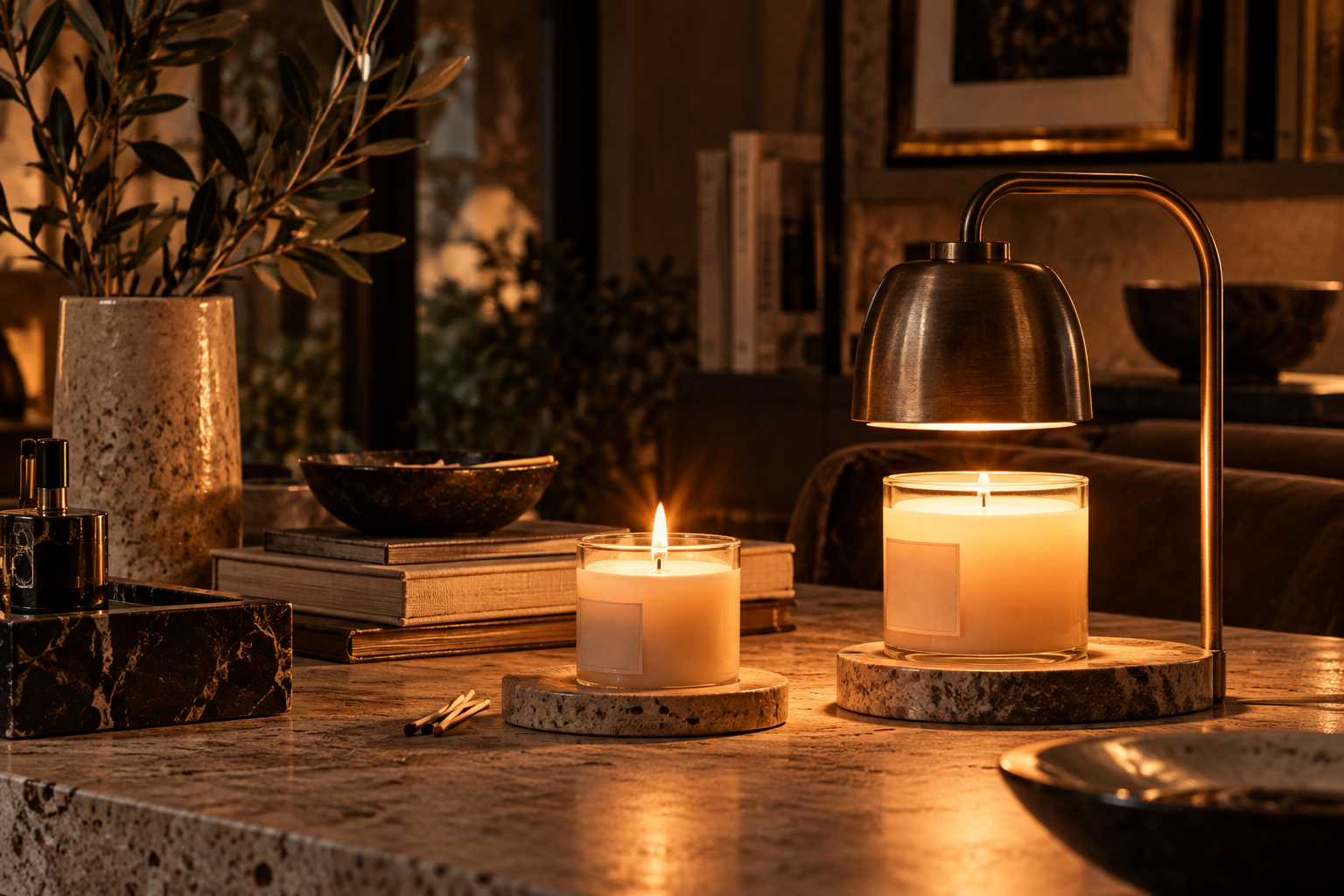
More small candle businesses now answer that objection with a warmer lamp set up beside the jars. It brings back a buyer who had already walked away, and that buyer reorders when the scent fades, not when the wax runs out. It also changes what is being sold. A candle that is never lit still has to smell right, and that is a different test from the one most makers run on their pours.
Test your own wax under a lamp
A lamp is a different heat source from a wick, and wax blends respond to it differently. A soy blend and a paraffin blend poured with the same fragrance oil can throw very differently under the same bulb, and a load tuned for hot throw on a wick can read softer under a lamp. Before buying lamps in any number, put three or four of your best sellers under a sample for a full evening each, and note what the room smells like after one hour and after four. That test tells you which candles to pair with a lamp and which to keep selling for the wick.
Measure the jars before the price
The most common mistake is a lamp that does not fit the product. Every lamp has a clearance between its base and its shade, adjustable on some models and fixed on others, and every candle line has a tallest vessel. Measure the height and width of each jar you sell, and ask any supplier for the clearance of each model in writing. A lamp that takes your eight-ounce tumbler but not your large three-wick vessel will steer customers toward your cheapest candle.
Keep bulbs on hand
Most warmer lamps run on small halogen bulbs, and a bulb eventually burns out. A customer whose lamp goes dark one evening and who cannot find the right replacement does not come back for another candle; the lamp goes into a drawer. Makers who do well with lamps keep the matching bulbs next to the wax and mention them at the register. Bulbs cost little and keep the lamp, and your wax, in use.
Show it working, if the venue allows
Ask the organizer about power first. Outdoor fairs often have none, and juried shows may limit items you did not make. Where there is an outlet, one lamp switched on, with a jar of your own wax softening under it, explains the idea faster than a sign. Choose a mild scent for the demonstration so it does not bother the next booth, and put a price card beside it that lists the lamp, a jar and a spare bulb together. Online, a short clip of the melt pool forming does the same job.

Ordering lamps
Once lamps start selling, some makers order straight from a lamp factory instead of reselling a retail product. BeginLighting, which sells candle warmer lamps wholesale to US shops, lists replacement GU10 bulbs as a separate item, so the bulbs can go on the same order as the lamps. Whoever supplies them, put your own tallest jar under each model before ordering more than a few.
Start with one model that fits your best-selling jar, keep a dozen bulbs under the table, and count how many of the people who used to walk away come back for a second scent.