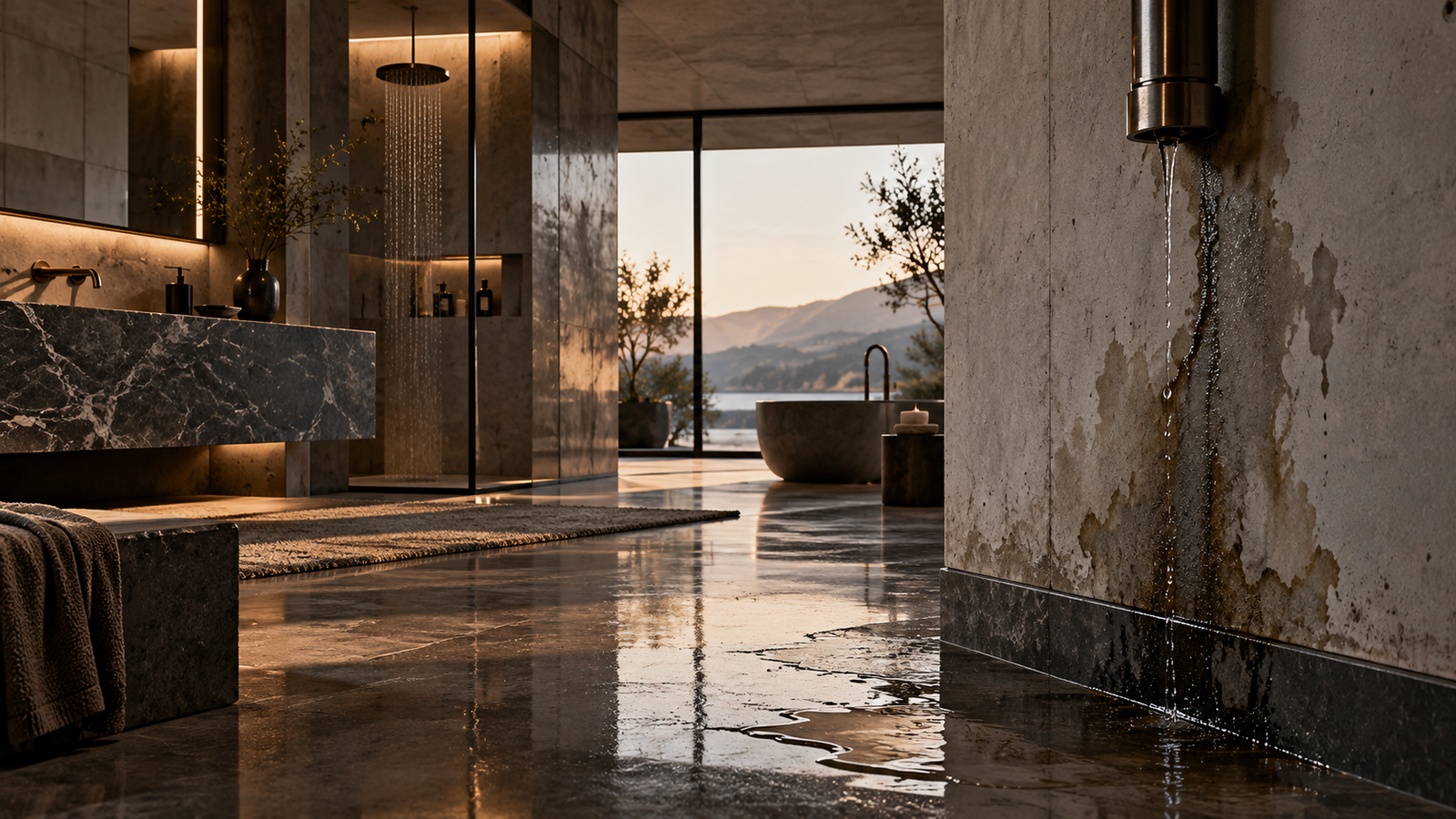
You probably notice architecture through clean lines, good light, and spaces that feel calm to live in. Then a pipe bursts, a drain backs up, or a ceiling starts dripping, and the whole mood changes fast. Plumbing emergencies don’t just damage your home’s structure. They can wreck finishes, interrupt layout plans, and turn carefully chosen design details into expensive repair projects if you don’t act quickly and smartly.
Why plumbing problems hit aesthetics and structure at the same time
When water gets loose inside your home, it rarely stays in one neat little spot. It travels behind walls, under flooring, into trim, and across ceilings. What starts as a leak under a sink can end up warping hardwood, staining plaster, and loosening tile adhesive.
You’re dealing with two problems at once: visible damage and hidden deterioration. Paint bubbles and damp patches are the obvious warning signs. The less obvious issue is what happens underneath, where moisture can weaken subfloors, swell drywall, and create conditions for mold.
From a design angle, plumbing failure can erase details you spent years building. Custom cabinetry, vintage flooring, textured wall finishes, and carefully aligned fixtures all become vulnerable. Water has no respect for your floor plan. It’s the rudest guest in the house.
What to do in the first hour after a plumbing emergency starts
Your first hour matters more than most people realize. Fast action can save materials, reduce repair bills, and protect parts of your home that would otherwise need to be replaced.
Start with the water supply. If you know the local shutoff valve for the affected fixture, use it. If not, turn off the main water supply immediately. Then cut electricity to affected areas if water is near outlets, appliances, or baseboard wiring.
Next, move rugs, furniture, artwork, and anything absorbent away from the area. Take photos for insurance while the scene is still clear. Use towels, mops, or a wet vacuum if it’s safe.
Then call a professional. If you need rapid help, an emergency plumbing company can diagnose the source, stop the active problem, and help prevent secondary damage that spreads long after the original leak begins.
The most common emergency plumbing issues homeowners face
Some plumbing emergencies explode into view. Others build quietly and then turn serious overnight. Knowing the usual suspects helps you react faster and limit damage before your home starts looking like a renovation site you never asked for.
Watch for these common emergency situations:
– Burst or frozen pipes
– Overflowing toilets
– Sewer line backups
– Water heater leaks or failures
– Major drain clogs
– Broken supply lines under sinks or behind appliances
– Slab leaks beneath floors
A burst pipe can dump gallons of water in minutes. A sewer backup adds contamination, odor, and cleanup complexity. A failing water heater can flood a garage, utility room, or nearby hallway before you notice.
If you live in an older home, emergency risk often increases because aging pipes, outdated shutoff valves, and previous patchwork repairs tend to fail at the worst possible moment.
How emergency repairs can affect the look and layout of your home
Emergency plumbing work is practical first, pretty later. That can be frustrating when you care about interiors, symmetry, and finish quality. Accessing pipes often means opening drywall, lifting flooring, or removing vanity panels and built-ins.
In some homes, a repair requires cutting through a ceiling below the leak. In others, technicians may need to remove tile, detach fixtures, or open a chase behind a shower wall. The actual plumbing fix may be smaller than the visual disruption around it.
You should also expect material-matching issues. New tile may not match old dye lots. Refinished wood can look slightly different from surrounding boards. Repaired plaster may reflect light differently than the original wall.
Good emergency work focuses on stabilization first. Restoration comes next, and smart homeowners plan for both stages instead of treating them as one bundled task.
How to protect design features before an emergency ever happens
Prevention sounds boring until you compare it with replacing flooring, drywall, and millwork. A few strategic moves can preserve both your home’s performance and its visual character.
Focus on practical protection steps like these:
– Learn where your main water shutoff valve is
– Label fixture shutoff valves clearly
– Replace old braided supply lines before they fail
– Inspect caulking around tubs, showers, and sinks
– Check water pressure if fixtures hammer or spit
– Install leak detectors near water heaters, sinks, and washers
– Insulate exposed pipes in cold areas
– Schedule plumbing inspections in older homes
If you’re renovating, choose materials with resilience in mind. Porcelain tile, moisture-resistant drywall in wet zones, removable access panels, and elevated cabinetry details can make future repairs less destructive.
Design and durability should work together. The best-looking room in your home still needs competent plumbing behind the scenes.
Why older and design-focused homes need extra plumbing attention

Older homes often carry a lot of visual charm and a lot of hidden risk. You may have original moldings, beautiful proportions, historic tile, or character-rich finishes that newer builds try hard to imitate. Behind those walls, though, the plumbing may be telling a very different story.
Galvanized pipes corrode. Old joints loosen. Previous renovations sometimes connect modern fixtures to outdated supply systems in ways that work until they suddenly don’t. Even a house that looks polished can have vulnerable infrastructure.
Design-focused homes also tend to include premium materials that are harder to repair or replace. Think natural stone, handmade tile, custom oak vanities, or one-of-a-kind wallpaper. Water damage in those spaces has a bigger aesthetic cost, not just a higher invoice.
If your home mixes age, craftsmanship, and upgraded interiors, preventive plumbing care stops being optional. It becomes part of preserving the architecture you actually love living with.
How to choose the right plumber when the issue can’t wait
During an emergency, panic can push you toward the first number you find. A better move is looking for a plumber who handles urgent situations regularly and communicates clearly under pressure.
You want someone who can explain the source of the issue, the immediate fix, and what restoration steps may follow. Ask whether they handle emergency calls, how quickly they can respond, and whether they’ve worked in homes with sensitive finishes or older plumbing systems.
Look for practical signs of professionalism:
– Clear service descriptions
– Real contact information
– Fast response expectations
– Experience with repairs, not just installations
– Willingness to discuss damage prevention
– Transparent pricing or estimates when possible
A strong emergency plumber doesn’t just stop a leak. They help you avoid making the damage worse while keeping the path to repair and restoration more manageable.
What your home can teach you after the crisis is over
Once the water is gone and the repair is done, you’ve got a chance to make your home smarter, tougher, and easier to protect. Emergencies expose weak points that routine life tends to hide.
Maybe your shutoff valve was too hard to reach. Maybe the laundry area had no drain pan. Maybe a beautiful bathroom used materials that hated moisture from day one. Those lessons are useful. They help you improve both function and design instead of simply returning to the old setup.
Use the aftermath to upgrade vulnerable parts of the house, document your plumbing layout, and create an emergency plan everyone at home can follow. Great architecture isn’t only about how a space looks in perfect conditions. It’s also about how well it recovers when real life barges in with wet shoes and very bad timing.