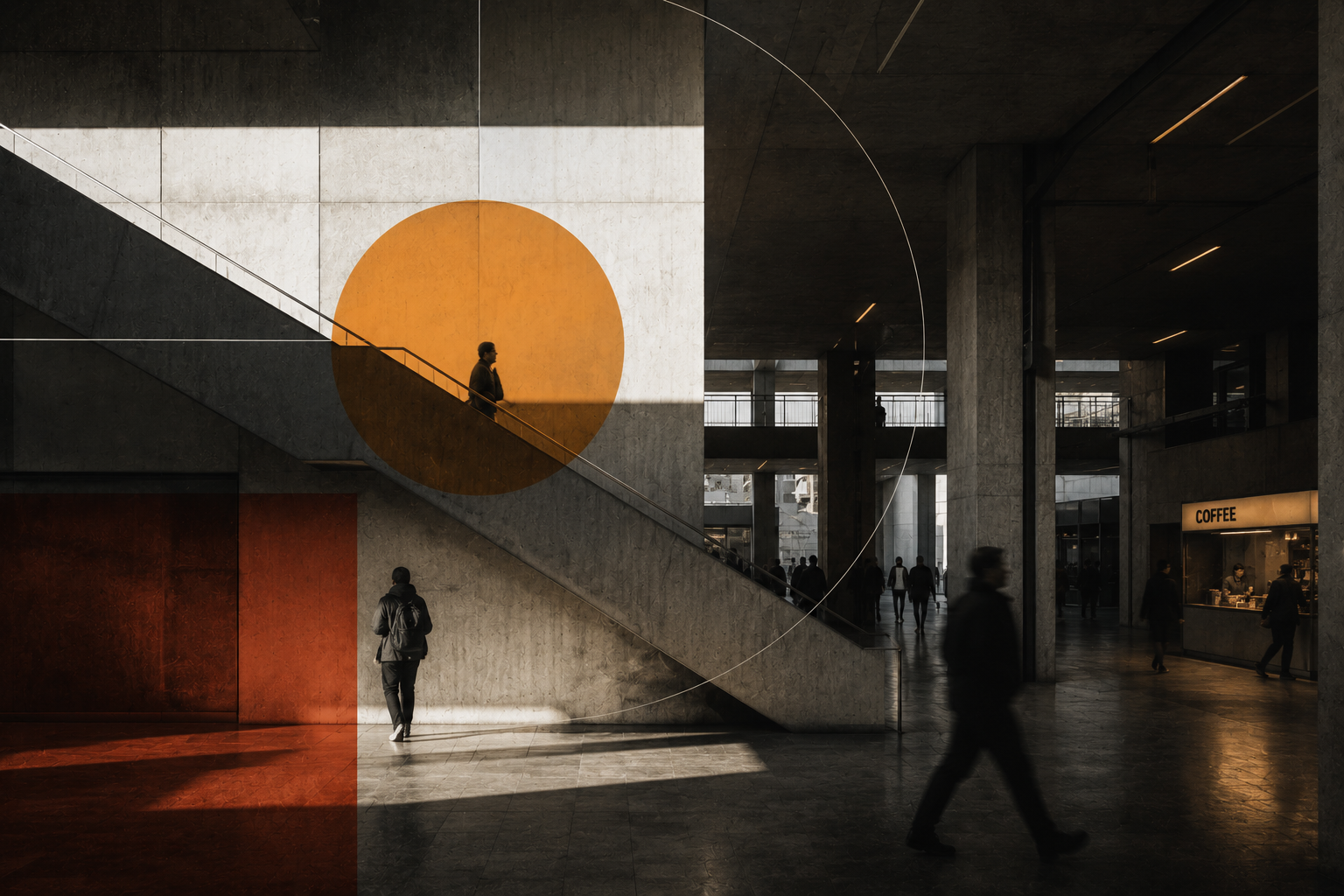
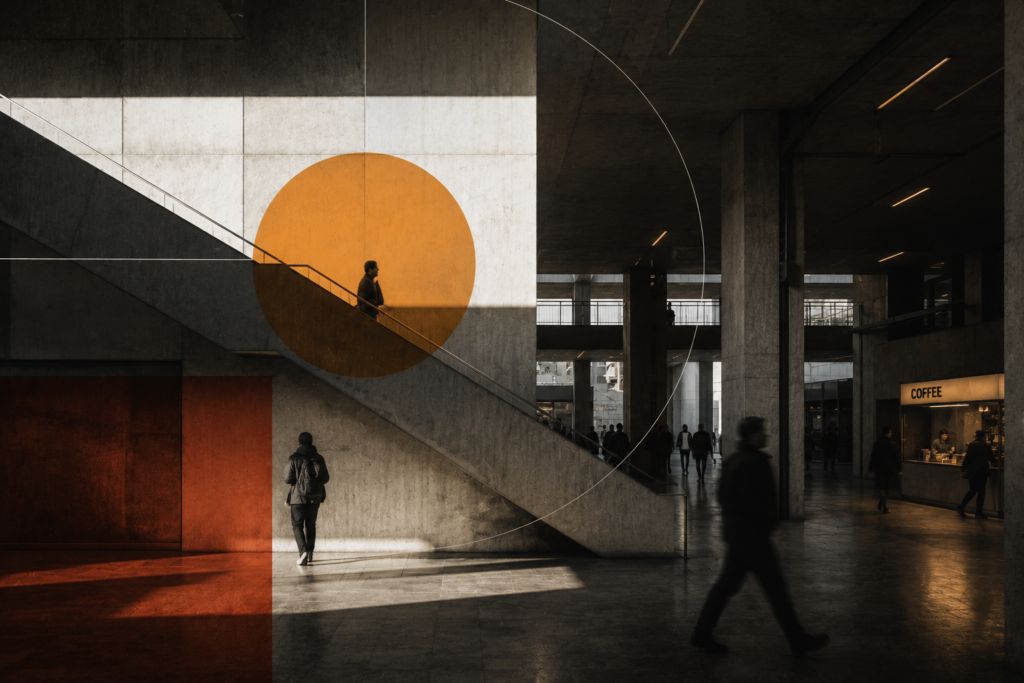
Art is often associated with galleries, museums, hotel designs, and curated exhibitions, but in reality, much of the visual experience that shapes human perception happens in everyday environments. Offices, public buildings, retail spaces, and shared facilities all contain design choices that influence how people feel, move, and interact without them even realizing it.
These spaces are not neutral. They communicate structure, intention, and identity through form, material, and spatial organization. Yet, because they are so familiar, their aesthetic impact is often overlooked.
When Function Becomes Invisible Design
Most commercial and public spaces are designed with function as the primary goal. Efficiency, durability, and usability take priority over visual expression. However, this does not mean that aesthetics disappear. Instead, they become embedded within functional decisions.
The way a space is divided, how materials are chosen, and how movement is guided all contribute to an underlying visual language. Even when not explicitly designed as “art,” these elements form a silent composition that shapes perception.
When this balance is ignored, spaces can feel incomplete or emotionally flat, even if they serve their practical purpose effectively.
The Missing Layer In Commercial Environments
Many modern interiors achieve technical functionality but lack visual cohesion. This creates environments that feel fragmented rather than unified. The issue is not necessarily poor design, but rather a lack of integration between structure and aesthetics.
In well-designed spaces, even the most utilitarian elements contribute to the overall composition. Lines, surfaces, divisions, and transitions all play a role in shaping how the environment is experienced.
In many public and commercial environments, design is often judged purely on functionality, yet the visual experience of these spaces plays a far greater role in how they are perceived and remembered. From restaurants and office buildings to hospitality and shared facilities, every structural decision contributes to a broader aesthetic logic that shapes user behavior and emotional response. This is especially evident in modular spatial systems like https://onepointpartitions.com/, where functional elements are increasingly designed not only to serve practical needs but also to support a more coherent and visually intentional environment.
Space As A Form Of Silent Communication
Every space communicates something, whether intentionally or not. Clean lines can suggest order and professionalism, while cluttered layouts can create tension or confusion. Materials can signal warmth, authority, minimalism, or creativity depending on how they are used.
This silent communication plays a major role in shaping human behavior. People naturally respond to spatial cues, adjusting their movement, attention, and emotional state based on their surroundings.
Because of this, design is never just visual. It is behavioral.
The Role Of Structure In Aesthetic Experience
One of the most overlooked aspects of spatial aesthetics is structure. Walls, partitions, and divisions are often viewed purely as functional necessities. However, they also define rhythm, proportion, and visual flow within an environment.
When structured thoughtfully, these elements can enhance rather than interrupt the visual experience of a space. They create boundaries that guide perception while still maintaining openness and coherence.
This is where the relationship between architecture and design becomes most visible, as practical elements begin to influence emotional and visual outcomes.
Why Modern Spaces Feel More “Designed”
In contemporary architecture and interior design, there is a growing emphasis on intentionality. Instead of simply filling space with functional objects, designers are now considering how every element contributes to the overall experience.

This shift has led to environments that feel more curated, even in highly functional contexts such as offices or public facilities. The goal is not decoration, but coherence.
Spaces that achieve this balance tend to feel calmer, more structured, and more engaging, even when users cannot immediately identify why.
Reconnecting Function And Aesthetics
The separation between functional design and artistic expression is becoming less relevant in modern spatial thinking. Instead, the focus is shifting toward integration, where utility and aesthetics exist within the same framework.
This approach allows even highly practical environments to carry a sense of identity and intention. It also creates spaces that are more memorable, because they engage users on multiple levels simultaneously.
As this perspective continues to evolve, the boundaries between architecture, interior design, and visual art become increasingly blurred.
Conclusion
Every space carries an aesthetic presence, whether it is acknowledged or not. The challenge in modern design is not to add decoration, but to recognize and refine the visual logic already embedded within functional environments.
When structure, material, and form work together, even the most ordinary spaces can take on a sense of clarity and purpose. In this way, design becomes less about decoration and more about shaping experience itself.