Fire can change a building in minutes, but understanding the full extent of the damage can take considerably longer. What appears to be a burned wall or smoke-stained ceiling may be only the visible part of a much larger problem involving structural materials, moisture, electrical systems, finishes, and indoor conditions.
Recovery therefore involves much more than cleaning what looks damaged. The building needs to be evaluated as a connected system so that immediate safety concerns, hidden damage, salvageable materials, and long-term repairs can be addressed in the right order.
Look Beyond the Most Obvious Damage
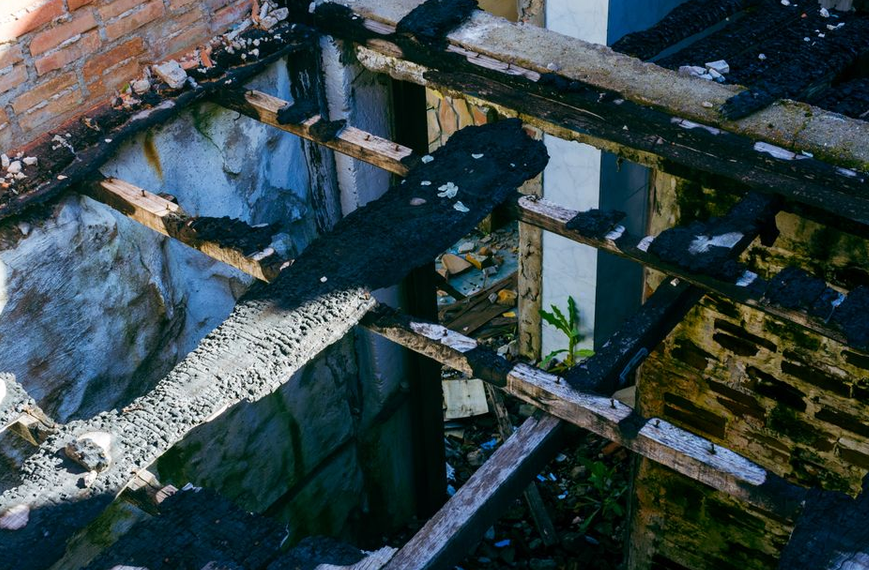
Charred materials naturally attract attention after a fire, but appearance alone does not reveal whether something is safe or salvageable.
Heat can alter the performance of structural materials, damage electrical components, distort finishes, and affect assemblies beyond the area directly touched by flames. Smoke and soot can travel through openings, cavities, and mechanical systems, leaving contamination well beyond the visibly burned area.
Water adds another complication.
The moisture introduced while extinguishing a fire can soak drywall, insulation, flooring, furnishings, and concealed spaces. If those materials remain wet, the building can develop additional problems even after the original emergency has ended.
That is why the first assessment needs to consider the entire affected area rather than simply following the most visible burn marks.
Make the First Recovery Decisions Carefully
The period immediately following a fire can involve several overlapping priorities: securing the property, removing standing water, assessing safety, preventing further weather exposure, and determining what can reasonably be saved.
Professional fire damage restoration can bring these activities together by addressing issues such as emergency stabilization, water removal, smoke and soot cleanup, odor treatment, and the evaluation of affected materials. The precise scope should reflect the actual damage rather than assuming every surface needs either simple cleaning or complete replacement.
That distinction matters.
Removing salvageable materials unnecessarily can increase rebuilding costs, while leaving compromised materials in place can create problems later. A careful assessment helps establish where cleaning ends and repair or reconstruction needs to begin.
Understand That Every Material Responds Differently
A fire does not affect wood, concrete, metal, glass, and interior finishes in the same way.
Wood may char, crack, or lose material depending on the intensity and duration of exposure. Metal components can distort or experience changes that are not obvious from a quick visual inspection. Concrete and masonry may crack or spall, while plastics and synthetic finishes can melt or deform.
Porous materials create another challenge because smoke residue and odors can penetrate beneath the surface.
The decision to clean, repair, test, or replace a material should therefore depend on its condition and role within the building rather than on appearance alone.
This is especially important with structural components. Something that still looks intact should not automatically be assumed to perform exactly as it did before the fire.
Don’t Let Water Become the Second Disaster
Once the immediate fire danger has passed, moisture deserves attention quickly.
Water can migrate beneath flooring, behind walls, into insulation, and through other concealed areas. Materials that appear dry at the surface may still contain moisture internally.
Understanding what to do after water enters a building can help clarify why drying, moisture detection, and timely removal of materials that cannot be saved are important parts of recovery.
Rushing directly into cosmetic repairs before moisture problems are resolved can simply conceal damage that continues developing underneath.
A dry-looking wall and a genuinely dry wall are not necessarily the same thing.
Treat Smoke and Soot as More Than Cosmetic Problems
Smoke has an inconvenient ability to reach places flames never touched.
Particles and residues can settle on walls, ceilings, fixtures, furniture, ventilation components, and materials inside concealed spaces. Different surfaces may also require different cleaning methods, which makes indiscriminate scrubbing a poor restoration strategy.
Odor can be particularly persistent when residue has entered porous materials.
Simply painting over discoloration or introducing fragrance does not necessarily address its source. Successful odor control generally begins with identifying and removing contaminated material or residue before treating what remains.
Cleaning up safely after a fire also requires appropriate precautions because damaged buildings can contain hazards that are not obvious during an ordinary cleanup.
The objective is not merely to make the building smell better. It is to address the material responsible for the contamination.
Decide What Should Be Restored and What Should Change
Recovery creates an unusual design question: should the building return exactly to what it was, or should rebuilding become an opportunity to improve it?
Some architectural elements may be worth carefully restoring, particularly when they contribute significantly to the character of the space. Other damaged materials may be difficult to reproduce, prohibitively expensive, or no longer appropriate for the way the building will be used.
That can lead to a combination of restoration and redesign.
A distinctive feature might be recreated while lighting, finishes, storage, or mechanical systems are updated. Layout changes may also become practical when damaged areas already require substantial reconstruction.
The best answer is rarely “replace everything exactly as it was.” It is to decide deliberately which elements deserve preservation and where change can make the building more functional or resilient.
Let Safety Shape the Design Conversation
Good design is not only about what occupants notice when they enter a room.
Fire-rated assemblies, appropriate compartmentation, electrical systems, alarms, suppression measures where required, and access to important building controls can all influence how a structure responds during an emergency.
Recovery provides an opportunity to reconsider those less visible parts of the design.
Rebuilding may also trigger current code requirements that differ from those in place when an older structure was originally constructed. That can affect materials, electrical work, egress, fire protection, and other aspects of the project.
Rather than treating these requirements as obstacles to the design, they can become part of creating a building that is better prepared for the future.
Document Before Making Irreversible Decisions
The period after a fire can feel urgent, but documentation deserves time before damaged materials disappear.
Photographs, videos, inventories, existing drawings, finish schedules, receipts, and records of previous improvements can all help establish what existed before the incident.
Documentation can also support conversations among property owners, insurers, contractors, designers, and other professionals involved in recovery.
For distinctive interiors, records of materials, hardware, cabinetry, colors, and custom details can become particularly useful if those elements need to be recreated.
A detail that once seemed too ordinary to document can become surprisingly difficult to reproduce once the original is gone.
Think Beyond the Day the Repairs Finish
A successful recovery should restore more than appearance.
Occupants need a building that functions properly, feels comfortable to use, and has had relevant damage addressed rather than hidden beneath new finishes.
That means the final stages of recovery deserve the same attention as demolition and reconstruction. Mechanical systems, electrical components, repaired assemblies, finishes, and other affected areas may require appropriate inspection or verification before normal use resumes.
It is also worth documenting the completed work. Records of repairs, replacement materials, inspections, and upgrades can be valuable for future maintenance and property decisions.
Rebuild With the Future in Mind
Fire has a way of revealing how interconnected a building really is.
Structure, materials, mechanical systems, moisture management, safety features, and interior design cannot always be separated neatly once serious damage occurs. A decision in one area can influence several others.
That is why thoughtful recovery goes beyond restoring what people can see.
The aim is to understand what happened, preserve what can reasonably be saved, repair what has been compromised, and use reconstruction as an opportunity to make better decisions where appropriate.
A building does not have to emerge from a fire exactly as it was before. Done carefully, it can return safer, more functional, and better prepared for whatever comes next.