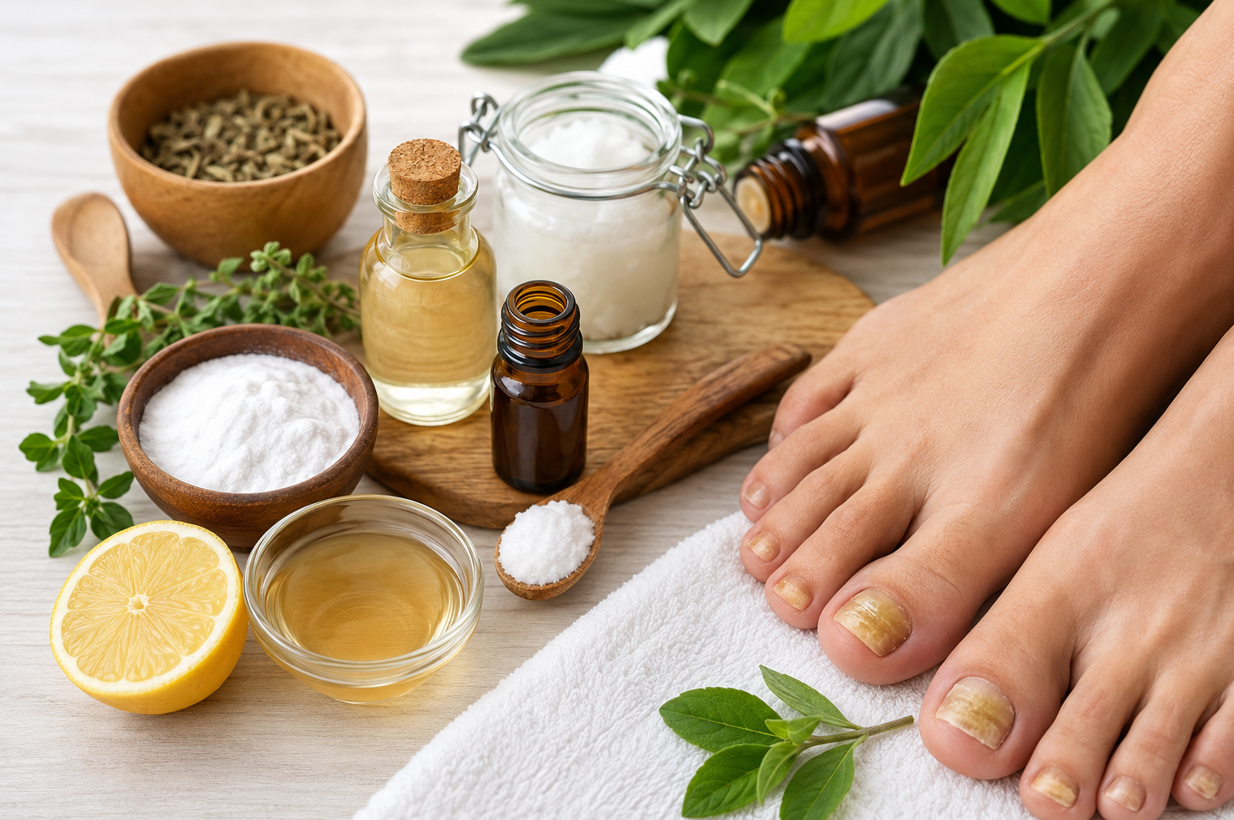
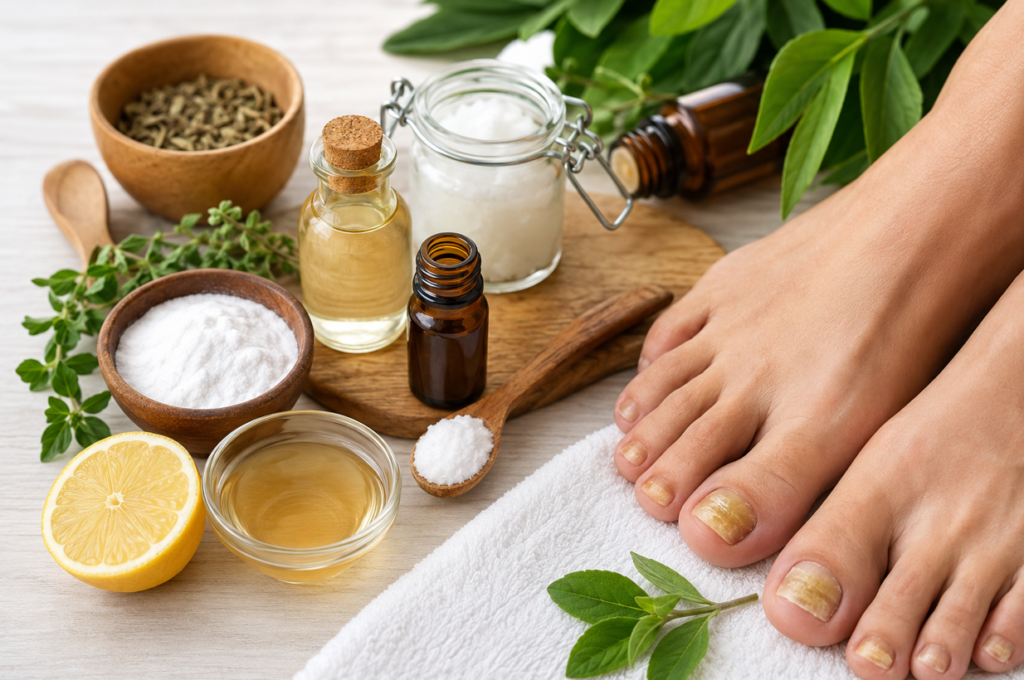
A thick, yellow, brittle toenail can be frustrating, especially when it seems to change very slowly. Fungal nail infection, also called onychomycosis, is common and usually develops gradually. The infection can make the nail thicker, discolored, crumbly, or separated from the nail bed. Although it is usually not serious, treatment can take months because the healthy nail has to grow out.
Many people look for home remedies before using conventional antifungal treatments. Some natural ingredients have shown antifungal activity in laboratory studies or small clinical trials, but that does not mean they can reliably clear an established nail infection. A systematic review found preliminary evidence for several complementary treatments, while also noting that larger, better-designed trials are needed.
1. Tea Tree Oil and Oregano Oil
Tea tree oil is probably one of the most widely discussed natural options for fungal nails. Laboratory research has shown antifungal activity, and several small clinical studies have investigated tea tree oil for nail infections. However, the evidence is still limited. A systematic review of complementary treatments found some encouraging results, but concluded that larger randomized trials are needed before these remedies can be confidently recommended as replacements for established treatments.
Oregano oil is another essential oil sometimes discussed as a natural remedy for fungal nail infection. Its compounds have demonstrated antifungal activity in laboratory settings, but laboratory results do not necessarily translate into successful treatment of a thick human toenail. Essential oils can also irritate the surrounding skin, particularly when used undiluted. For people considering an essential oil, avoiding damaged skin and stopping if burning, redness, or irritation develops is sensible.
2. Vinegar Soaks and Baking Soda
Vinegar soaks are a popular home approach because vinegar contains acetic acid, which can create an environment that is less favorable to some microorganisms. Despite its popularity, strong clinical evidence showing that vinegar alone cures toenail fungus is lacking. A short soak may be harmless for some people, but frequent exposure can irritate dry or cracked skin. It should not be viewed as a proven substitute for antifungal medicine.
Baking soda is sometimes suggested because it can absorb moisture and help keep footwear and surrounding areas drier. That may be useful as part of general foot care, but there is little clinical evidence that applying baking soda directly to an infected nail eliminates onychomycosis. Keeping feet clean and dry is more firmly supported as a prevention measure because fungal infections thrive in warm, damp environments.
3. Vicks VapoRub and Propolis
Vicks VapoRub has attracted attention because it contains ingredients such as camphor, menthol, and eucalyptus oil. Small studies have explored its use for fungal nails, and it was included among the complementary therapies identified in a systematic review. However, the available research is limited, so it is difficult to know how consistently it works compared with established antifungal treatments.
Propolis, a resin-like substance produced by bees, has also been investigated for possible antifungal properties. Some laboratory and early clinical findings are interesting, but the evidence remains preliminary. A natural ingredient can have genuine antifungal activity without being strong enough to penetrate a thick nail and clear the infection. This distinction matters when comparing home remedies with treatments designed specifically for nail infections. A trusted seller or familiar brand does not change the quality of the underlying medical evidence.
4. Snakeroot, Coconut Oil, and Better Nail Care
Ageratina pichinchensis, sometimes called snakeroot, has been studied in small clinical trials for onychomycosis and was one of the natural therapies identified in the systematic review of complementary treatments. The early findings are worth noting, but the research base is much smaller than the evidence available for established antifungal medicines.
Coconut oil is another common household remedy. It contains fatty acids that have shown antimicrobial activity in laboratory research, but there is not enough clinical evidence to say that coconut oil reliably cures fungal nail infections. In practice, simple nail and foot care may be more useful alongside treatment: keep nails reasonably short, keep feet dry, change socks regularly, and avoid sharing nail clippers or shoes. These measures can help reduce moisture and limit the spread or return of infection.

What the Evidence Really Says About Home Remedies
The biggest issue with home remedies is not that every natural ingredient is ineffective. Some clearly have antifungal properties, and a few have been studied in people. The problem is the limited quality and size of many studies. The 2022 systematic review identified only 17 relevant articles covering several complementary therapies and concluded that larger, placebo-controlled trials were needed.
This means people should be careful with claims that a particular oil or household ingredient will completely remove nail fungus. If you are tracking nail fungus healing stages, remember that visible improvement can be slow. A healthy nail has to grow from the base, and toenails can take many months to replace damaged areas. NHS guidance notes that pharmacy antifungal nail treatments may need six to 12 months of use, with improvement sometimes taking several months to become noticeable.
When Home Care Is Not Enough
A changed or discolored nail is not automatically caused by fungus. Nail trauma, psoriasis, and other conditions can produce similar changes, which is one reason medical sources recommend confirming the diagnosis in appropriate cases before starting systemic treatment.
If several nails are affected, the infection is severe, the nail becomes painful, or home and pharmacy measures are not helping, professional advice is worthwhile. People with diabetes or a weakened immune system should be particularly cautious because foot problems can become more serious.