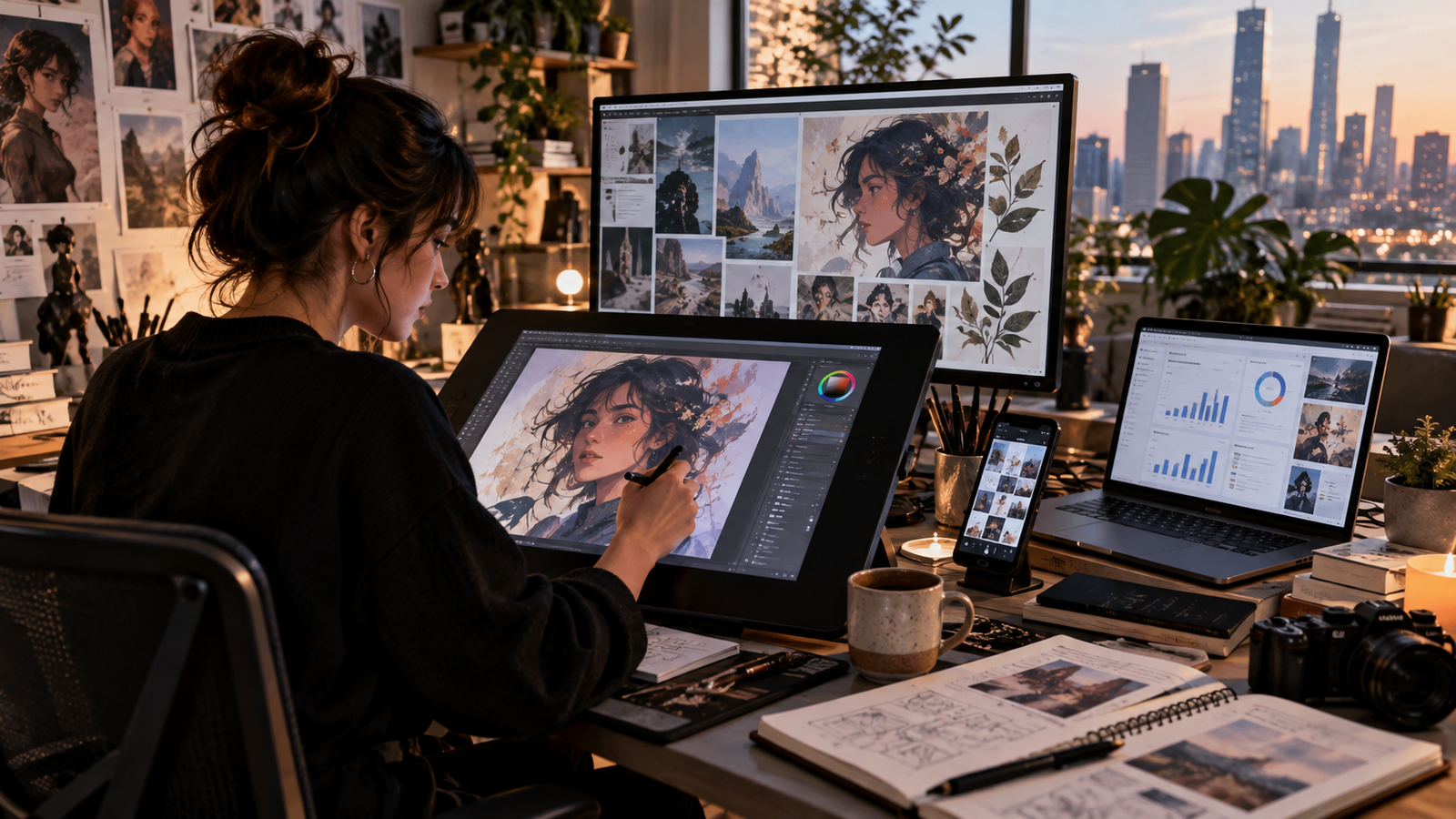
Artists work today in a completely new world compared to their predecessors. While technology has opened up many possibilities for creative expression, the modern artist’s work is dominated above all by creativity. At the same time, it also involves a wide variety of organizational tasks that require an array of skills to ensure their artistic projects achieve their desired ends.
Many artists today run online businesses, managing their own portfolios and client communications. This added layer of work, alongside artistic development, is the norm in today’s creative economy. Many creatives manage their projects independently and use online communication to network with other creatives, manage client relationships, and develop strategies for artistic growth.
How Digital Tools Are Reshaping the Creative Process
Technology is used throughout the creative process, whether through digital drawing programs and photo manipulation software, 3D modeling programs to create highly detailed scenes, or online collaboration platforms that bring people from around the world together to work on a project. Artists can now showcase their work to an international audience through their own websites, social media accounts, and online marketplaces. This gives designers and artists control over how the public sees their work and lets them earn money from sales, rather than relying on galleries to display it to local audiences.
These same digital tools also make creative work more accessible to designers, photographers, and other artists, whether they work individually or in teams. By teaming up with people worldwide, artists can create work that interests a global audience and sell it online to people everywhere.
Even with more access to create and show off artwork, artists and aspiring artists have more information to sift through than in the past. They must track projects, understand their audiences, plan for costs, and more.
Why Digital Artists Need Strong Business and Planning Skills
Effectively organizing a wide array of artistic and organizational responsibilities can help independent artists make the best decisions possible about their artistic output and how they run their business. Financial organization, time management, and even planning goals and events can help artists be as productive as possible.
New technologies are creating new ways to simplify complex tasks, including areas that go beyond the creative process itself. For independent artists who often manage project budgets, irregular income, and long-term career goals, having access to better organizational tools can make financial planning more manageable. An AI financial advisor can help individuals organize financial information, understand spending patterns, and gain a clearer view of how everyday decisions may influence their broader financial goals. By simplifying this information, these tools allow artists to spend less time managing administrative tasks and more time focusing on their creative work.
This doesn’t mean to replace creativity with automation. Much of what a digital artist does can be streamlined to reduce time spent organizing information so they can focus on more important aspects of creating, i.e., developing the next idea and improving technique.
Building a Personal Brand in the Digital Age
Building a successful artist brand and growing your fan following is essential today, when it’s easier than ever for artists to find an audience, with more creatives making work, selling it, and becoming “successful” in the creative industries each year. A consistent personal brand is part of becoming a successful, professional artist and a major part of a full-time creative’s career, along with creating work to sell.
Artists’ stories can now be shared across the globe through social media platforms. Digital artists can build communities of people interested in their style of work and engage with them through online forums. To build a career as a creative, an artist no longer has to wait for opportunities to come their way; instead, they can create their own by sharing their process and work with others.
Additionally, artists should establish a digital presence and keep up with online networking, blog posts, and videos that showcase their creative process. Many artists also establish an online store to sell their work directly to fans. Artists need a well-organized plan to manage their online presence and the opportunities it can bring.
The Future of Creativity and Technology
The relationship between art and technology continues to evolve. New tools will let artists express themselves in a wider range of ways and with greater detail. However, technology has not replaced artistic creativity and will not, and it will continue to augment the artist’s unique view.
Technology should add to, rather than take away from, a creative’s unique style and ability to express themselves in different ways. For example, digital painting, generative design, immersive environments, and online art exhibitions all exist in the here and now, opening up a whole host of possibilities for artists.
Beyond exploring their creativity, emerging artists also need to understand technology and use it effectively to build a successful career in today’s competitive marketplace.
The modern digital artist represents more than a transition from physical art supplies to computer software. This new generation of artists also reflects the many changes in how artists can build a successful career in today’s creative economy. By harnessing their creativity with forward-thinking and planning, today’s artists can continue to create meaningful art that inspires while opening up many new opportunities for themselves.