There is something deeply satisfying about a cat humiliating human confidence.
For more than a century, science had not formally described a completely new living cat species. The cat family, after all, is not exactly obscure. Lions are not hiding behind the sofa. Tigers do not pass unnoticed in the cereal aisle. Even the smaller wild cats have been studied, photographed, named, renamed, argued over, placed in field guides, and given the usual Latin labels that make nature sound like it has filed the correct paperwork.
And then a three-pound wild cat from Bolivia looked up from the cloud forest and quietly ruined the illusion.
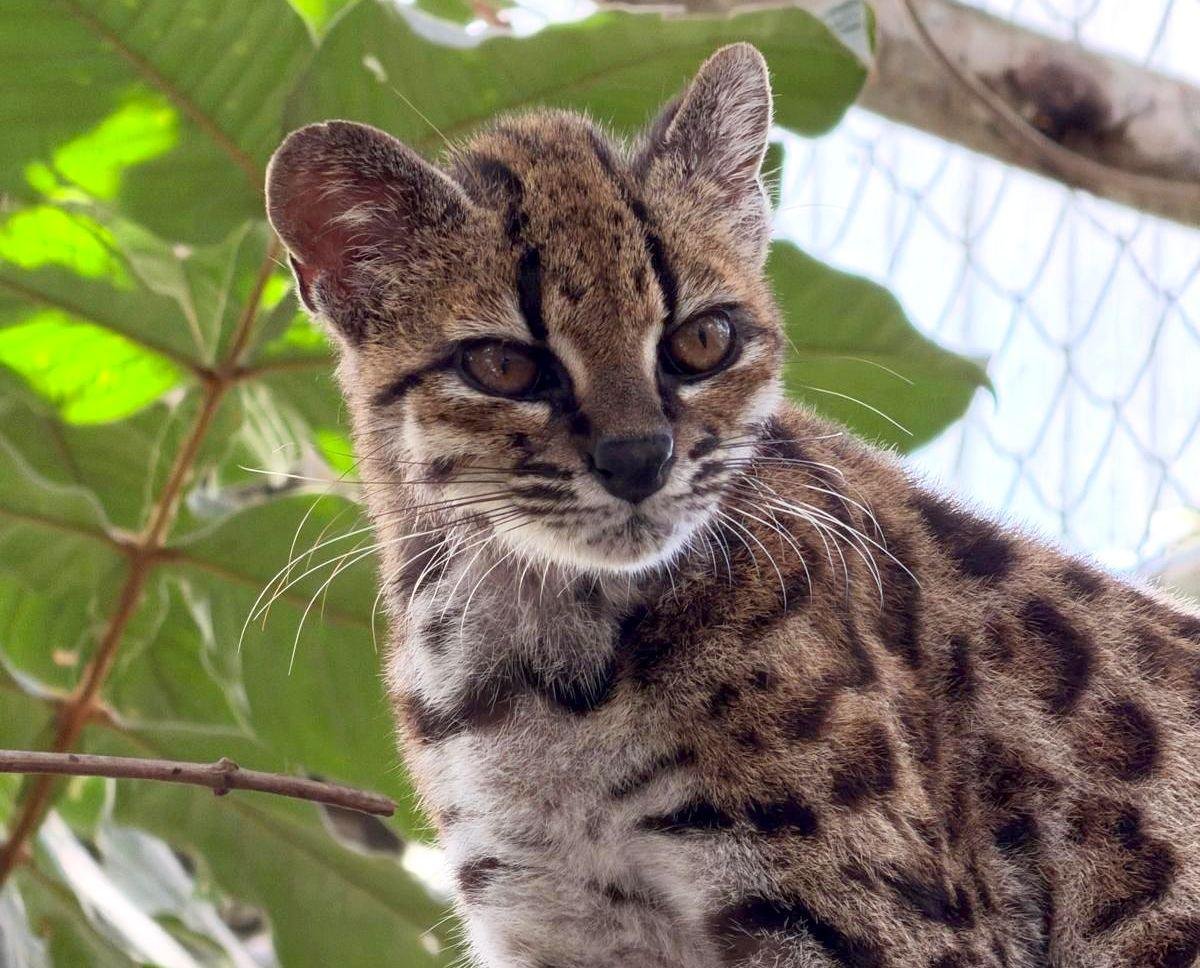
The animal is now known as Leopardus tilcayo, or simply the tilcayo: a small, spotted tiger cat from the Yungas region of Bolivia, where humid mountain forests sit along the eastern slope of the Andes. It is not a new pet breed, not a domestic cat with better public relations, and not a fantasy animal invented by the internet because the internet had a slow Tuesday. It is a newly recognized wild felid — new to science, though not new to the people who live near it and already knew it by a local name.
That last point matters. “Discovery” is one of those words that can make science sound slightly too pleased with itself. The tilcayo was not waiting in the forest for anyone to give it permission to exist. Local communities had a name for it. The animal existed. The forest knew. Science arrived late, took DNA seriously, and finally admitted that the cat deserved its own line on the family tree.
Which is very cat behaviour, frankly.
The Cat That Was Too Strange to Ignore

The modern story begins with a cat that did not quite fit.
According to reports around the new study, Bolivian biologist Paola Nogales-Ascarrunz first encountered the unusual animal after a wildlife sanctuary received what was described as a strange cat. It had reportedly been found as a kitten near a forest and at first mistaken for something domestic. This was understandable in the same way that mistaking a tiny dragon for an angry lizard would be understandable: technically close, spiritually wrong.
The cat was small, spotted, wild-looking, and visually different enough to raise questions. Its fur has been described as light brown with irregular dark rosettes, giving it the appearance of a miniature leopard designed by someone with excellent taste and very little concern for human taxonomy.
For years, the assumption was that this animal belonged somewhere within the messy tiger-cat group of South America — small spotted cats in the genus Leopardus that are notoriously difficult to separate by appearance alone. These cats are what scientists call cryptic species: animals that may look similar on the outside while carrying deeper evolutionary differences beneath the fur.
In other words, the tilcayo did what small wild cats apparently do best.
It hid in plain sight.
When DNA Becomes the Plot Twist
The tilcayo did not become a new species because it looked cute in photographs, although one suspects that did not hurt its public relations.
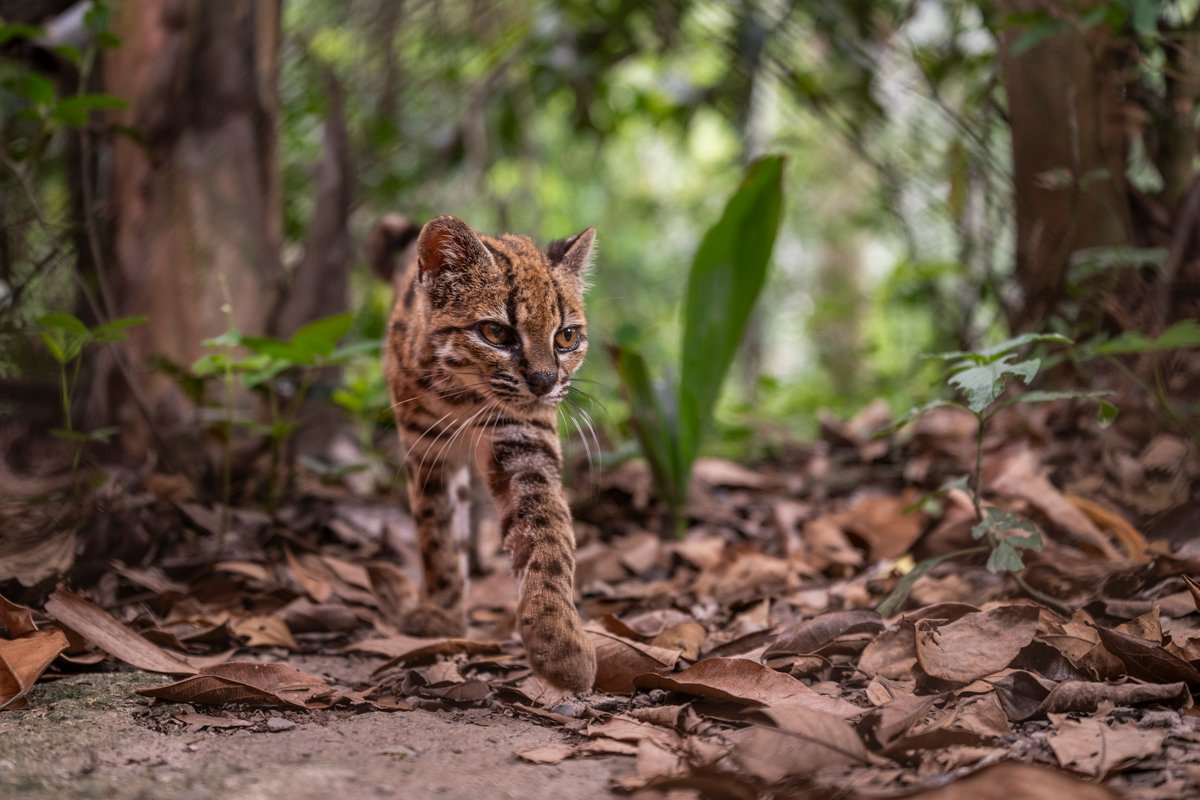
The real case came from genetic analysis. Researchers compared genomic data from cats across the Leopardus group, including living individuals and museum specimens. The results showed that the Bolivian tilcayo was not merely a local variation of a known tiger cat. It represented a distinct evolutionary lineage, one that researchers estimate split from related cats around 1.4 million years ago.
That is the kind of number that makes the phrase “we just noticed” feel a little embarrassing.
The findings were published in Current Biology, in a study that did more than name one new animal. It also reshaped the understanding of South America’s tiger cats, showing that what had often been treated as a simpler group is actually a more complicated set of distinct species and lineages.
This is the quiet drama of modern taxonomy. It is not always a scientist hacking through jungle and shouting over a newly discovered beast. Sometimes it is DNA, museum drawers, old specimens, better tools, and the slow realization that nature has been more detailed than our labels.
The cat was not hiding from the forest. It was hiding from classification.
A Three-Pound Reminder That Small Does Not Mean Simple

The tilcayo is tiny by cat standards. Reports describe it as smaller than the average domestic cat, weighing roughly three pounds and measuring around eighteen inches from head to body, with a tail adding additional length. This means that somewhere in Bolivia there is a wild feline that looks like it could lose a fight with a well-fed housecat named Mr. Biscuits, while also carrying a million-year evolutionary history in its bones.
Small wild cats rarely receive the glamour of their larger relatives. Lions get empires. Tigers get poems. Leopards get fashion campaigns. Jaguars get mythological menace. Small spotted cats get mistaken for each other, underfunded, under-photographed, and occasionally treated as footnotes with whiskers.
That imbalance matters. The world’s charismatic megafauna has always had better branding. A tiger can raise money by existing near a camera. A tiny nocturnal cat in a cloud forest must first convince science it is not someone else’s cousin.
This is one reason the tilcayo story feels so pleasing. It gives the small cat the main character role. For once, the creature rewriting the map is not enormous, cinematic, or built for documentary voiceovers. It is small, secretive, spotted, and apparently very good at being scientifically inconvenient.
Art-Sheep has always enjoyed the strange cultural power of cats, from their domestic mythology to the visual history of Walter Chandoha’s feline photography. The tilcayo belongs to a different world, of course — less sofa, more cloud forest — but it proves the same basic principle: cats are very good at making humans look like supporting characters.
The Yungas: A Cloud Forest With Secrets

The tilcayo lives in Bolivia’s Yungas, a region of cloud-covered mountain forest where the Andes begin to soften toward the Amazon. It is the kind of landscape that sounds as though it should naturally contain unknown animals: humid slopes, thick vegetation, shifting mist, difficult terrain, and enough ecological drama to make a taxonomist cancel dinner plans.
Cloud forests are especially good at keeping secrets. They are layered, wet, hard to move through, and biologically rich. They do not offer their animals easily to human attention, which is one of the few respectable qualities left in the world.
But the secrecy of such places should not be confused with safety. The Yungas are also under pressure from deforestation, agriculture, fire, mining, roads, and the general human talent for finding a beautiful ecosystem and immediately asking how quickly it can be made useful.
That makes the tilcayo’s scientific recognition urgent as well as charming. A species cannot be properly protected if it is not properly understood. If a population has been hidden inside a broader category, conservation plans may fail to see its real vulnerability. Naming is not everything, but in conservation it can be the beginning of being counted.
A cat without a name may still exist. A cat with a name is harder to ignore.
The Museum Drawer Was Part of the Forest
One of the most interesting parts of the tilcayo story is the role of museum specimens.
Modern discoveries often depend on older collections. A preserved skin, skull, tissue sample, note, label, or misidentified specimen can become newly important when scientific tools improve. The museum, in this sense, is not a dead place. It is a delayed conversation with the field.
This is particularly true for cryptic species. Animals that look similar may be placed together for decades until DNA, morphology, geography, and better comparison begin to reveal hidden divisions. Suddenly, what looked like one species becomes several. The archive coughs politely. The family tree has to be redrawn.
There is something beautifully humiliating about that. Humans love final categories. Nature prefers footnotes, exceptions, hybrids, gradients, and creatures that refuse to stand still long enough for a clean diagram.
The tilcayo is therefore not just a field discovery. It is an archival one. It shows how living animals, museum collections, local knowledge, genomic technology, and old-fashioned curiosity can combine to correct the record.
Science did not simply find a cat in Bolivia. It found a mistake in its own filing system.

Not Just One Cat, But a Broken Family Tree
The new research does not only introduce Leopardus tilcayo. It also clarifies the wider tiger-cat group in South America, suggesting five distinct species where older classifications had been less precise. The study also identifies a new subspecies in Peru, Leopardus tigrinus antisuyo, adding another layer to the already complicated story.
This is where the discovery becomes bigger than one adorable animal with inconvenient genetics. The tilcayo is part of a broader lesson about biodiversity: much of it may be hidden not because it is invisible, but because it has been badly grouped.
That is a serious problem for conservation. If several distinct species are treated as one broad species, their individual population sizes, ranges, risks, and ecological needs may be misunderstood. One “vulnerable” category can hide a far more fragile reality underneath. A species that seems widespread on paper may in fact be several species, each living in a smaller and more threatened range.
This is the bureaucratic horror story behind the cute cat headline. The world may be losing animals before it has even separated their names correctly. Extinction does not wait for taxonomy to finish its paperwork.
And that, unfortunately, is very on brand for the Anthropocene.
The Beautiful Humiliation of Human Knowledge
The tilcayo story feels almost too symbolic.
In an age of satellites, camera traps, genomic sequencing, global databases, artificial intelligence, instant maps, wildlife documentaries, and millions of people online acting as though they personally supervise the planet, a tiny wild cat still managed to remain scientifically unnamed until now.
This should be comforting, but only in the most insulting way. The world is still larger than our confidence. There are still animals moving through forests without caring whether our categories are ready for them. There are still lineages hiding behind familiar shapes. There are still names known locally before they are printed in journals. There are still living things quietly refusing to become content until science catches up.
The tilcayo is not spectacular in the obvious sense. It is not a dinosaur, not a giant squid, not a monster, not a glowing deep-sea nightmare, not a beast from an explorer’s fever dream. It is a small cat with rosettes, a sharp face, and the evolutionary dignity of having been itself long before anyone asked for its paperwork.
That may be why the story works so well. It reminds us that wonder does not always arrive enormous. Sometimes it weighs three pounds and lives in the mist.
The Cat That Was Already There
The most important thing about Leopardus tilcayo is not that it suddenly appeared.
It was already there.
In the forest, in local language, in the ecological life of the Yungas, in the genetic history of South America’s small cats, in the blind spots of science, in the museum record, and in the strange gap between seeing an animal and understanding what one has seen.
That is the real poetry of the discovery. The tilcayo does not represent nature producing a novelty for our entertainment. It represents nature continuing to exceed the systems built to contain it. The animal was not new to the world. The world was new to our knowledge of it.
And perhaps that is the best kind of discovery: not the arrogant fantasy of “finding” what was lost, but the quieter and more useful admission that reality had been more complicated all along.
A tiny wild cat walked out of Bolivia’s cloud forest and into science.
Not because it needed our attention.
Because, after more than a century, our attention finally became good enough to notice.