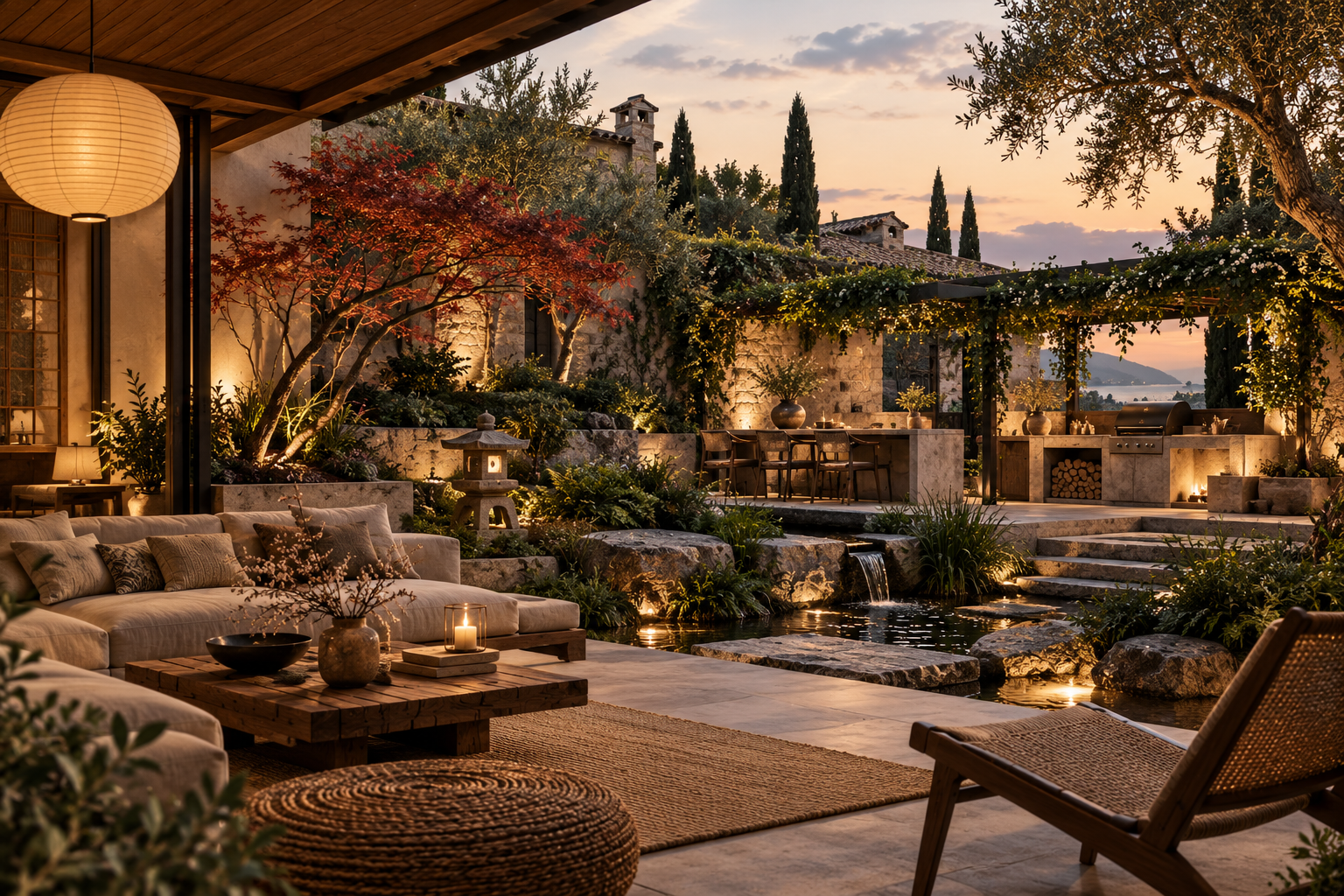
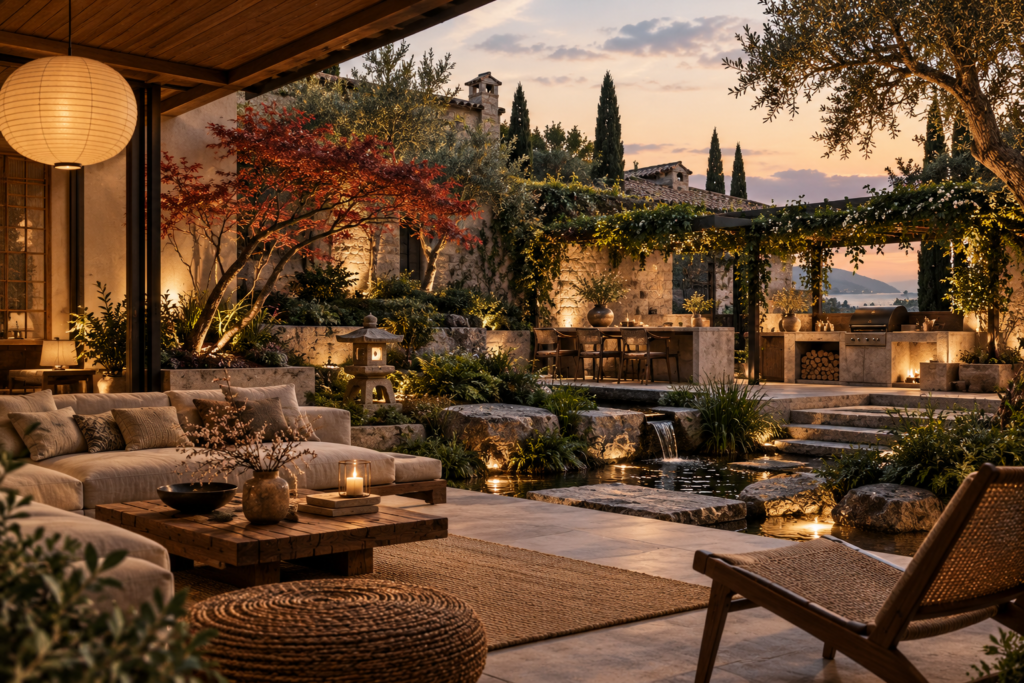
Backyards often end up looking like abandoned movie sets by mid-November. We buy the expensive teak furniture and set up string lights, fully expecting to spend every evening outside. Then the temperature drops a few degrees. Suddenly, we retreat indoors and leave the patio to gather dust until spring. The reality is that creating an outdoor space you actually want to use requires more than just decent weather and a few lawn chairs. It takes intentional planning to make an outdoor area comfortable when conditions aren’t perfectly mild. Designing an outdoor room is about controlling the elements just enough to make lingering enjoyable.
Moving beyond the standard patio slab
We tend to treat our yards as an afterthought. You throw down a concrete rectangle, add a grill, and call it a day. But think about how you arrange your indoor living room. You group furniture to encourage conversation. You set up focal points. The same logic applies outside.
Instead of pushing everything against the back of the house, try pulling the seating arrangement out into the yard. This forces you to engage with the space differently. A well-placed outdoor rug and some heavy-duty chairs do a lot of the heavy lifting here.
Deciding between a sprawling wooden deck or a stone patio often comes down to your tolerance for maintenance. Wood usually requires regular staining and sealing to prevent rot. Stone is largely hands-off. Consider a quick breakdown of common options:
- Wood decking: Warms up nicely in the sun and feels softer underfoot, but demands high upkeep over the years.
- Natural stone: Highly durable and classic, though it can sometimes get hot in direct summer sunlight.
- Concrete pavers: Cost-effective and versatile, requiring almost zero maintenance.
For most busy families, stone or pavers usually win out simply because nobody wants to spend their weekend power-washing and staining boards.
The anchor of evening entertainment
People naturally gather around heat and light. It happens at every camping trip and late-night party. When the sun goes down, a central fire feature extends the life of your gathering by hours.
You can definitely pick up a cheap metal bowl from a big-box store. They work fine for roasting marshmallows a few times a year. The problem is they rust out quickly and blow smoke directly into your eyes the second the wind shifts. If you want something permanent that actually looks like it belongs with your home’s architecture, bringing in a custom fire pit builder makes a massive difference. You get control over the height, the stone type, and the fuel source.
Gas options are incredibly popular right now for a few simple reasons. You flip a switch and you have fire. No chopping wood. No smelling like a campfire for three days. However, wood-burning pits offer that authentic crackle and intense heat that gas just can’t easily replicate. It comes down to whether you prefer modern convenience or traditional atmosphere.
Choosing materials that handle the weather
Let’s talk about longevity and weather resistance. You want hardscaping materials that won’t degrade after one harsh winter or a blistering summer. Stamped concrete is a common budget-friendly choice, but it can crack when the ground freezes and thaws over several years.

Pavers offer a bit more flexibility. Because they are individual units, they can shift slightly with the earth without breaking apart completely. And when it comes to installation, experience matters immensely. Checking out resources or consulting with established teams like Allied Outdoor Solutions can give you a better idea of what materials naturally suit your specific climate.
You don’t have to guess whether porous travertine will survive your local weather patterns or if slate will become dangerously slippery near a pool. Getting advice from professionals who handle these materials daily prevents costly mistakes down the road. They generally understand drainage, soil settling, and how different stones react to constant UV exposure.
Keeping the momentum going
Lighting is the final piece of the puzzle. Relying solely on a glaring porch floodlight often kills the mood. It feels like an interrogation. You need layers of softer light.
Try path lighting to guide people safely through the yard, mixed with subtle uplighting on a few key trees or architectural features. This creates depth. It makes the yard feel expansive rather than shadowy and restrictive. You want a soft glow that invites people to stay outside.
Start small with your layout changes. Pick one area of your yard that feels dead and decide what it needs to become a destination. Add a reliable heat source. Arrange some comfortable, deep seating. Set up a low-voltage lighting system. Once you build a space that genuinely feels good to sit in, you will notice your evening routine naturally shifting outdoors.