There is nothing wrong with a simple outfit. A pair of jeans, a plain top, neutral trousers, or a straightforward dress can create the foundation for some of the best looks. The problem comes when everything has roughly the same visual weight and nothing gives the eye a reason to stop.
Making an outfit more interesting does not require replacing your wardrobe or piling on statement pieces. Usually, a few deliberate changes to texture, proportions, layering, accessories, and contrast are enough to transform clothes that initially seem ordinary.
Add One Piece With Strong Texture
When an outfit feels flat, texture is one of the quickest ways to give it more dimension. This is particularly effective when most of the clothes are simple and relatively smooth.
Denim, leather, knitwear, suede, corduroy, and waxed fabrics all interact differently with light and create contrast without requiring bright colors or complicated patterns. A straightforward jeans-and-knit combination, for instance, immediately gains more character when topped with one of the many styles of womans waxed jackets, where the distinctive outerwear texture becomes part of the look rather than simply another layer.
This approach works especially well for people who prefer neutral wardrobes. Black, brown, olive, navy, cream, and gray can still look visually rich when several different surfaces are combined.
Pay Attention to Proportions
Sometimes an outfit is not actually too basic. Its proportions simply make every piece disappear into the next.
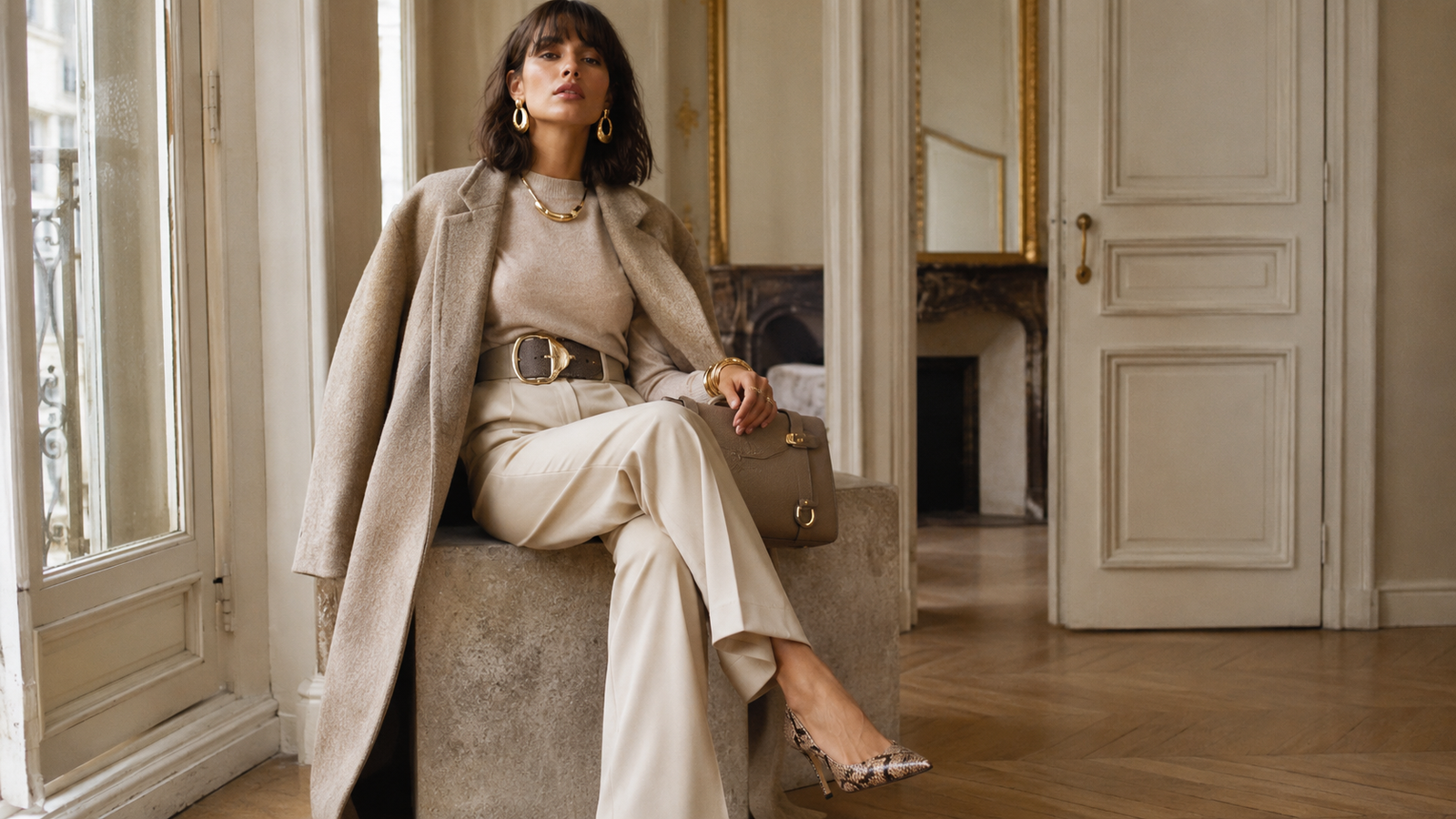
If both the top and trousers are loose, adding some definition at the waist can change the silhouette. If everything is fitted, a larger jacket or relaxed shirt can introduce contrast. Wide-leg trousers can look completely different with a shorter top than with something that finishes at the widest point of the hips.
The same principle applies to length. A long coat over a shorter skirt creates different visual lines from a cropped jacket worn with high-waisted trousers.
Experimenting with proportions costs nothing because the necessary pieces may already be in the wardrobe. Before adding more accessories, try tucking, rolling, layering, or changing where individual garments visually begin and end.
Let Jewelry Change the Mood
Jewelry can alter the personality of very simple clothing without requiring the outfit itself to become complicated.
A plain black or white top provides an especially useful background because the neckline leaves room for jewelry to become noticeable. Even the construction of a chain can affect the impression it creates. The difference between a cuban link or rope chain is a good example: one can bring a stronger, more structured presence, while the other introduces detailed texture and movement.
That makes jewelry useful for controlling how bold the finished outfit becomes. A substantial chain can act as the focal point, while a finer piece can add just enough detail to prevent a minimal outfit from feeling unfinished.
There is no need to wear several necklaces, bracelets, rings, and earrings simultaneously. One carefully chosen piece can have more impact than multiple accessories competing for attention.
Create Contrast Instead of Adding More
Photo by Vitaly Gariev on Unsplash
Interesting outfits often contain an element that seems slightly unexpected next to everything else.
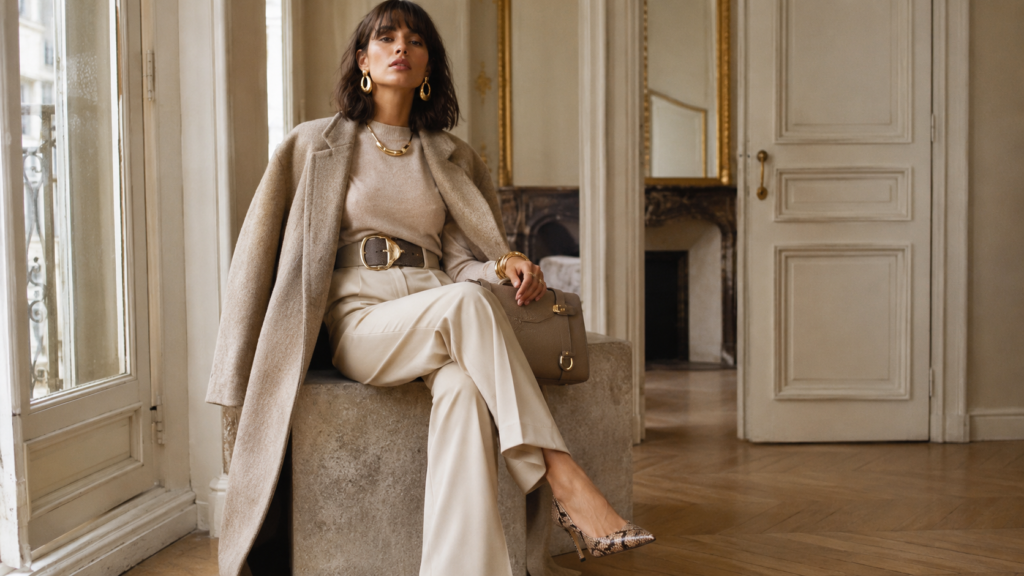
A tailored blazer can be worn with relaxed jeans. A delicate skirt can be balanced by heavier boots. A structured handbag can sharpen an otherwise casual outfit, while sneakers can make traditionally smarter clothing feel less formal.
This type of contrast gives individual pieces more personality because they are not surrounded exclusively by items from the same style category.
Color can accomplish the same thing. An outfit does not need five different colors to become interesting. A predominantly neutral combination with one deeper, lighter, or brighter shade can provide enough separation.
The goal is not to make pieces clash. It is to prevent the entire outfit from communicating exactly the same visual message.
Use Layers to Build Depth
Layering is particularly useful when the individual garments are extremely simple.
A T-shirt beneath an open shirt already creates more depth than the T-shirt alone. Add a jacket and the outfit gains another set of lines, textures, and proportions. A visible collar beneath a sweater can have a similar effect.
Good layering does not necessarily mean wearing more heavy clothing. Thin layers can create the same visual complexity without adding excessive bulk.
Pay attention to what remains visible. A shirt cuff extending slightly beyond a sweater sleeve, a contrasting collar, or a longer hem underneath a shorter jacket can introduce detail in a controlled way.
This is often why professionally styled outfits appear more considered even when every individual garment is relatively ordinary.
Make Shoes Part of the Outfit
Shoes are sometimes treated as the final practical decision: whatever is comfortable and roughly matches the clothes gets worn.
Styling them deliberately can produce a very different result.
Imagine straight-leg jeans and a plain white shirt. With simple sneakers, the combination remains casual. Loafers make it sharper. Ankle boots add more structure. A sleek heel changes the proportions and pushes the same clothes toward a dressier direction.
The clothes have not changed, but the overall impression has.
Shoes can also provide texture or contrast when the rest of the outfit is intentionally restrained. This makes them particularly valuable when someone prefers uncomplicated clothing but does not want every look to feel identical.
Stop Trying to Make Every Piece Interesting
One reason outfits can become difficult to style is the assumption that every item needs to contribute something noticeable.
Usually, the opposite works better.
Allow basic garments to function as the background and decide what deserves attention. It might be the jacket, jewelry, shoes, bag, silhouette, or an interesting combination of textures. Once that focal point exists, the quieter pieces give it space to work.
This also makes getting dressed easier. Instead of asking how to make a plain shirt, jeans, jacket, shoes, and accessories individually exciting, choose one or two elements to carry the look.
A basic outfit is therefore not necessarily a styling failure. In many cases, it is simply an unfinished foundation. Add texture, adjust the proportions, introduce one strong accessory, or create a little contrast, and clothes that initially seemed ordinary can suddenly look completely intentional.