Starting knitting is exciting—and a little bewildering. Walk into any craft shop (or browse online) and you’ll see walls of needles, yarn in every texture imaginable, and gadgets that look like they belong in a toolbox. The good news: you don’t need much to begin. The better news: choosing the right basics early on can make the first few weeks feel smooth instead of frustrating.
Before you buy anything, ask yourself one question: what do you want your first project to be? A scarf, a headband, a simple hat? Beginners often do best with “small wins”—projects that teach core skills without taking months. If you like the idea of curated materials and a clear plan, looking at easy-start yarn projects can help you understand what a sensible beginner setup typically includes (and, just as importantly, what you can ignore for now).
Start with a sensible first yarn
Yarn choice is the biggest driver of early success. The right yarn makes your stitches easier to see, your tension easier to control, and your finished piece more forgiving.
Pick a beginner-friendly fibre
As a rule of thumb, aim for yarn that’s smooth, soft enough to hold comfortably, and not overly slippery.
- Wool or wool blends: Great elasticity and “memory,” meaning it bounces back and helps even out uneven tension. Many new knitters find wool the easiest to learn on.
- Acrylic: Affordable, widely available, and low-maintenance. It’s often smoother than rustic wool, though sometimes a bit split-prone depending on the twist.
- Cotton: Beautiful for dishcloths and summer knits, but less stretchy. That lack of give can make it feel harder on the hands when you’re learning.
What to avoid at first? Super fuzzy mohair-style yarns (hard to see stitches), very dark colours (hard to read your work), and novelty yarns with bumps or eyelash textures (they hide mistakes until they become big mistakes).
Choose a comfortable thickness and colour
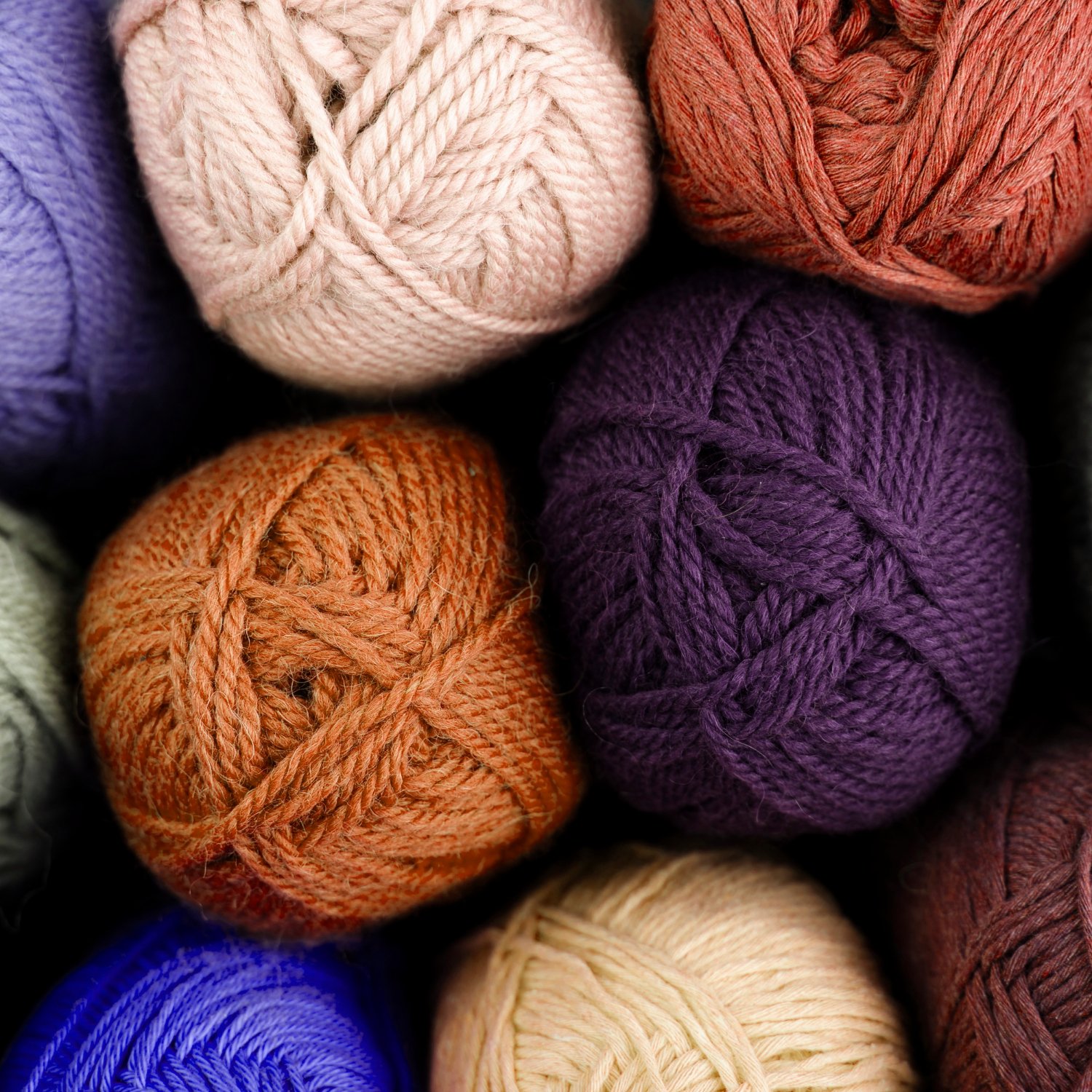
Most beginners do best with DK (double knit) or worsted/aran weight yarn—thick enough to see, not so bulky that it feels clumsy. Colour matters more than people expect: a light to medium solid shade (or gently heathered) makes it far easier to spot where your needle should go.
Needles: the right type beats the “best” type
Needles aren’t one-size-fits-all. The “best” needles are the ones that help you control the yarn without fighting it.
Straight vs circular (and why circulars aren’t just for “advanced” knitters)
Many newcomers start with straight needles, and that’s fine for flat pieces. But circular needles are often more comfortable because the weight of the project rests in your lap, not on your wrists. You can knit flat on circulars too—so they’re a versatile early purchase.
Material matters more than branding
Different needle materials change how the yarn moves:
- Bamboo/wood: Slight grip, which helps prevent stitches sliding off. Great for first projects.
- Metal: Fast and smooth. Excellent once you’re confident, but can feel slippery at the start.
- Plastic: Varies widely in quality; can be fine, but some flex or catch.
If you’re unsure, a mid-size bamboo circular needle is a safe bet for learning.
Nail the needle size to match your yarn
New knitters often buy needles first and yarn second. Flip that: choose yarn, then match the needle size recommended on the ball band. That recommendation is a starting point, not law, but it keeps you in the right zone.
The small tools that actually help (and the ones you can skip)
You’ll see long lists of “must-have notions.” Realistically, a handful covers most beginner needs.
Essentials worth having from day one
Here’s the one (and only) bullet list you’ll need:
- Tapestry needle (for weaving in ends)
- Small scissors (or yarn snips)
- Stitch markers (a few are enough)
- Measuring tape (for checking length and basic sizing)
- Row counter (optional, but surprisingly helpful)
Everything else—cable needles, stitch holders, fancy gauges—can wait until a pattern specifically calls for them.
Gauge tools: useful, but don’t let them intimidate you
Gauge is simply “how many stitches and rows make a certain measurement.” For a scarf, it’s not critical. For a hat or jumper, it matters a lot. As a newcomer, focus on understanding that needle size + yarn + your tension creates fabric. If your fabric feels stiff, go up a needle size; if it’s floppy and loose, go down.
How to set yourself up for early success
The first few projects are less about perfection and more about building muscle memory. A good supply setup supports that.
Choose patterns that teach one new thing at a time
A classic beginner progression looks like:
- Knit stitch and purl stitch on a simple rectangle
- Learn increasing/decreasing on something small (a hat or simple shaped cowl)
- Introduce knitting in the round (if you haven’t already)
- Try a basic texture pattern (rib, seed stitch) before jumping into lace
This approach keeps you motivated because you can see progress.

Make practice easier on your hands
If your hands cramp early on, it’s usually a mix of grip, tension, and posture. A few simple adjustments help:
- Use needles that feel warm and comfortable to hold (many prefer bamboo early on).
- Keep your shoulders down; rest your elbows if you can.
- Take short breaks before discomfort becomes pain.
- Don’t “choke” the yarn—aim for consistent tension rather than tight tension.
Knitting shouldn’t hurt. If it does, pause and tweak your setup.
Buying supplies wisely: where to spend and where to save
It’s easy to overspend at the beginning because the craft is beautiful—and because buying tools feels like making progress. But skill comes from time with the needles, not from a drawer full of accessories.
Spend on: yarn you’ll enjoy touching
If the yarn feels scratchy in the skein, it won’t magically feel better after hours of knitting. Choose something pleasant, especially for wearables. Even budget-friendly yarn can feel great; the key is picking a fibre and texture you like.
Save on: extras you can improvise
Stitch markers can be paper clips. A row counter can be a note on your phone. Blocking mats can wait until you’re working on garments or lace. Start lean, then upgrade once you know what you genuinely use.
The bottom line: build a “small, smart” knitting kit
A newcomer’s knitting supplies don’t need to be complicated: one or two beginner-friendly yarns, an appropriately sized pair of needles (often circulars), and a few simple notions. The goal is to remove friction so you can focus on the real work—learning how stitches form, how fabric grows, and how satisfying it is to make something from a strand of yarn.
Once you’ve finished your first project, you’ll have something better than a shopping list: you’ll have preferences. And that’s when choosing supplies gets genuinely fun.
Image Source