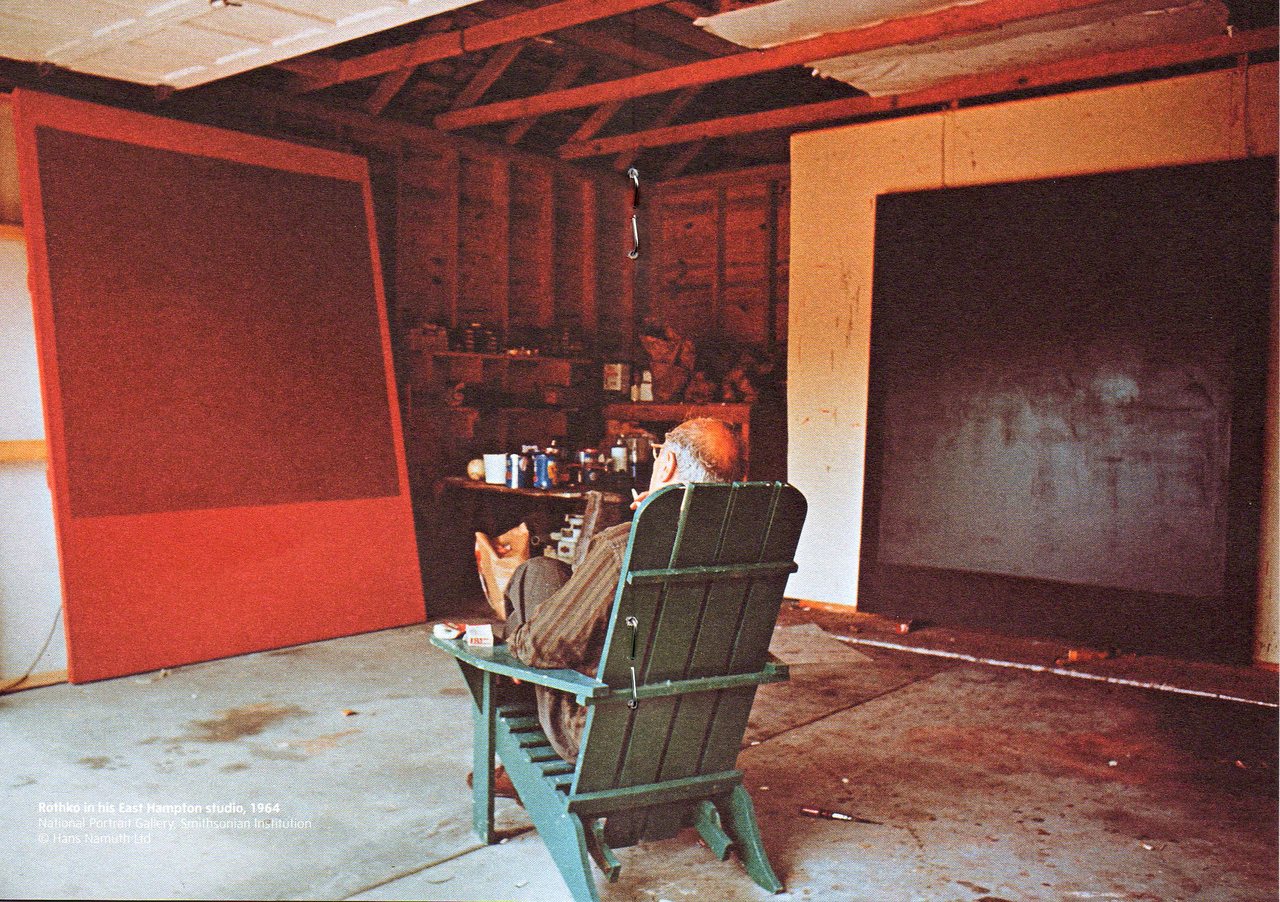
Rothko’s canvases still hum like open wounds. In an age where everything must shout to be heard, he remains one of the rare artists who understood the power of silence. His paintings don’t perform; they confront. They are not spectacles — they are rooms you walk into and never fully exit.
If you want to see how minimalism ripples through modern culture, read 7 Of The Most Influential Painters Of The 20th Century
on Art-Sheep — it places Rothko among peers and explains how his visual logic migrated into interiors, film, and branding.
For the museum perspective, the Tate’s Rothko overview
is a concise, authoritative resource explaining the psychology of his Seagram murals and later work, and why his color fields feel more like emotional architecture than decoration.
The uncomfortable psychology of stillness
Rothko never painted stories; he painted atmosphere. His color fields function like emotional climates that leave viewers negotiating their inner life. In front of a Rothko, nothing is narrated — everything is felt. Where most contemporary works ask to be liked, Rothko asks to be endured.

The myth, the weight, the empty room
His suicide in 1970 became part of the interpretive frame on his work. That biography shades the canvases, but it does not explain them. The darkness in his late paintings existed before the tragedy; the tragedy hardened the shadow.
How Rothko accidentally redecorated the world
From boutique hotels to cinematic color grades, Rothko’s palette has been commodified. What began as an inquiry into feeling became a library of mood presets for designers and advertisers. Misreadings abound, but influence is influence.
What Rothko protects us from
We live in an attention economy where spectacle is currency. Rothko resists that market. His canvases demand patience and vulnerability — qualities algorithms cannot price. In refusing to perform, he preserves a space for honest, unshareable feeling.