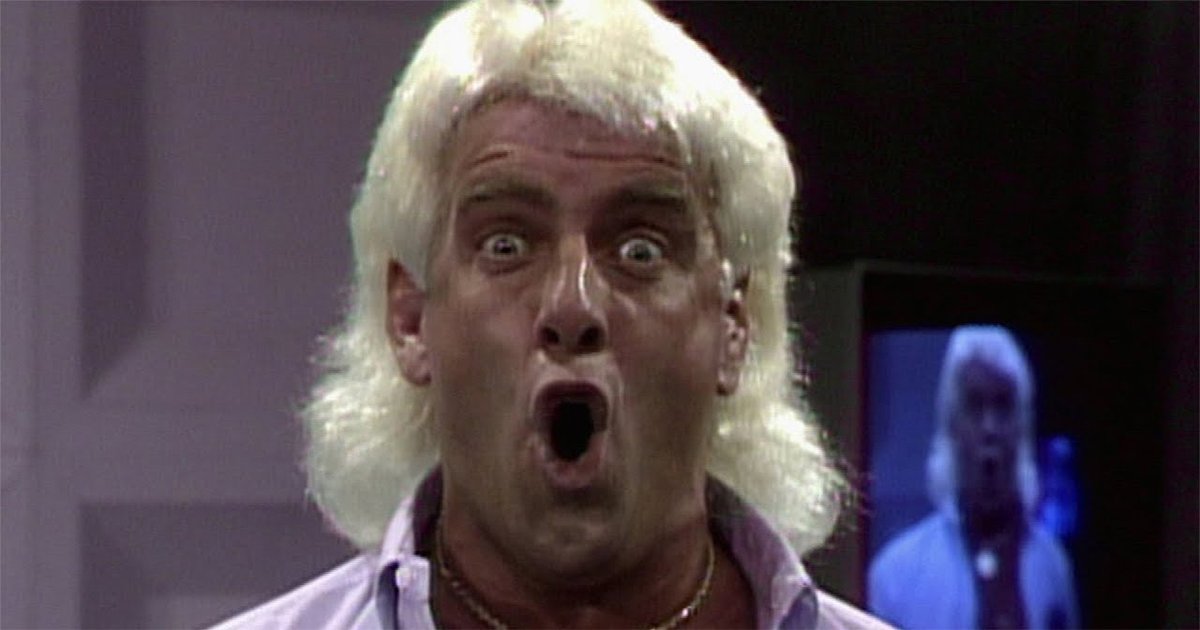
There are gestures that belong to history, and then there are gestures that become history by refusing to behave. The Flair Flop belongs firmly to the latter category. It is excessive. It is unserious. It is theatrically wrong. And yet, it may be one of the most influential physical expressions in popular culture that no one ever thought to analyze properly.
Until now.
The Flair Flop — that overcommitted, face-first collapse performed by Ric Flair after even the gentlest strike — was never about realism. It was about belief. Or rather, about persuading the audience to believe in the lie so completely that the truth became irrelevant.
A Body That Refused Subtlety
Professional wrestling has always existed in a strange cultural corridor between sport, theater, and ritual humiliation. Within that corridor, Ric Flair built a persona that thrived on excess: the robes, the strut, the endless self-mythologizing. The Flair Flop was the physical punctuation of that persona.
When Flair was struck, he didn’t fall. He collapsed. He didn’t sell pain — he sold catastrophe. Gravity itself seemed offended by his defeat.
What made the move unforgettable was not its mechanics, but its confidence. Flair trusted the audience to understand the joke while still surrendering to the drama. That trust is rare. Most performers either chase realism or parody it. Flair did both at once.
Comedy as a Weapon, Not a Distraction
The brilliance of the Flair Flop lies in its timing. It often appeared at moments when tension needed release — a pressure valve disguised as humiliation. The audience laughed, but they didn’t disengage. If anything, they leaned in closer.
This is where the move quietly crosses into performance art.
Like slapstick or silent cinema, the Flair Flop used exaggeration to heighten emotional stakes. Buster Keaton fell so that the world could feel unstable. Flair fell so that victory could feel fragile.
It is no coincidence that audiences still react to it decades later. The move taught viewers how to watch wrestling: not as a test of realism, but as a shared act of complicity.
The Body as Text
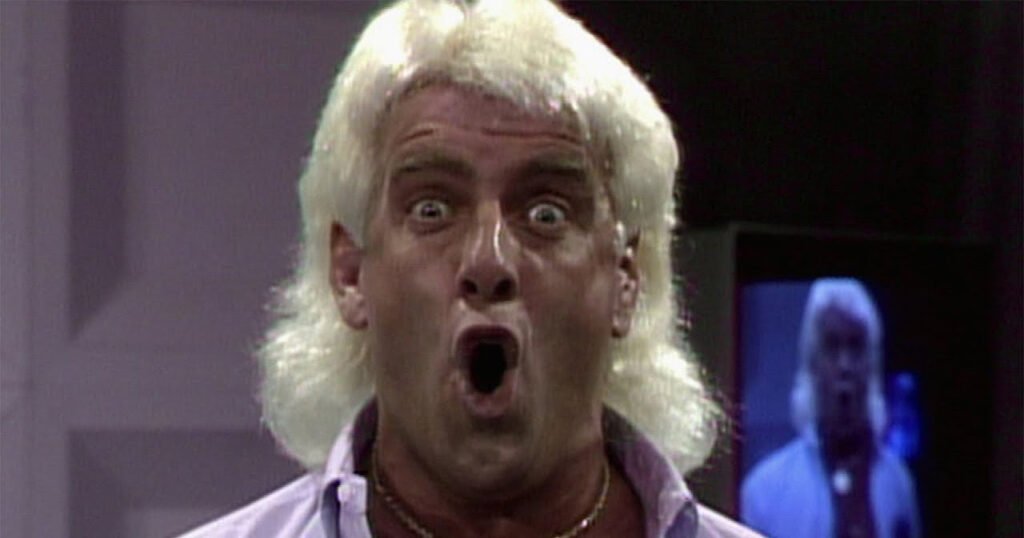
In art criticism, the body is often described as a site of inscription — a surface on which culture writes itself. The Flair Flop is exactly that: a repeated physical text, rewritten night after night, always the same and never identical.
Each flop carried context. Who hit him. Where he landed. How long he stayed down. The move became modular, adaptable, endlessly reusable.
In this sense, it shares DNA with gestures analyzed across visual culture on platforms like art-sheep, where repetition, exaggeration, and symbolic collapse are understood not as laziness, but as language. The Flair Flop was not filler. It was vocabulary.
Why It Worked (And Why It Still Does)
The Flair Flop worked because it understood something fundamental about audiences: people don’t want authenticity — they want conviction. Flair never flopped halfway. He never winked at the camera. He committed fully to absurdity.
This is why the move continues to circulate online, long after its original context faded. Detached from wrestling storylines, the flop becomes pure gesture — a meme before memes had a name.
It also explains why so many modern performers fail when attempting irony. They fear embarrassment. Flair weaponized it.
Masculinity, Undone
There is another layer here that often goes unspoken. Wrestling traditionally performs hypermasculinity: dominance, strength, control. The Flair Flop does the opposite. It presents the male body as vulnerable, ridiculous, overwhelmed.

And yet, it never diminishes Flair’s authority. If anything, it amplifies it.
This contradiction is what makes the move culturally potent. It suggests that power does not come from refusing collapse, but from surviving it — publicly, theatrically, without apology.
The Flair Flop as Cultural Prototype
Once you start looking, you see the Flair Flop everywhere. In cinema. In internet culture. In viral videos where overreaction becomes its own art form.
The logic is the same: exaggerate failure so completely that it becomes unforgettable.
Scholars of performance and popular culture often point to figures like Ric Flair as accidental theorists of spectacle. His career, documented extensively in places like his biography and cultural legacy, reveals a performer who understood instinctively what academia would later attempt to formalize: spectacle works best when it knows it is spectacle.
Why This Article Needed to Exist
The Flair Flop deserved analysis because it represents a rare moment where low culture outpaced theory. It solved problems artists still struggle with: how to balance sincerity and irony, how to fail without disappearing, how to turn embarrassment into authority.
It also reminds us that not all cultural milestones arrive announced. Some of them fall face-first, arms outstretched, to the sound of an audience laughing — and remembering.
There should have been an article about the Flair Flop.
Now there is.