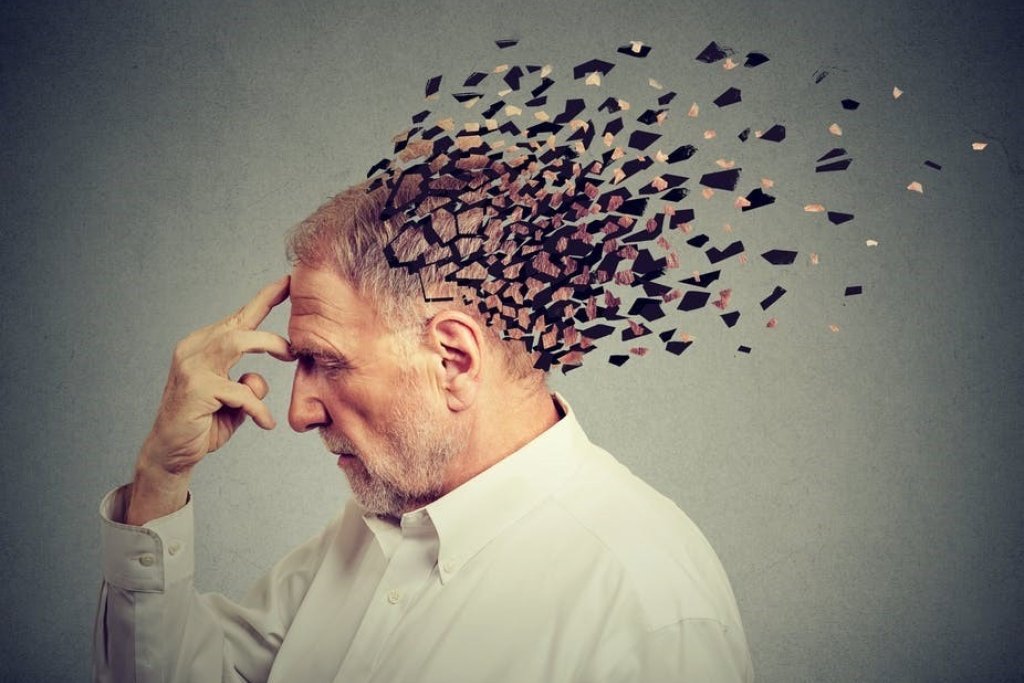
For decades, Alzheimer’s research has been a graveyard of headlines. “Promising new treatment…” followed by “didn’t translate to humans.” Hope, rinse, repeat. Families learned to keep optimism polite and temporary. Scientists learned to speak in cautious verbs.
But in late 2025, the tone changed. Not because we suddenly discovered a miracle cure (this is not a movie), but because the field is finally moving from describing Alzheimer’s to intercepting it — earlier, smarter, and with greater clarity than before.
The important shift isn’t just treatment. It’s timing.
The Old Problem: We Were Always Too Late
Historically, Alzheimer’s has been diagnosed when the damage is already underway — when memory loss becomes visible, when confusion enters daily life, when the brain has already been quietly reorganized by disease.
That’s like diagnosing a house fire when the roof collapses.
The major scientific fight has been this: can we detect Alzheimer’s early enough to change its trajectory? Can we target meaningful mechanisms without gambling years on theories that collapse at trial stage?
In 2025, we’re finally seeing a layered “yes.”
The Big Change: Better Detection, Smarter Targets, Less Guessing
This year’s developments point to a more mature era of Alzheimer’s science — one where biomarkers, immunotherapies, inflammation research, and clinical frameworks are converging.
A particularly major signal comes from CTAD 2025 (Clinical Trials on Alzheimer’s Disease), where researchers highlighted progress not only on drugs, but on delivery methods, side-effect mitigation, and how we categorize patient response — the kind of boring-sounding progress that actually changes medicine. Alzheimer’s Research UK’s CTAD 2025 highlights captures that momentum clearly.
Here’s what matters culturally and medically: Alzheimer’s is starting to look less like an unavoidable curse and more like a condition with multiple intervention points. Not fully preventable (yet), not curable (still no), but increasingly interruptible.
Why This Breakthrough Matters Outside of Medicine
Alzheimer’s doesn’t belong only to hospitals. It belongs to families. To economies. To caregivers. To the emotional infrastructure of aging societies.
When science improves early diagnosis, it doesn’t just create better treatments — it changes how people live:
-
people can plan earlier
-
caregivers can act sooner
-
trials can recruit more accurately
-
therapies can target the right stage
-
and most importantly: fear becomes less abstract

Every step forward in Alzheimer’s shifts the psychological atmosphere of aging. It changes the way societies imagine the future — not as decline-by-default, but as something that may be shaped.
That matters.
The Dark Humor of Hope
The cynicism around Alzheimer’s research wasn’t irrational. It was earned. Too many press releases. Too many “next big things” that fizzled. Too much money for too little measurable relief.
But this year feels different because it’s not built around one miracle claim. It’s built around a system-level improvement: better frameworks, better measurement, better modeling of response.
It’s not the kind of hope that sells movie tickets.
It’s the kind that quietly alters history.
And yes — it should scare industries that profit from long-term decline. But it should also comfort families who’ve lived too long with the idea that Alzheimer’s equals inevitability.
If you’ve ever wondered how humans make meaning out of slow catastrophes — and how we aestheticize, narrate, and cope — it’s worth reading cultural work that dissects these emotional mechanisms through art. For a strangely fitting parallel, see how contemporary satire encodes societal anxieties in visual form in this Art-Sheep feature on Pawel Kuczynski.
Because Alzheimer’s is medical — but it is also deeply cultural.
And finally, in 2025, it looks less like a sentence and more like a fight.