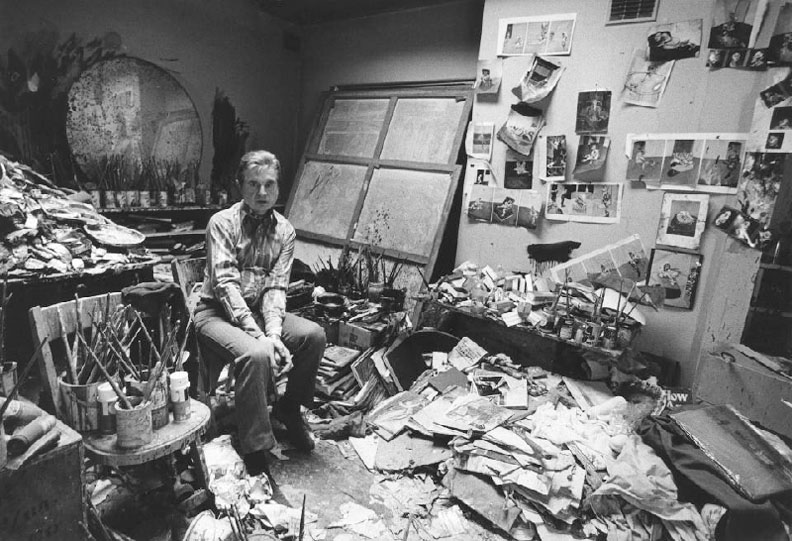
Francis Bacon never painted gentle things. He didn’t paint flowers, or peaceful landscapes, or serene faces gazing dreamily into neutral space. He painted the human condition without anesthesia — contorted bodies, smeared faces, mouths that seemed to howl from beyond the canvas. His art was the equivalent of waking up from a nightmare you refuse to admit is real.
And yet, in 2025, Bacon feels more modern than ever.
The Canonical Scream
Bacon’s work is often described as violent, but violence alone does not explain its lingering chill. The power lies in the emotional residue — the way his figures seem trapped in the act of becoming themselves, caught between flesh and spirit, matter and meaning.
His obsession with the scream is particularly infamous. Inspired in part by the frozen grimace in Eisenstein’s Battleship Potemkin, Bacon’s screaming figures neither call for help nor express catharsis. They are mouths dislocated from logic. Sound, but without salvation.
It’s no coincidence that contemporary artists obsessed with existential discomfort are frequently compared to Bacon. Consider the raw psychological tension in the satirical work of Pawel Kuczynski, whose visual allegories capture modern society’s unspoken dread, as highlighted in Art-Sheep’s feature on his brilliant social commentary
. Both artists share a talent for revealing the grotesque underbelly of “normal life.”
A Painter of Psychological Architecture
Bacon once said he wanted to “paint the sensation, not the fact.” His figures are less bodies and more psychic landscapes. They stretch, warp, and dissolve, as though reality itself were melting under emotional pressure.
This is part of what makes Bacon feel timeless. Even today’s hyper-digital society remains haunted by the same anxieties: identity, mortality, isolation, the strange disconnect between public persona and private despair.
The Tate’s extensive Bacon archive (Tate Biography
) describes his work as a “distortion that clarifies,” a paradox that explains why his paintings still resonate. He distorts faces so we can see ourselves more clearly.
Bodies as Battlegrounds
In Bacon’s universe, the body is both a home and a prison. His flesh isn’t decorative; it’s argumentative. It pushes back. It collapses. It refuses aesthetic politeness.
Modern viewers — increasingly aware of trauma, dissociation, and mental health — find in Bacon a language for psychological states that resist clean narrative. His bodies are metaphors for people navigating invisible wars.
He painted not what was seen, but what was felt in the pit of the stomach.
Violence Without Villains
Perhaps the most unsettling element of Bacon’s work is its lack of perpetrators. Violence exists, but no one inflicts it. The figures appear tortured by existence itself, not by external agents.
This aligns disturbingly well with today’s emotional climate — a world where people increasingly describe burnout, anxiety, and despair as environmental rather than interpersonal. A world where the villain is not a person, but the circumstances of modern life.
Bacon and Queer Identity
Bacon’s sexuality is crucial to understanding his paintings, but not in a reductive “gay painter paints gay pain” sense. His works reflect desire and danger intertwined, intimacy and brutality fused together, mirroring the social environments in which he lived.
His relationship with George Dyer, marked by passion and tragedy, produced some of his most devastating works. These paintings don’t merely depict a man; they depict Bacon’s fear of loss, abandonment, and the collapsing boundaries between love and self-destruction.
The Persistence of the Cage
Many Bacon figures appear trapped inside geometric structures, transparent boxes, or invisible cages. These motifs offer an eerily contemporary metaphor:
We are constantly observed.
We are constantly performing.
We live in digital cages we fear leaving.
Bacon sensed this before it became the architecture of daily life.
Bacon in Pop Culture
Bacon’s imagery permeates cinema, fashion, photography, and editorial aesthetics. Directors like David Lynch, Derek Jarman, and Gaspar Noé borrow heavily from Bacon’s visual vocabulary:
-
distorted faces
-
dim, theatrical lighting
-
bodies suspended in emotional viscosity
Even recent AI-generated works echo Bacon’s style, albeit unintentionally, as algorithms attempting to produce “raw emotion” often arrive at smeared, flesh-like imagery eerily reminiscent of his canvases.
Why He Still Haunts Us
Because Bacon paints the things people feel but rarely articulate. Because suffering, in his hands, becomes mythic — not melodramatic, not moralistic, but existential. Because he shows us that the scream is not a call for help, but an acknowledgement of being alive.
In a world that hides its wounds with filters, Bacon’s art is the unfiltered truth.