Personal desks spark better ideas by immediately giving your creativity a distinct visual language, functionally optimizing your physical surface for smarter daily workflows, and fostering deep emotional well-being that minimizes mental resistance to difficult tasks.
This intentional approach to artistic design transforms a standard, generic desk into an inspiring creative environment.
By carefully curating personalized elements, specific color palettes, and tactile objects, professionals construct a workspace that actively sustains focus and fuels continuous innovation.
Over the past several years, the explosive growth of the creator economy and the permanent shift toward remote work have pushed artists, designers, and desk-based professionals to think differently about where their ideas are born.
Personalized workspaces, environments shaped by individual taste and intentional design, have moved from a niche habit to a recognized cornerstone of creative culture.
Walk through any online design community today, and you will find thousands of curated desk setups, each one a small autobiography told through color, texture, and carefully chosen objects.
For creative professionals especially, this shift feels instinctive. Artistic design has always been about expressing something true, making it logical that the environment in which that expression happens should feel true as well.
But beyond the aesthetic appeal, there is a deeper question worth exploring regarding how exactly customizing your desk changes the quality of your output.
Why Your Desk Is More Than a Surface
Before examining what to change, it helps to understand why the space around you matters so much in the first place.
A desk is not just a functional piece of furniture; it is a psychological environment that sends constant, low-level signals to your brain about what kind of thinking is expected. Workspace is the second largest overhead for most organisations and can influence productivity by up to 20%.
Walk up to a cold, cluttered, generic surface, and your brain registers obligation. Walk up to a space that feels alive with personal meaning, and something subtler happens where your mind relaxes its guard and begins to open.
People working in enriched spaces were 17% more productive than those in lean spaces, but those sitting at empowered desks were even more efficient, being 32% more productive than their lean counterparts without any increase in errors.
The specific elements of artistic design influence mood and mental state in ways that often operate below conscious awareness. Whether that is the deliberate arrangement of objects, selecting the right ambient lighting, or anchoring your workflow with a custom desk mat from Custom Envy, the impact is tangible. By the time you sit down to work, your environment has already been having a conversation with your brain.
| Key Insight: Your desk is a psychological environment. Personalizing it isn’t just decoration; it pre-programs your brain for focus, shifting your mindset from obligation to open, creative engagement before you even start working. |
3 Ways Personalization Quietly Powers Creative Work
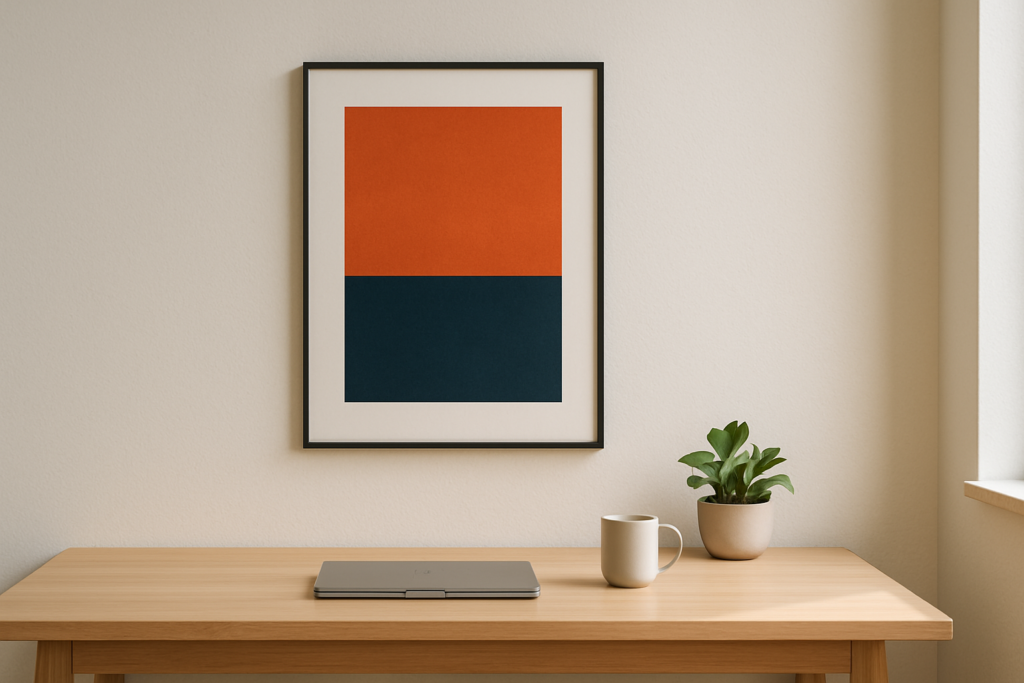
1. It Gives Your Creativity a Visual Language
There is a concept in environmental psychology known as environmental priming, the idea that the objects, colors, and imagery surrounding you can pre-activate certain mental states before a task begins. For creative professionals, this effect is particularly powerful when applying artistic design to their spaces.
When you surround yourself with colors, images, and objects that reflect your personal aesthetic, you are not just decorating. You are fundamentally altering how your brain perceives your workspace.
You are building a visual grammar for your own mind, telling the brain that this is a space where your ideas are welcome. Individual expression at the desk, in this sense, is less about taste and more about permission. Consider a graphic designer who keeps a curated mat printed with the signature color palette she uses across her client work.
Before she opens a single file, her eyes have already moved across those exact tones. Her workspace is speaking her design language before she does, cutting out the warm-up because the creative environment has done part of the priming work for her.
Even one intentional visual element can meaningfully shift the feel of a space, reducing the friction between inspiration and execution.
2. It Helps You Work Smarter, Not Harder
Workspace personalization is not only an emotional or aesthetic phenomenon; it is deeply functional. A space optimized for your particular way of thinking and working looks fundamentally different from a space optimized for anyone else.
If your process involves sketching on paper before moving to a screen, physical surface space and easy access to drawing tools matter more than extensive monitor real estate.
If you work from physical reference images, having a visible wall or a surface area that keeps those references within your eyeline is an efficiency tool.
Micro-frustrations from a workspace that does not match your actual process are creative flow killers that accumulate invisibly throughout a workday. This is where the physical objects you choose become genuinely strategic.
A high-quality custom mat, for example, quietly protects the surface while defining the physical boundaries of the active workspace. It anchors the visual aesthetic and introduces a tactile quality that affects how it feels to work.
Beyond individual objects, ergonomic personalization pairs naturally with aesthetic choices to compound productivity gains, treating functional and aesthetic priorities as the exact same conversation.
3. It Makes the Space Feel Like Yours, and That Matters
There is a dimension of workspace personalization that productivity research sometimes underweights: what it does for emotional well-being over the long term.
Showing up to a desk that feels impersonal or disconnected from who you are carries a subtle but real cost. Motivation erodes in environments that feel like borrowed territory, whereas creative safety grows in spaces that reflect authentic identity.
Personalizing your workspace builds emotional connections and boosts motivation in the office. A study found that 87% of professionals with customized workspaces saw better motivation and productivity. This shift happened for one freelance illustrator during a difficult winter when she was struggling with creative blocks.

She made deliberate changes to her workspace, adding warm-toned personal photographs above her monitor and placing meaningful objects within reach.
She grounded her keyboard with an amber and terracotta mat, making her desk finally feel like it was actively rooting for her. Environments that reflect personal identity are linked to reduced cortisol levels and higher reported job satisfaction, correlating with sustained creative output.
| Warning/Important: Don’t just copy trendy desk setups from social media. A workspace that looks beautiful but ignores your actual physical workflow will create micro-frustrations that silently kill your creative momentum. |
Simple Starting Points for Personalizing Your Creative Space
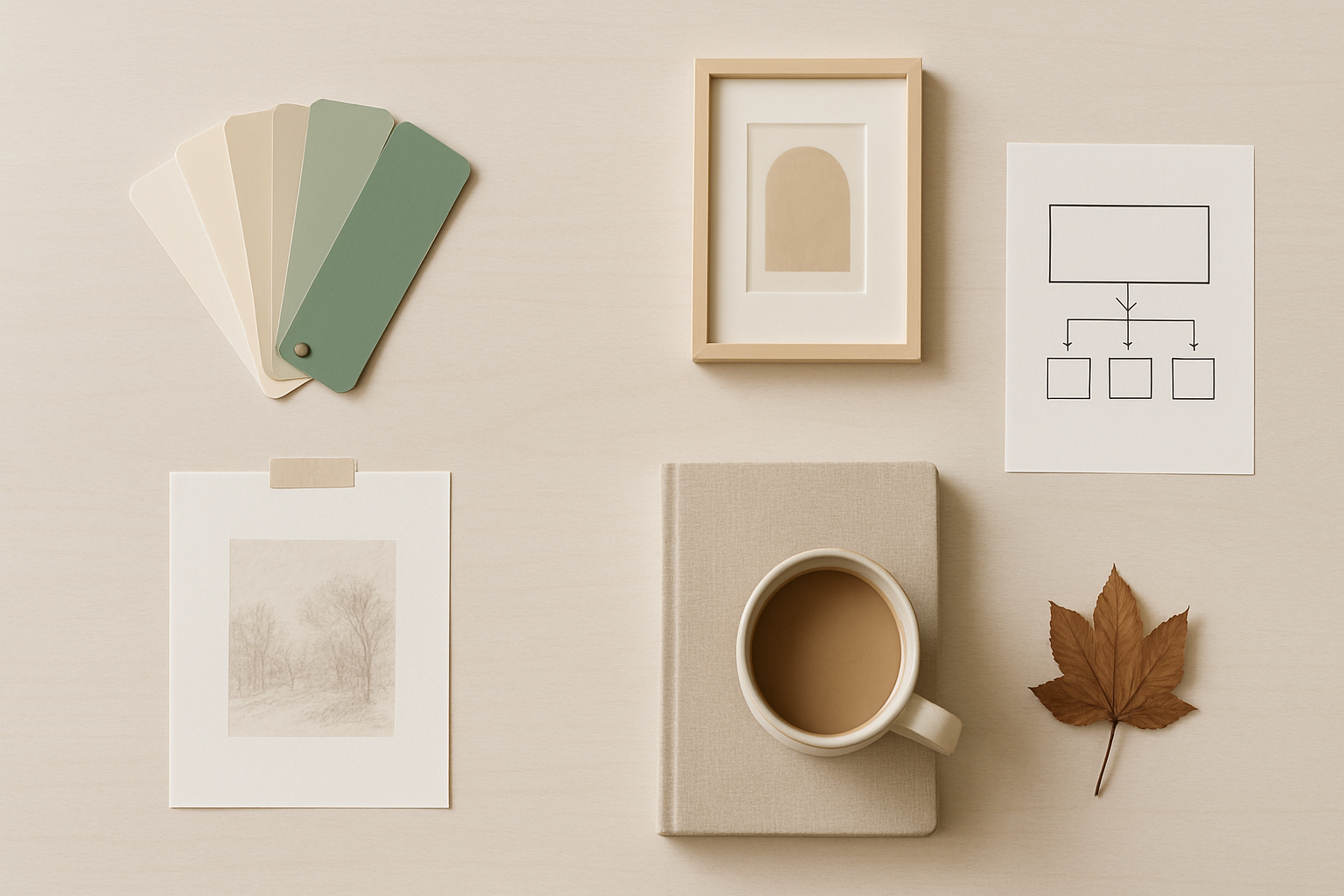
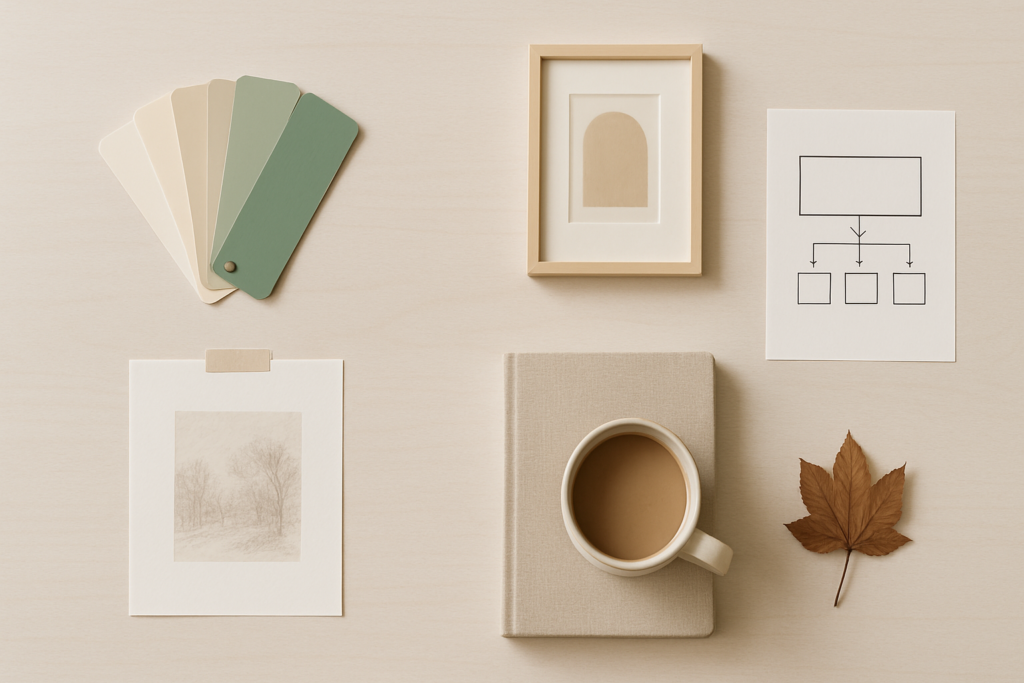
Alt: Cozy workspace featuring textured notebook.
If you are looking at your desk right now and feeling unsure where to begin, start smaller than you think necessary. Transformation in creative spaces rarely comes from a single dramatic overhaul. Instead, it accumulates through small, deliberate decisions made over time.
- Start with one surface and make it intentionally yours before touching anything else.
- Anchor your color story by identifying two or three colors that genuinely energize you.
- Bring in something personal and handmade, like a sketch you are proud of or a meaningful photograph.
- Design for your actual process by arranging the space around your real workflow.
- Layer texture and touch, since tactile warmth affects how you feel while working.
- Refresh seasonally with small rotational changes to keep the space feeling alive.
| Pro Tip: Avoid the trap of trying to redesign your entire workspace in a single weekend. Pick one specific anchor point, like a custom desk mat or an eye-level shelf, and build your aesthetic outward from there. |
A Closing Reflection: The Space That Thinks With You
Transforming your creative output does not always require acquiring new skills or forcing yourself to work longer hours. You can change your environment deliberately and personally, allowing your ideas to arrive with less resistance and much more clarity.
This story represents a pattern visible across creative communities wherever people have given themselves permission to treat their workspace as a creative act in itself.
Before returning to your daily workflow, sit for a moment and consider what your current desk says about how you create.
Ask yourself which single element could make you feel most at home in your own creative space. The best creative environments are not built overnight, but rather assembled slowly, one meaningful detail at a time.
Each choice adds another layer of signal to the space, affirming that this is where your work comes from. That process is worth starting this week, even if the first step is only one small, intentional change. Your personalized workspace will continue to grow and evolve alongside your artistic journey.
| Author Profile: Custom Envy is the leading online retailer of personalized gifts and custom products for individuals seeking unique, memorable presents. |