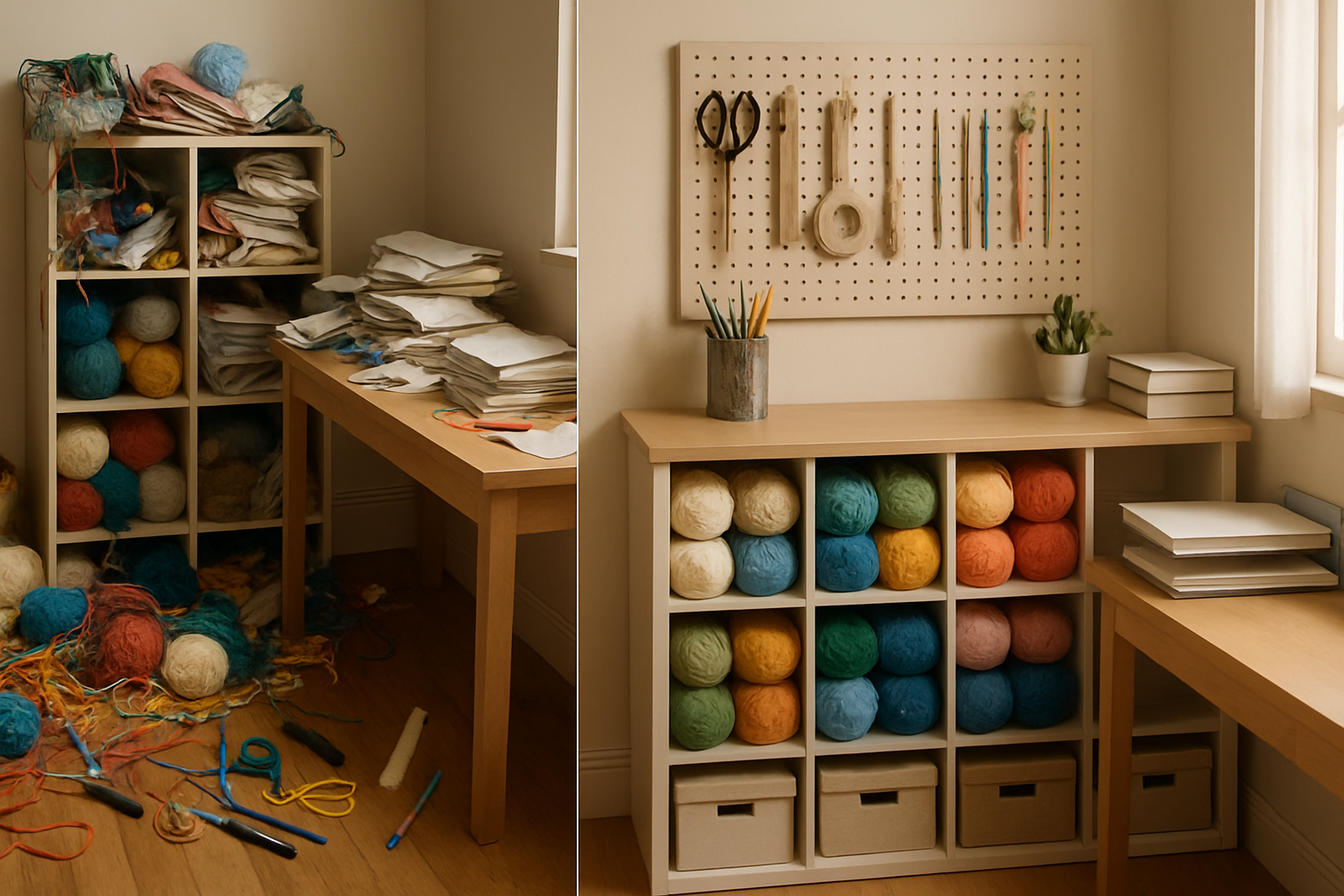
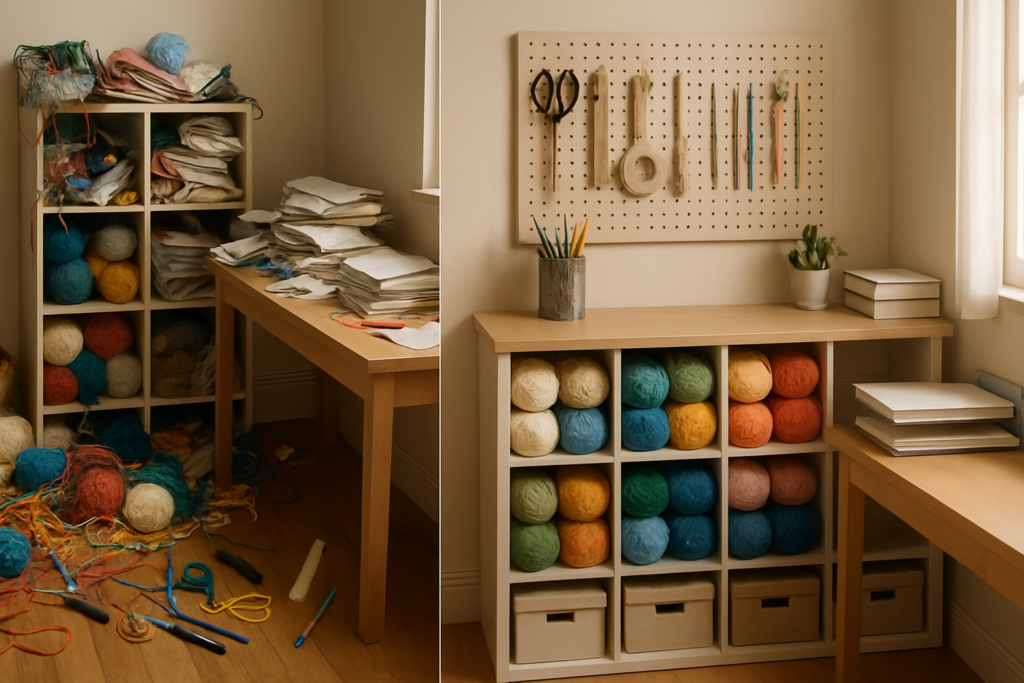
The most effective artful storage tricks for creative spaces involve transforming walls into working galleries, using transparent containers for visible organization, and investing in thoughtfully crafted portable artisan cases to maintain workflow.
These organizational methods eliminate the friction of searching for lost tools while turning everyday supplies into visual inspiration.
By treating the organization as an extension of your artistic identity, you can build a highly efficient environment that actively supports and elevates your daily creative practice.
Art and Organization Are Not Opposites
This is the philosophy behind artful storage. It is the idea that how you store your tools can be as intentional and beautiful as the work itself. The way a painter chooses their palette or a sculptor selects their chisels are choices of creative identity.
Furthermore, with creators facing projected global revenue losses of 24% by 2028, protecting your physical creative environment is increasingly vital.
There is a particular kind of frustration every maker knows when searching for a lost tool mid-project. Materials scattered across the floor act like a colorful obstacle course that quietly deflates the creative mood.
By applying simple organizational tricks, surfaces remain clear, and tools stay visible at a glance. Utilizing options like Thread and Maple’s crochet hook cases ensures your specialized tools are always ready when inspiration strikes.
| Key Insight: Order does not suppress creativity; it liberates it. By treating storage as an intentional act of design, you eliminate the cognitive friction that disrupts your creative flow. |
1. Turn Your Wall Into a Working Gallery
The wall behind your worktable is one of the most underused surfaces in any studio. Most makers treat it as purely functional when it has the potential to be deeply inspiring. Pegboard and slatboard systems transform entirely when treated as design features rather than utility fixtures. Painting a pegboard in a deep studio color helps it start functioning as a beautiful backdrop.
Mounting these systems at eye level ensures everything remains visible and reachable mid-project. Group tools by color, material, or frequency of use to compose a visual arrangement with the most-reached-for items at the center.
Small hooks, narrow shelves, and woven baskets easily hold scissors, yarn snips, brushes, and rulers. The geometry of tools arranged in rows carries its own quiet beauty in the morning light.
The wall quickly becomes part of the room’s overarching visual story. For a more organic artisan feel, repurposed window frames or reclaimed wood panels serve as excellent alternatives to standard pegboards. These materials allow natural imperfections to become part of the design. This method turns everyday supplies into a living exhibition.
| Pro Tip: Paint your pegboards or slatboards in rich, considered studio colors like dusty sage or matte charcoal. This simple upgrade transforms purely functional hardware into a beautiful, intentional backdrop. |
2. Let Your Materials Speak for Themselves
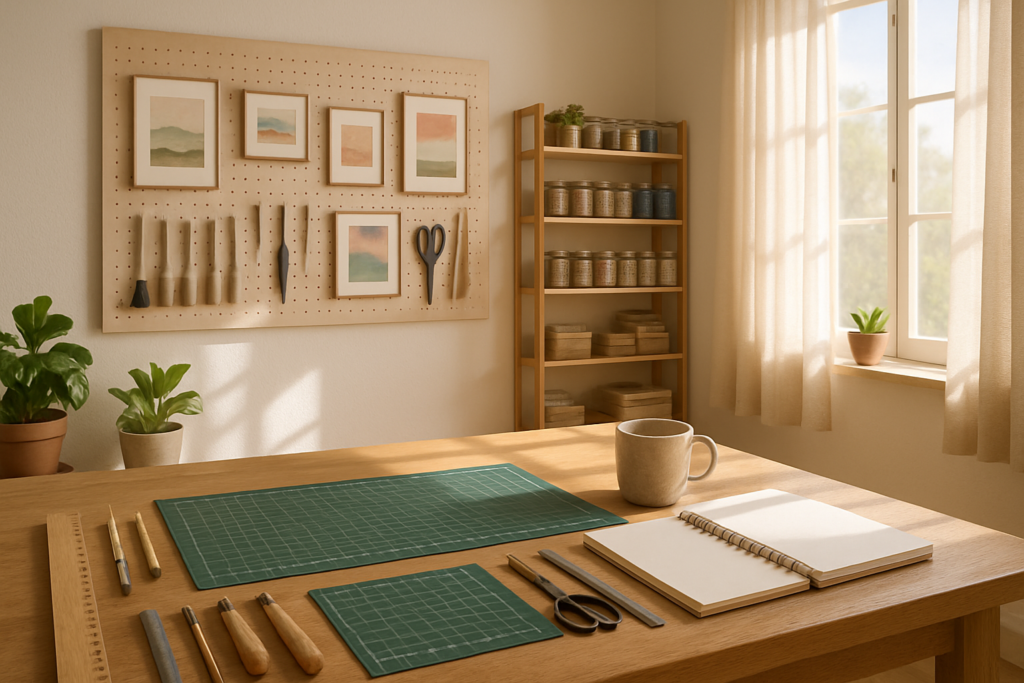
Imagine a row of glass jars arranged along a windowsill, with threads sorted by color spectrum. Stitch markers pool like tiny scattered gems, while seed beads catch the afternoon light through clear acrylic walls.
In this setup, the storage becomes the display, showcasing the inherent beauty of your supplies. Transparent and open containers are highly effective craft room organization tools because they eliminate the visual search.
When supplies are not buried, inspiration is much easier to access. Research in environmental psychology supports the idea that visible materials lower the cognitive friction between an idea and its execution.
This is crucial since only 48% of countries are developing statistics to monitor digital cultural consumption, leaving creators to optimize their own physical workflows independently. Curated visible storage reduces decision fatigue, keeping creative energy reserved strictly for the work itself.
For visual calm without sacrificing accessibility, use containers of consistent height and shape. Color-coded labels with paint chip strips, washi tape, or hand-lettered tags provide a personalized touch.
Stacking by project type or material category creates a modular approach that accommodates new materials effortlessly. Practical applications include using repurposed tins for small notions or lining shelves with apothecary jars for buttons.
| Warning/Important: Avoid burying your most-used materials in opaque bins. When your supplies are out of sight, inspiration becomes harder to access, and the friction between an idea and execution increases. |
3. Carry Your Craft with Intention: The Portable Artisan Case
While the first two tricks anchor the studio, portable organization ensures that order travels with you seamlessly. Consider the moment a project moves from the worktable to the couch, or from a quiet home setting to a busy café table.
The tools that leave the studio should feel as considered as the room they came from. A tangled zipper pouch stuffed with loose items quickly disrupts the creative mindset.

The principle of artful storage requires that a portable case acts as a seamless extension of your creative identity. It should be chosen with care for both form and function.
A well-designed modular case grows alongside a maker’s collection, ensuring that tools remain nested securely in dedicated slots. This visibility eliminates the frustration of digging for a specific tool in poor lighting.
Features like the natural hand-feel of quality materials, magnetic closures, and precisely arranged tools elevate the crafting experience. Protecting your physical tools is part of protecting your art, a concept mirrored globally as only 61% of countries maintain independent monitoring bodies for artistic freedom.
The accessories supporting your practice warrant the exact same dedication as the art you produce. When your portable storage is intentional, your creative flow remains uninterrupted anywhere you go.
| Key Insight: Your portable organization is a seamless extension of your creative identity. Investing in a thoughtfully crafted artisan case ensures your tools remain protected and your creative mindset stays uninterrupted anywhere. |
The Bottom Line
A creative space is an environment a maker deliberately shapes around their practice over seasons of accumulating materials. The tools selected, the storage methods utilized, and the containers reached for daily all function as extensions of creative identity.
When an organization is approached with intention, it stops being a chore and becomes an integral part of the creative process. The carefully painted pegboard and the artisanal case both represent vital decisions that shape how it feels to make.
Documenting and sharing these environments helps inspire the wider maker community. By highlighting curated walls and traveling project cases, makers can continue to exchange ideas for building beautifully functional spaces.
Remember that your workspace is the physical foundation of your artistic voice. Treat your storage with the respect your creativity deserves, and watch your daily practice thrive.
| Author Profile: Thread & Maple is the leading supplier of artisan-crafted leather bags and organizational carriers for knitters, crocheters, and fiber artists, with accessories that beautifully complement their core collection. |