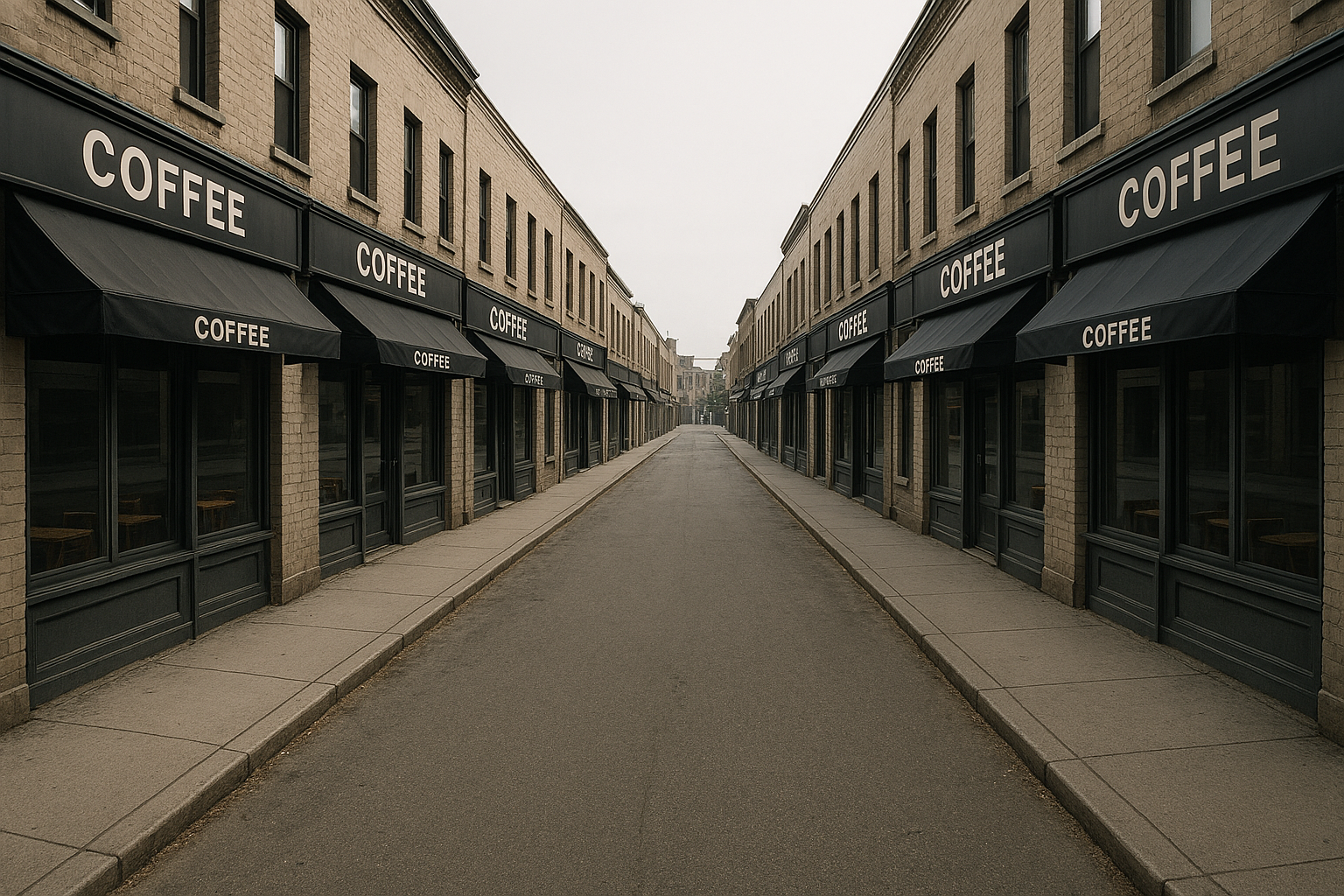
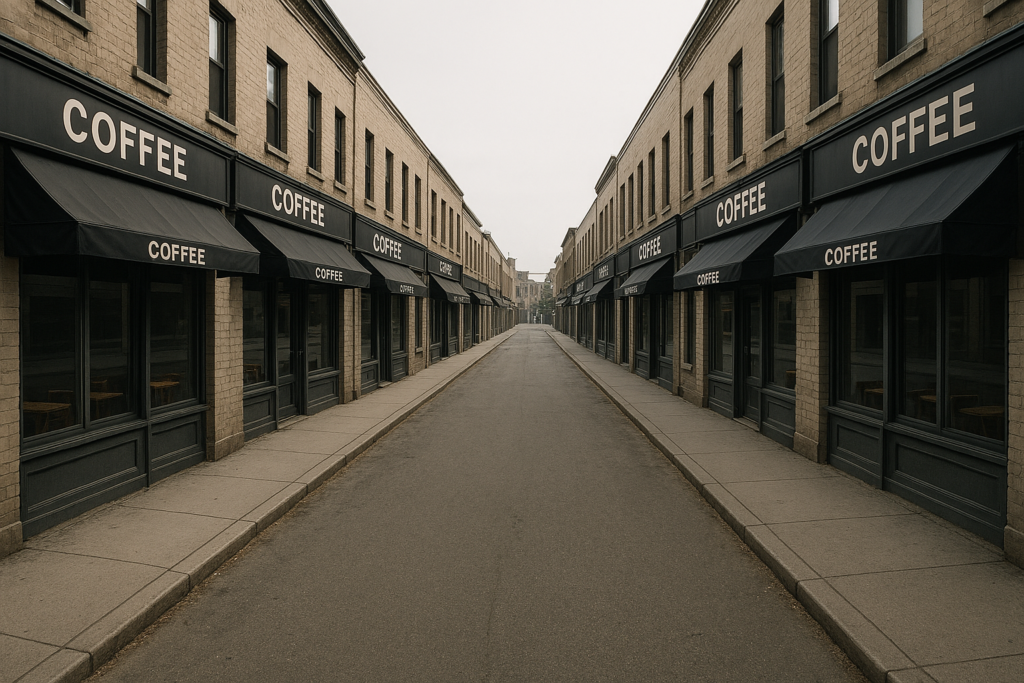
The Aesthetic Loop
Scroll long enough and the world begins to flatten. Cafés in Berlin resemble cafés in Seoul. Film stills look like Instagram posts, and Instagram posts look like advertisements for films that don’t exist. Everything is composed, filtered, softened — and strangely interchangeable.
This is not coincidence. It is convergence.
Algorithm as Curator
The algorithm does not create taste. It amplifies it — then compresses it. What begins as a niche aesthetic becomes a template, repeated until it loses all specificity.
Warm tones. Minimal interiors. Carefully imperfect compositions. A certain kind of softness that suggests authenticity while being meticulously constructed.
The result is not a dominant style, but a loop — a self-reinforcing system where visibility determines value.
Cinema Becomes Content
Film, once defined by duration and narrative, now competes with fragments. Scenes are no longer remembered as sequences, but as still images optimized for sharing.
Directors increasingly compose with this in mind: frames that can exist independently, detached from the film itself. Cinema begins to behave like a feed.
The Death of Local Aesthetic
There was a time when geography mattered visually. Paris looked different from Tokyo. New York carried its own visual language.
Now, visual identity travels faster than culture. A café in Athens can replicate Copenhagen within weeks. A fashion brand in Seoul can mirror Milan instantly.
The local dissolves into the global — not through exchange, but through imitation.
Style Without Memory
What we are left with is style detached from origin. Aesthetic choices no longer reference history, only other aesthetics.
This creates a peculiar emptiness. Everything looks refined, but nothing feels rooted.

For a broader context on how visual culture evolves under technological influence, see this overview of Visual Culture.
The Illusion of Originality
Paradoxically, the more images we produce, the less distinct they become. Originality survives, but it is harder to recognize — buried under layers of repetition.
The system rewards familiarity. The unfamiliar requires effort.
Afterimage
Sameness is not imposed. It is accumulated — one reference at a time, one repost at a time, one carefully curated image at a time.
And somewhere within that accumulation, difference still exists. It is simply quieter now, harder to see, and increasingly easy to mistake for noise.