Prologue in Slow Motion
Football sells grace, geometry, and collective emotion — yet some of its most enduring images are collisions, ruptures, and brief, incandescent losses of control. These moments persist because they feel larger than sport: closer to theatre, opera, or even performance art accidentally staged inside a stadium. Violence on the pitch is rarely just physical; it becomes symbolic almost instantly, replayed until it turns mythological.
If football is remembered through goals, it is mythologized through gestures — those sudden, unplanned acts that fracture the narrative and linger longer than trophies. The following nine moments remain iconic not only because they shocked audiences, but because they condensed emotion, psychology, and spectacle into a single unforgettable frame.
1. Zidane’s Last Gesture
Italy vs France — FIFA World Cup Final, Berlin (2006)
Extra time in Berlin felt suspended, as if the match were waiting for something irreversible. Zinedine Zidane, already moving through the game with the calm of a departing monarch, turned toward Marco Materazzi after a brief exchange. What followed — the headbutt delivered with almost ceremonial stillness — remains football’s most operatic collapse.
The image persists because it is composed like classical drama: white shirts frozen mid-motion, bodies orbiting a single violent gesture. Zidane had scored earlier with an audacious Panenka; his dismissal transformed triumph into tragedy. It felt scripted by fate — a Shakespearean finale disguised as sport. Even now, the moment is replayed less as scandal than as myth.
2. Cantona’s Impossible Leap
Crystal Palace vs Manchester United — Premier League, Selhurst Park (1995)
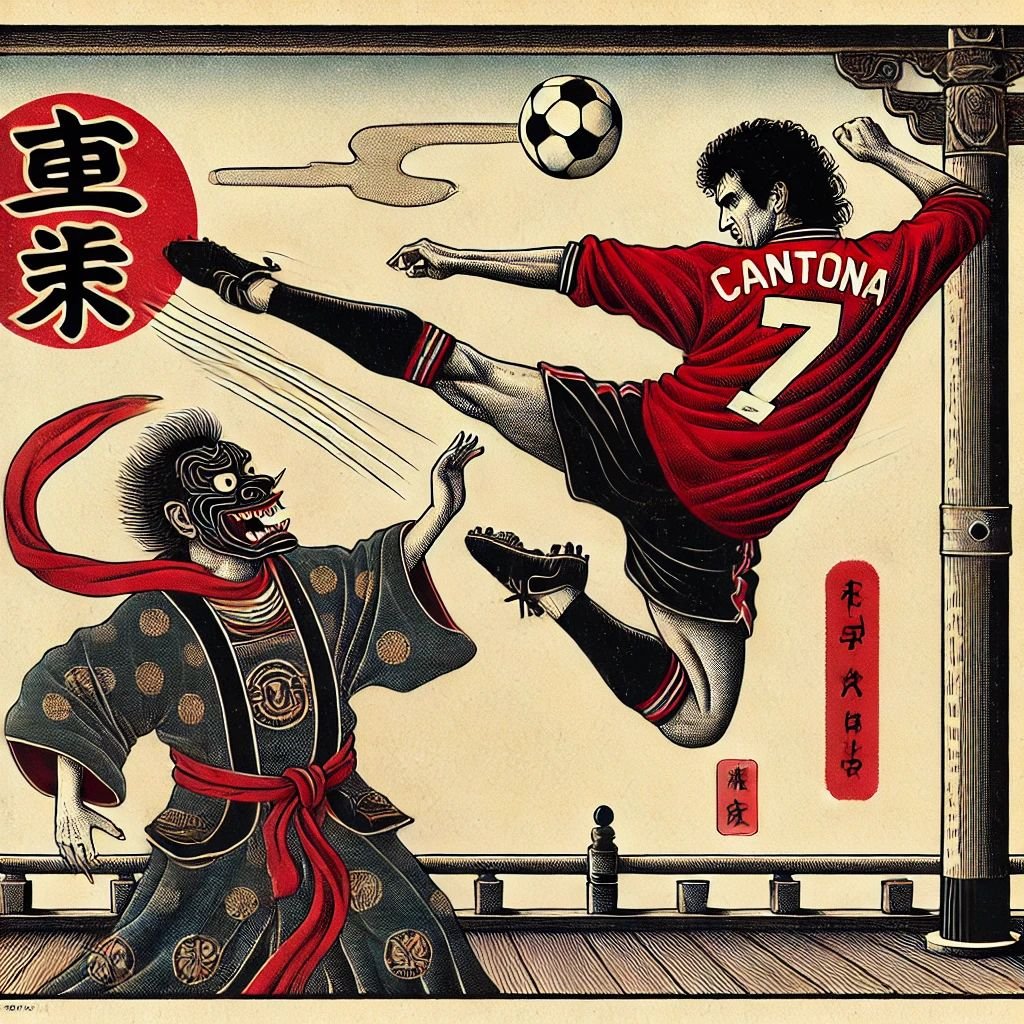
Sent off after kicking Richard Shaw, Eric Cantona walked toward the tunnel with the composure of a man exiting a stage. Then, suddenly, he re-entered it. Launching himself into the stands with a kung-fu kick aimed at a heckling supporter, he produced one of football’s most surreal freeze-frames.
The violence was shocking, but its theatricality made it unforgettable. Cantona later described seagulls and trawlers; the mythology practically wrote itself. The Premier League of the mid-90s — newly global, newly televisual — absorbed the moment instantly into its growing folklore. It was less a breakdown than a performance that escaped its script.
3. Suárez and the Logic of Teeth
Ajax vs PSV (2010) / Liverpool vs Chelsea (2013) / Uruguay vs Italy — World Cup (2014)
Luis Suárez’s three biting incidents — Otman Bakkal in the Eredivisie, Branislav Ivanović at Anfield, and Giorgio Chiellini in Natal — form a trilogy unmatched in football’s archive. Each occurred in a different country, under different stakes, yet together they read like variations on a single surreal theme.
Unlike conventional aggression, Suárez’s actions felt instinctive and strangely irrational, producing reactions closer to disbelief than outrage. The images circulated globally within minutes, collapsing explanation into spectacle. The bites transformed Suárez into football’s most improbable antihero — at once villain, absurdist figure, and reluctant myth.
4. De Jong’s Airborne Stud
Netherlands vs Spain — FIFA World Cup Final, Johannesburg (2010)
The Johannesburg final was tense, physical, increasingly fragile. Then came Nigel de Jong’s airborne challenge into Xabi Alonso’s chest — a collision that resembled martial arts more than midfield play. Broadcast in slow motion across the world, it felt almost unreal in its violence.
That it received only a yellow card amplified its legend. The incident became shorthand for the match’s brutality, its memory inseparable from the image of Alonso folding under impact. Like Zidane’s headbutt, it transcended the result — remembered not for consequence, but for composition.
5. Roy Keane’s Cold Revenge
Manchester United vs Manchester City — Premier League, Old Trafford (2001)
Roy Keane’s challenge on Alf-Inge Håland arrived with the clarity of intent rather than impulse. Years after accusing Håland of feigning injury, Keane lunged with visible calculation. Later, in his autobiography, he admitted the revenge was deliberate.
The tackle reads less like spontaneous violence than narrative closure — football as noir cinema, driven by memory and unfinished business. The still image — Håland collapsing, Keane looming above him — remains one of the Premier League’s most chilling tableaux.
6. Pepe’s Spiral
Real Madrid vs Getafe — La Liga, Bernabéu (2009)
Few moments capture psychological rupture as vividly as Pepe’s meltdown against Getafe. What began as a foul on Javier Casquero spiraled into kicks, stamps, and visible loss of control. Teammates intervened; the stadium watched in stunned silence.
Unlike premeditated aggression, this felt uncontained — a sudden collapse of composure broadcast live. Its disturbing quality lies not in calculation but in excess, revealing the fragile emotional line elite sport demands players walk every week.
7. Beckham’s Flick
England vs Argentina — FIFA World Cup, Saint-Étienne (1998)

David Beckham’s red card for flicking his leg into Diego Simeone remains less physically violent than culturally explosive. The act itself was minor; its consequences were enormous. England exited the tournament, and Beckham — symbol of late-90s composure — became national villain overnight.
The reaction revealed football’s emotional volatility: newspapers, effigies, outrage. Years later, the moment reads differently — less as scandal than as ritual scapegoating.
8. Schumacher’s Collision
France vs West Germany — FIFA World Cup Semi-Final, Seville (1982)
Harald Schumacher’s collision with Patrick Battiston is still one of football’s most disturbing images. Battiston lay unconscious with broken teeth; Schumacher stood unmoved. No foul was given.
The still frame remains haunting: bodies scattered, silence heavy. Unlike other incidents here, it carries no theatrical flourish — only blunt force and institutional indifference. It lingers because it feels unresolved, ethically unfinished.
9. Di Canio’s Push
Sheffield Wednesday vs Arsenal — Premier League, Hillsborough (1998)
Paolo Di Canio pushing referee Paul Alcock produced one of football’s strangest moments: scandal edged with comedy. Alcock’s exaggerated fall bordered on slapstick, yet the seriousness of the offense ensured its legacy.
It blurred sport and farce, authority and theatre. Like Cantona’s leap, it survives because it feels staged — absurd enough to transcend outrage.
Coda: Violence as Archive
These moments endure not simply because they were shocking, but because they condensed emotion into image. Football is remembered visually: gestures repeated, reframed, mythologized.
In the end, the sport’s most lasting archive may not be goals at all, but those brief, volatile seconds when structure collapsed and instinct took over — when football stopped being choreography and briefly became something closer to raw human theatre.