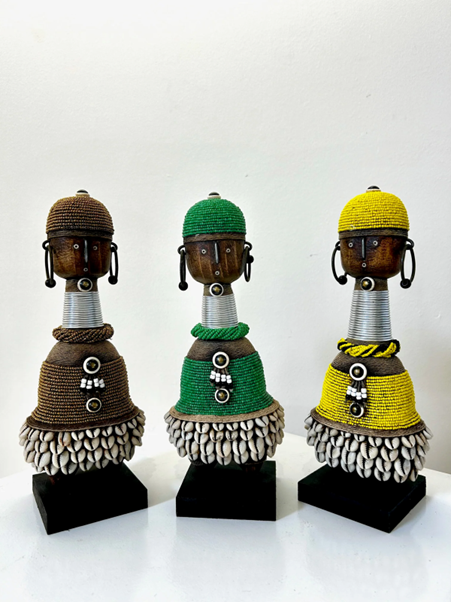
Imagine walking into a gallery, the kind that features in glossy interiors magazines. Your eyes are drawn to a peculiar yet captivating object on the shelf. It is a Namji doll, its wooden form adorned with a vibrant array of beads and cowrie shells. This doll, with its geometric elegance and colorful embellishments, is not just a decorative piece. What might surprise you is that this extraordinary object was never meant to be merely looked at. Its true purpose lies far beyond aesthetic appeal; it is an artifact of deep cultural significance, created to be carried, prayed to, and cherished across generations.
Understanding the Namji Doll
Originating from the Namji, or Dowayo, people of northern Cameroon, the Namji doll is an object steeped in tradition and meaning. Crafted from a single block of African Rosewood, each doll is unique, its individuality stemming from the hands that carved it and the materials used to adorn it. The Namji people are renowned for their skillful artisanship, and their dolls are no exception. The use of beads, cowrie shells, metal strips, and other materials is not simply for decoration; each element is chosen with intent to imbue the doll with specific powers and meanings.
These dolls serve as fertility talismans, traditionally given to brides on their wedding day. The Namji believe that these figures possess potent charms capable of enhancing fertility, protecting against evil spirits, and ensuring safe childbirth. Brides carry the dolls as symbols of good fortune, tucked into their clothing or bags. Once their hopes are realized and they become mothers, the dolls are often placed on family altars or passed down to their daughters, thereby continuing a cycle of protection and blessing.
Artistry in Design
To merely call Namji dolls “primitive” or “tribal” would be to undermine their artistic complexity and cultural depth. These dolls are extraordinary sculptural objects, appreciated by collectors worldwide for their formal qualities. The geometric carving of the wood creates a striking silhouette, a perfect canvas for the explosion of color and texture provided by the beadwork. Each doll is a singular creation, reflecting the individuality of its maker and the personal touch of its owners.
The process of creation does not end with the doll’s initial carving. As these dolls are passed from mother to daughter, they accumulate history. Each new owner may add her own adornments, making the doll a living document of family heritage. This practice ensures that no two Namji dolls are ever alike, each one carrying the unique stories and blessings of its lineage.
The Journey from Ritual to Collection
The transition of Namji dolls from intimate ceremonial use to coveted collectibles in the global art market is a fascinating journey. These objects, once deeply embedded in the fabric of Namji cultural practices, now find themselves in auction houses and private collections worldwide. Interior designers and collectors are drawn to their aesthetic appeal and the rich stories they encapsulate. However, this transition raises important questions about cultural understanding and provenance.

Owning a Namji doll is not just about possessing a beautiful object. It is about engaging with the object’s story and the cultural context from which it originates. Collectors are urged to seek out authentic Namji dolls, those that carry the full weight of their cultural significance. This ensures that the appreciation of Namji dolls goes beyond surface-level admiration, fostering a deeper understanding of the traditions they represent.
Finding Authentic Namji Dolls
For those interested in acquiring a Namji doll, authenticity is paramount. Galleries that specialize in African art, such as Rogl Souvenirs & Gallery, offer authenticated Namji dolls complete with cultural context. With over six decades of expertise, Rogl Souvenirs & Gallery provides collectors with the opportunity to appreciate these dolls not just as art objects, but as carriers of cultural heritage. Engaging with a Namji doll through such an establishment ensures that its story is preserved, respected, and understood.
As you return to the image of the Namji doll on the shelf, consider the layers of history, belief, and artistry that it embodies. The best African art does more than decorate a space; it engages with it, watches back, and invites the viewer into a dialogue with the past. The Namji doll is a testament to this dynamic, a piece that bridges the gap between tradition and modernity, art and artifact, object and observer.