The Geography of Escape
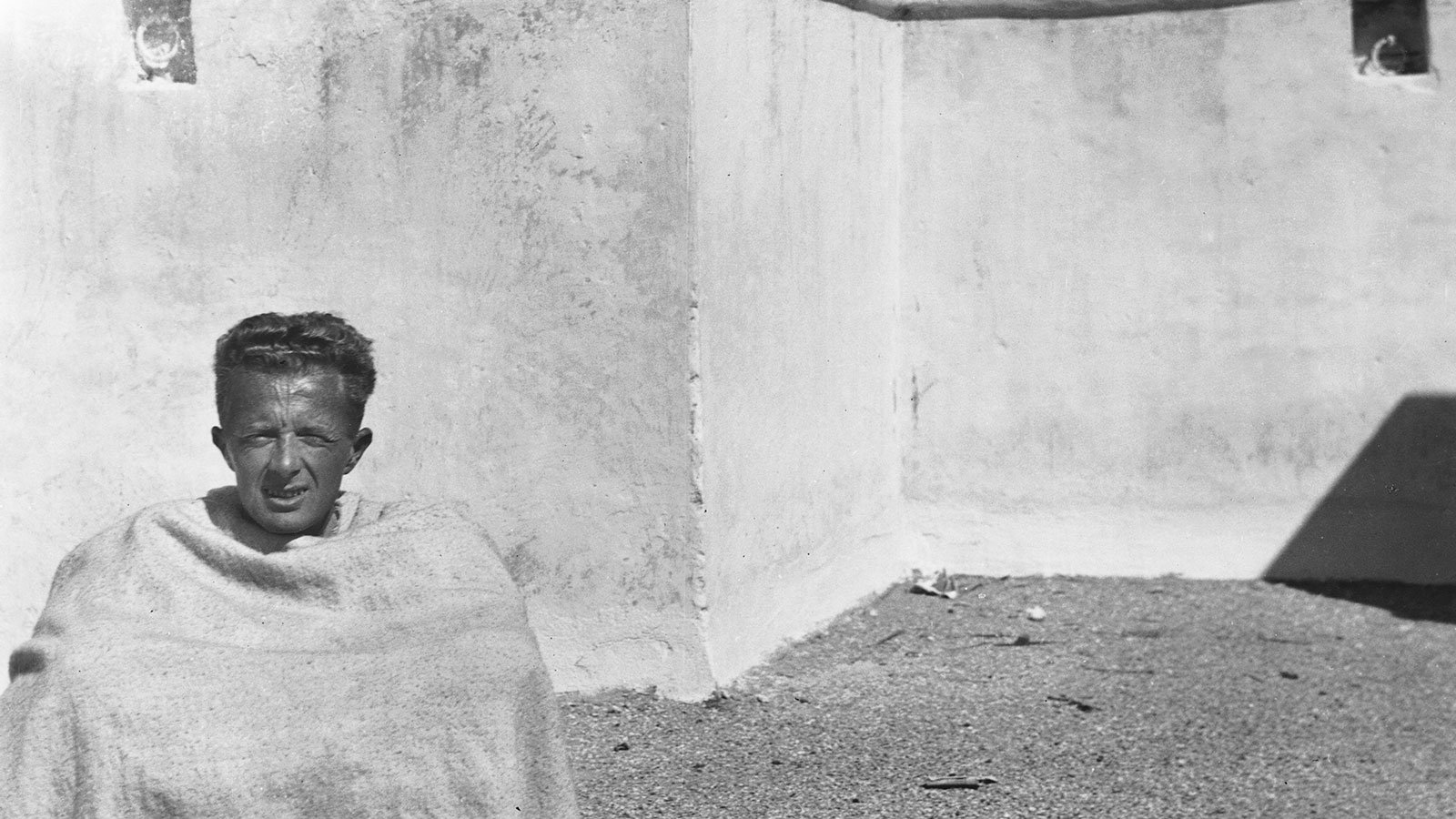
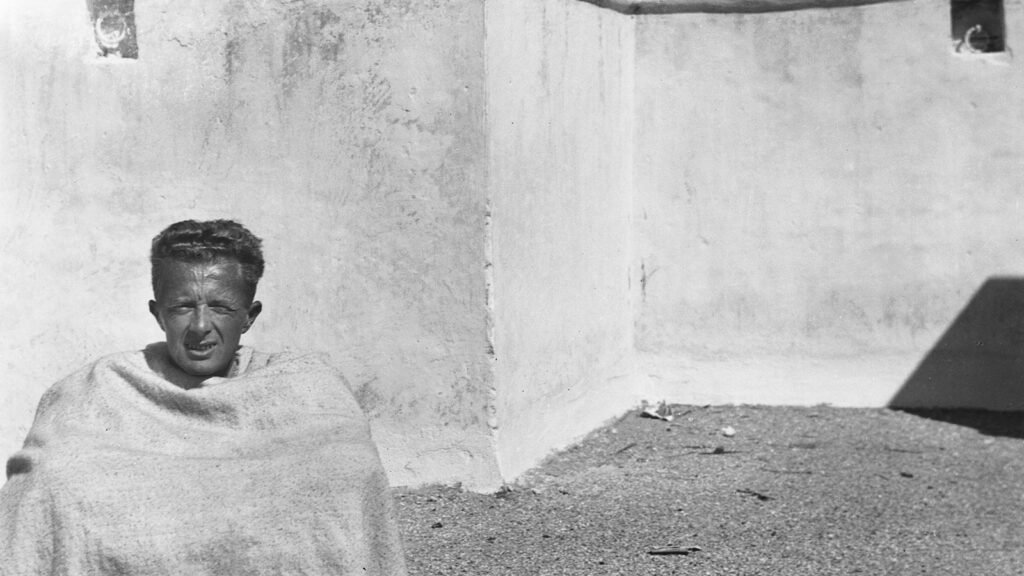
There is something unusually deliberate about Paul Bowles. He did not “end up” in Morocco the way so many artists end up elsewhere — by accident, by exile, by drift. He went there with intention. And more importantly, he stayed.
In 1947, Bowles settled in Tangier, at a time when the city occupied a peculiar position: geographically African, politically ambiguous, culturally suspended between worlds. It was not quite Europe, not quite the Middle East, not quite anything stable. Which is precisely why it attracted him.
Bowles was not looking for inspiration in the conventional sense. He was looking for distance — from America, from familiarity, from the illusion of control.
Tangier as Psychological Landscape
Tangier in the mid-20th century was less a city than a condition. Writers, spies, drifters, and exiles moved through it with a kind of quiet anonymity. It offered something rare: the possibility of disappearing without entirely vanishing.
For Bowles, the city became more than a backdrop. It became a structure through which he could explore dislocation — not just geographical, but existential. His most famous novel, The Sheltering Sky, unfolds not in Tangier itself but across the North African desert, where space expands and identity begins to dissolve.
The novel follows Western travelers who believe they are merely passing through, only to discover that distance changes them irreversibly. The desert, in Bowles’ world, is not empty. It is active, almost predatory — stripping away illusion, comfort, and narrative coherence.
For a broader context on how exile and displacement have shaped literary traditions, see this overview of Exile in Literature.
The Aesthetics of Discomfort
Bowles’ writing is often described as cold, detached, even cruel. His characters are not heroic; they are fragile. They misunderstand the environments they enter. They assume they are observers, when in fact they are participants — and often victims — of forces they cannot comprehend.
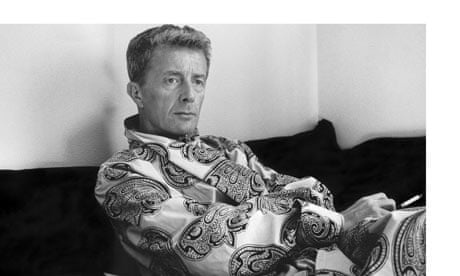
This is what makes his work unsettling. There is no redemption, no moral clarity, no comforting arc. Only exposure.
It’s a sensibility that feels surprisingly contemporary. The idea that travel is not discovery but destabilization — that leaving home does not expand identity but fractures it — resonates strongly in a world where movement is constant but understanding remains shallow.
In this sense, Bowles’ perspective echoes the kind of quiet disorientation explored in pieces like Teacher Missed Her Students So She Knitted Tiny Dolls Representing All 23 Students In Her Class, where seemingly simple gestures reveal deeper emotional and psychological undercurrents.
A Life Between Forms
Before becoming widely known as a writer, Bowles was a composer. Music shaped his understanding of structure, rhythm, and atmosphere — elements that carry into his prose. His sentences move with a kind of measured inevitability, as if each event were already predetermined.
He also worked extensively in translation, recording and transcribing Moroccan oral storytelling traditions. Unlike many Western artists who treated non-Western cultures as aesthetic resources, Bowles maintained a more complicated relationship — one that has been both praised and critiqued.

He did not attempt to “explain” Morocco. He documented fragments of it, often through intermediaries, preserving voices that might otherwise have remained unheard — while also raising questions about authorship, mediation, and cultural distance.
The Myth of Escape
Bowles has often been framed as the ultimate expatriate — the writer who escaped the West and found something more authentic elsewhere. But this interpretation is too simple, and perhaps too comforting.
His work suggests the opposite.

There is no true escape in Bowles’ universe. Only relocation. The self travels with you, and in unfamiliar environments, it becomes more visible, not less. The idea of escape, in this sense, is revealed as a fiction — one that collapses under pressure.
Tangier did not free Bowles from Western identity. It intensified his awareness of it.
After Tangier
Bowles remained in Morocco for the rest of his life. Long after Tangier lost its international-zone mystique, long after the expatriate myth began to fade, he stayed. Not as a visitor, but as a fixture — a quiet presence in a city that had already transformed around him.
By the time of his death in 1999, he had become something like a symbol: the writer who left and never returned, the observer who never fully belonged, the artist who turned distance into method.
Final Distance
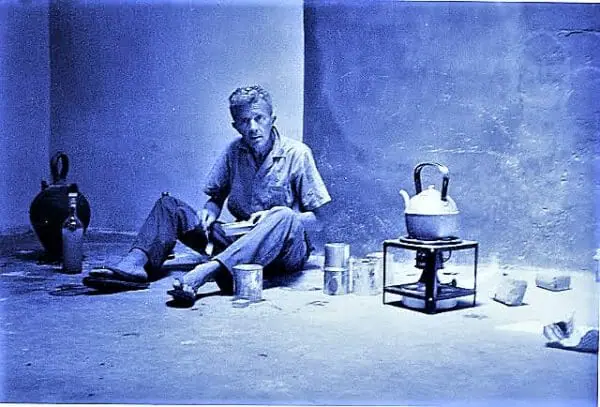
What makes Bowles enduring is not his biography, but his refusal to comfort the reader. He does not offer travel as liberation, nor culture as enrichment. Instead, he presents movement as risk — psychological, existential, irreversible.
In a world increasingly defined by mobility, his work remains a quiet warning.
Not all journeys expand you. Some simply reveal how little of yourself you understand.