The Artist Who Refused to Paint
There is something almost suspicious about Marcel Duchamp. Not because of what he created, but because of what he stopped creating. At a moment when modern art was accelerating toward abstraction, expression, and increasingly elaborate forms of visual innovation, Duchamp chose retreat. Or rather, he chose sabotage.
He abandoned painting not out of failure, but out of boredom. To him, art had already become too retinal — too obsessed with pleasing the eye. What interested him was not how art looked, but how it functioned. Or more precisely, how it could be dismantled.
The Object That Wasn’t Supposed to Be Art
In 1917, Duchamp submitted a porcelain urinal to an exhibition under the title Fountain. Signed “R. Mutt,” the object was rejected. Not because it was offensive, but because it revealed something the art world preferred to ignore: that context, not craftsmanship, defines art.
The scandal has since calcified into legend. Today, Fountain is often cited as one of the most influential works of the 20th century — not for its form, but for its proposition. It asked a question that still hasn’t been resolved: if an artist chooses an object and calls it art, what exactly are we looking at?

For a broader understanding of how such gestures reshaped artistic thinking, see this overview of Conceptual Art.
Readymades and the End of Skill
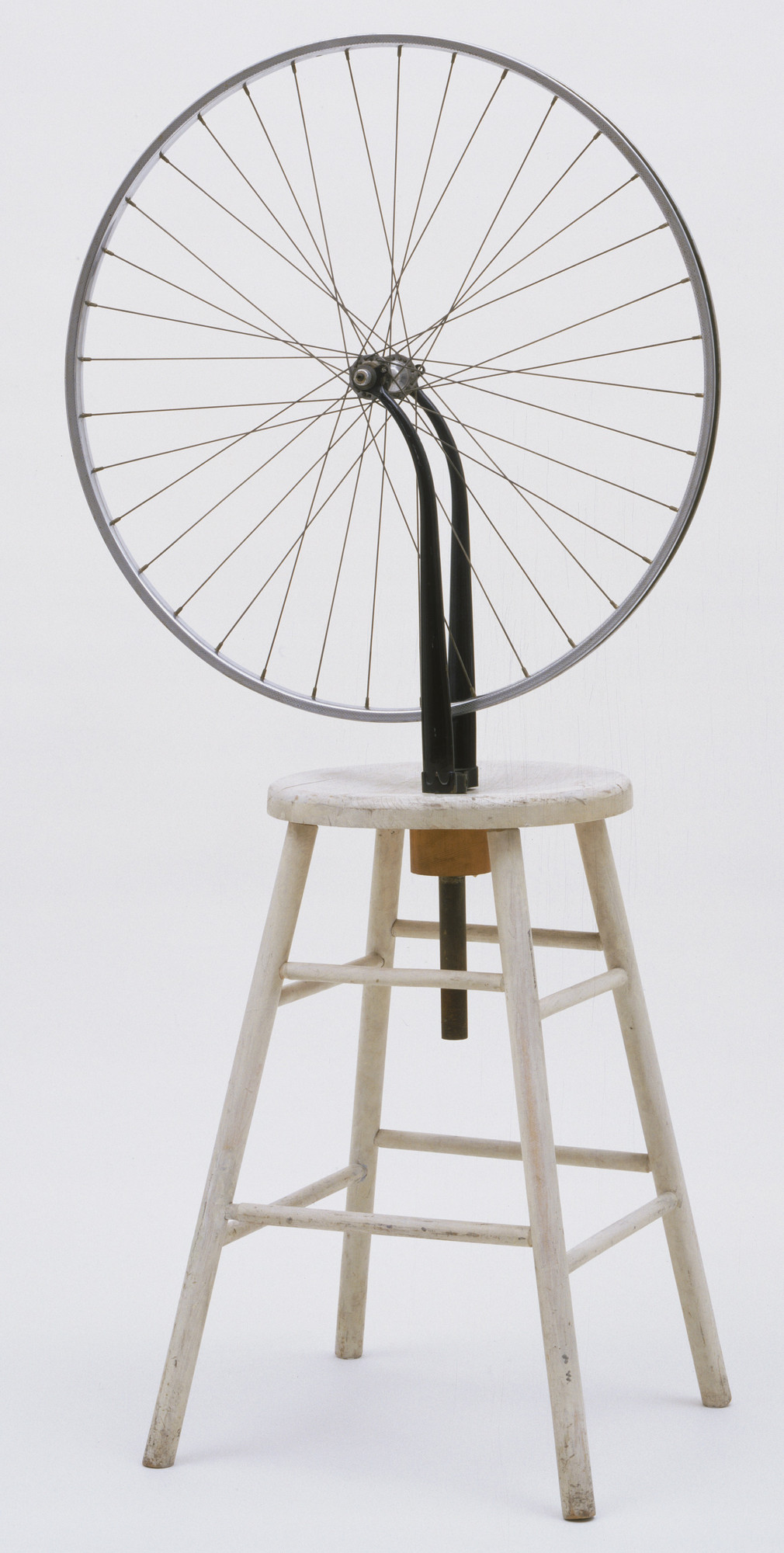
Duchamp’s readymades — ordinary objects repositioned as artworks — were not just provocations. They were a quiet demolition of artistic authority. A bicycle wheel mounted on a stool. A bottle rack. A shovel titled In Advance of the Broken Arm.
Each one reduced the role of the artist to a decision-maker rather than a maker. Skill became irrelevant. Taste became suspect. The artwork, stripped of aura, became an idea wearing the disguise of an object.
It’s a logic that still echoes today, particularly in the way we consume and reinterpret images — a dynamic not far removed from the transformations of meaning explored in pieces like These Amazing Laser Cut Star Wars Pins Will Blow You Away, where objects shift from utility to symbolism simply by context.
Irony as Method
Duchamp never argued aggressively. He didn’t need to. His irony was precise, almost surgical. Where others wrote manifestos, he placed objects.
His most complex work, The Bride Stripped Bare by Her Bachelors, Even — often called The Large Glass — resists easy interpretation. Part machine, part erotic diagram, part philosophical joke, it feels less like a painting and more like a system that refuses to stabilize.
This refusal is key. Duchamp’s work does not guide the viewer; it disorients them. It invites interpretation but refuses resolution.
The Artist Who Disappeared
Perhaps the most radical gesture of all was Duchamp’s withdrawal. For years, he appeared to abandon art altogether in favor of playing chess. Whether this was genuine or another layer of performance remains unclear.

But the effect was undeniable: he turned absence into part of his practice. The artist was no longer a producer, but a presence — or even a rumor.
After Duchamp
Everything that followed — conceptual art, institutional critique, even parts of contemporary digital culture — carries traces of Duchamp’s logic. The idea that art is not something you make, but something you designate, has become almost invisible in its ubiquity.
And yet, there is something unresolved in his gesture. If anything can be art, then nothing is. Or worse, everything is equally interchangeable.
Final Gesture

Duchamp didn’t just challenge art. He destabilized it so completely that we are still trying to reconstruct what was lost.
The strange part is this: we continue to exhibit his works in museums, to frame them, to preserve them — as if they hadn’t already escaped the very system that now contains them.