For most of the twentieth century, Native Americans appeared in American art primarily as subjects painted by outsiders, romanticized figures frozen in a mythic past, rendered by Anglo artists who treated Indigenous life as scenery rather than lived experience. The artists profiled here dismantled that tradition. Working from the 1960s onward, often trained together at the Institute of American Indian Arts (IAIA) in Santa Fe, New Mexico, they seized control of their own representation and built a body of work that is bold, confrontational, culturally grounded, and unmistakably contemporary. What unites them is not a single style but a shared insistence: Native identity is not a relic. It is a living, evolving force, and it belongs to the people who carry it. Their paintings and sculptures have reshaped how America sees itself, and their influence continues to define the landscape of contemporary Southwest art.
Fritz Scholder (Luiseño, 1937–2005): The Painter Who Broke the Mold
Fritz Scholder famously declared that he would never paint a Native American, and then spent a career doing exactly that, but on terms no one had seen before. His Indian Series, launched in the late 1960s, detonated the sentimental imagery that had defined Native representation in American art for a century. In works like Super Indian No. 2, Scholder depicted a warrior holding an ice cream cone, merging Pop Art’s flat, saturated color with the raw complexity of modern Indigenous life. The painting was not a celebration and not a lament, it was an act of reclamation, forcing viewers to confront the distance between the mythologized Indian and the real one.
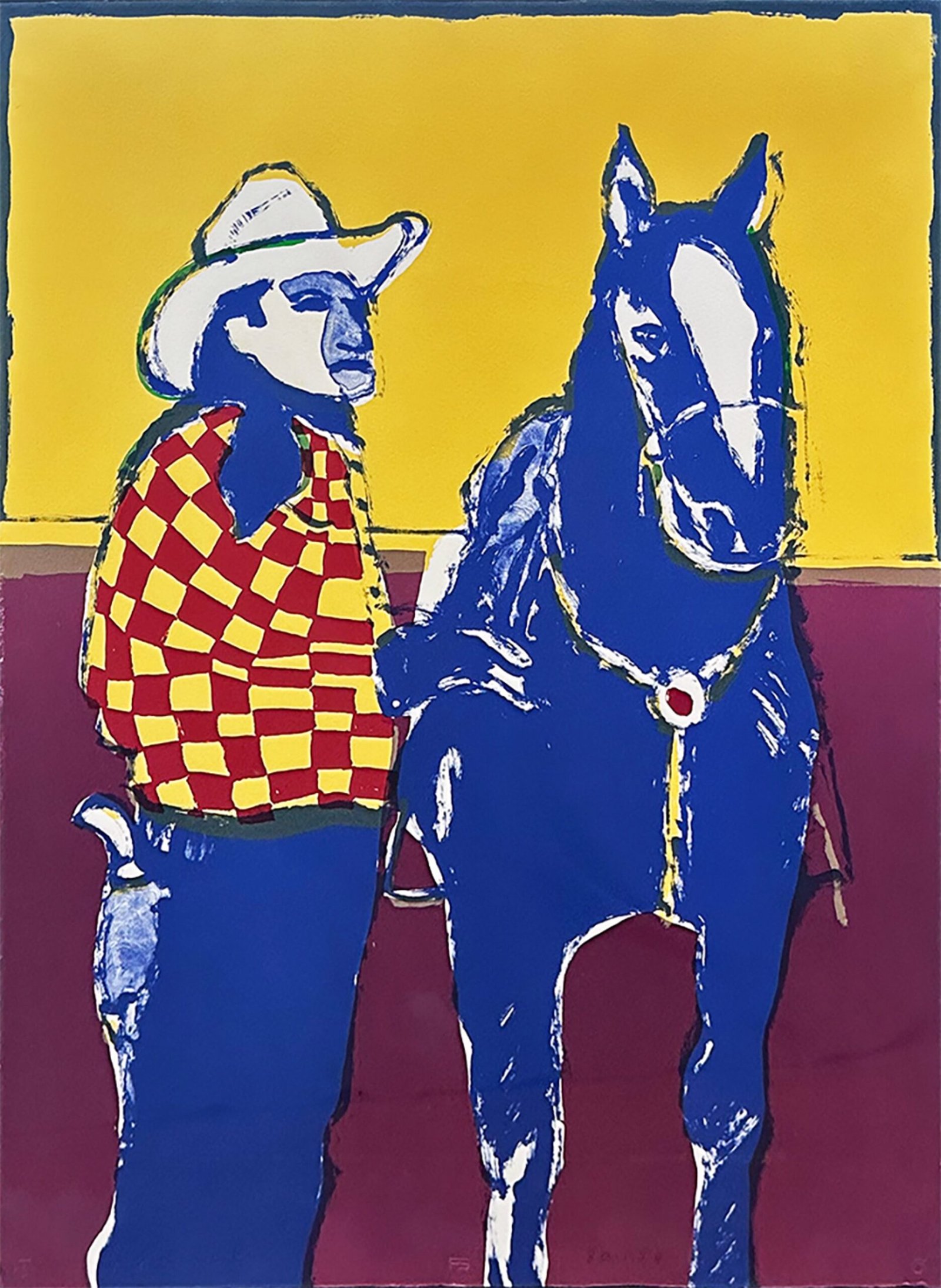
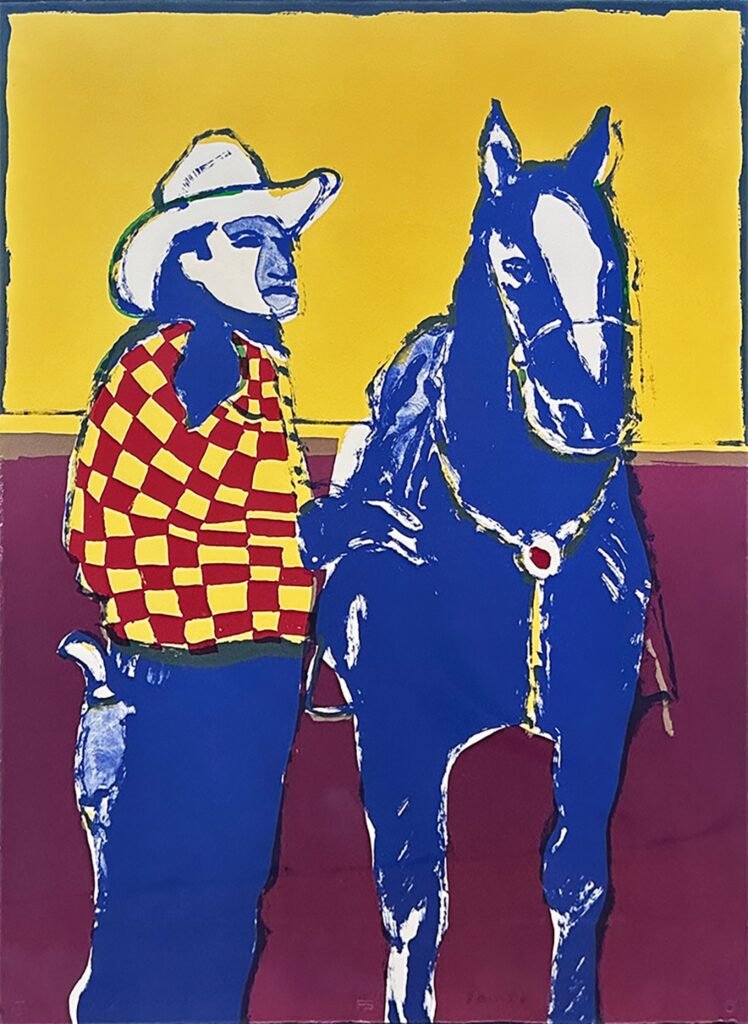
Scholder studied under Wayne Thiebaud at Sacramento City College, where he absorbed the language of Abstract Expressionism and Pop Art, before arriving at IAIA as an instructor, where he influenced an entire generation of Native artists, T.C. Cannon among them. His palette was aggressive, deep purples, electric blues, hot pinks, applied in broad, gestural strokes that gave his figures a monumental, almost confrontational presence. Scholder’s contribution was not merely aesthetic. He gave Native artists permission to be modern, to be uncomfortable, and to refuse the role of cultural artifact. His works remain among the most significant and sought-after in the contemporary Native American canon.
T.C. Cannon (Kiowa/Caddo, 1946–1978): The Prodigy Who Fused Worlds
Tommy Wayne Cannon arrived at IAIA as a teenager in the early 1960s and, by his mid-twenties, had produced a body of work that still feels ahead of its time. Cannon painted Native figures as fully modern people, listening to records, riding in cars, wearing sunglasses, while surrounding them with the flat, high-keyed color fields and decorative patterning of Matisse and the Fauves. The result was a visual language that honored Indigenous identity without trapping it in the past.
His painting Collector #5 (Man in Wicker Chair) depicts a Native man seated casually beneath a Van Gogh and a Matisse, wearing traditional jewelry with a contemporary outfit. The image is witty, defiant, and layered: it positions the Native subject as a participant in the global art conversation, not an object within it. Cannon’s death in a car accident at age thirty-one cut short one of the most promising careers in American art. The works that survive, vibrant, irreverent, culturally precise, are treasured for both their artistic power and their rarity.
Allan Houser (Chiricahua Apache, 1914–1994): The Sculptor Who Gave Form to Resilience
Allan Houser’s monumental sculptures are landmarks in American art, literally. His bronzes stand at the U.S. Mission to the United Nations in New York, outside the Oklahoma State Capitol, and in major museum collections worldwide. But Houser’s significance goes deeper than public placement. He was among the first Native American artists to achieve international recognition working in a modernist sculptural vocabulary, and he did so while remaining profoundly rooted in Apache culture and storytelling.
Houser’s early figurative works depicted the lived experience of Apache people, mothers with children, warriors, dancers, with a warmth and dignity that countered decades of dehumanizing imagery. As his career evolved, his forms became increasingly abstract: smooth, flowing bronze shapes that distilled human figures to their emotional essence. Works like Abstract Crown Dancer embody a remarkable synthesis, the spiritual gravity of Apache ceremony expressed through the clean, modernist lines of Henry Moore and Jean Arp. As an instructor at IAIA, Houser shaped the careers of dozens of Native artists, including Kevin Red Star. His influence as both artist and teacher makes him one of the foundational figures of the contemporary Southwest art movement.
Kevin Red Star (Apsáalooke/Crow, b. 1943): A Visual Historian of the Crow Nation
Kevin Red Star has spent more than five decades painting the culture, ceremonies, and people of the Apsáalooke (Crow) Nation with a specificity and devotion that is unmatched in contemporary Native American art. Born and raised on the Crow reservation in Lodge Grass, Montana, Red Star was selected for the inaugural class at IAIA in 1962, where he studied under Allan Houser and was exposed to world art history alongside his own tribal traditions. He continued his studies at the San Francisco Art Institute, absorbing the energy of the Bay Area art scene before returning to Montana.
What distinguishes Red Star’s work is his meticulous attention to historical and cultural detail, the specific patterns of bone hairpipe breastplates, the arrangement of eagle feathers in ceremonial regalia, the geometry of painted tipis, rendered through a bold, contemporary visual language of vivid color, strong graphic composition, and striking use of negative space. Every element in a Red Star painting carries specific meaning within Crow tradition, yet the paintings themselves feel unmistakably modern. His portraits of warriors, dancers, and parade riders at Crow Fair are individualized, each face a portrait of a specific person, perhaps an ancestor, a family member, a celebrated figure from Apsáalooke history. Red Star’s work is both a cultural record and a living artistic statement, affirming the persistence and vitality of his people’s traditions.

Tony Abeyta (Navajo/Diné, b. 1965): Carrying the Tradition Forward
Tony Abeyta represents the next generation, an artist whose work builds on the breakthroughs of Scholder, Cannon, and Houser while pushing into new expressive territory. Raised in Gallup, New Mexico, near the Navajo Nation, and trained at IAIA, the Maryland Institute College of Art, and New York University, Abeyta synthesizes Navajo cosmology, landscape, and ceremonial imagery with the gestural energy of contemporary abstraction.
His paintings are layered and textural, built up in rich applications of acrylic, oil, and sand that evoke the physical landscape of the Southwest, the striated mesas, the red-earth terrain, the immense open sky. Beneath the abstraction, Navajo symbols and spiritual motifs emerge: Ye’ii figures, ceremonial dancers, references to creation stories and the natural world. Abeyta’s work demonstrates that the contemporary Native American art movement is not a historical chapter but an ongoing conversation, one in which cultural heritage and artistic innovation are inseparable.
Where to Discover These Artists
These five artists represent a movement that has fundamentally altered the course of American art, a movement rooted in Santa Fe, New Mexico, where the Institute of American Indian Arts launched careers, the Indian Market sustains them, and a network of specialist galleries keeps their work visible and accessible to collectors. Among those galleries, Windsor Betts Art Brokerage & Gallery has served as a dedicated specialist in Native American and Southwest art for 38 years, offering collectors access to important works by Scholder, Cannon, Houser, Red Star, Abeyta, and their contemporaries. Located in the heart of downtown Santa Fe, Windsor Betts operates as both a curated exhibition space and an art brokerage, assisting collectors, estates, and institutions in acquiring and placing culturally significant works through the private secondary market.
For those encountering these artists for the first time, Windsor Betts provides the specialist knowledge and curatorial context that bring each work to life, not just as an object, but as a piece of a larger cultural and art-historical story that continues to unfold.