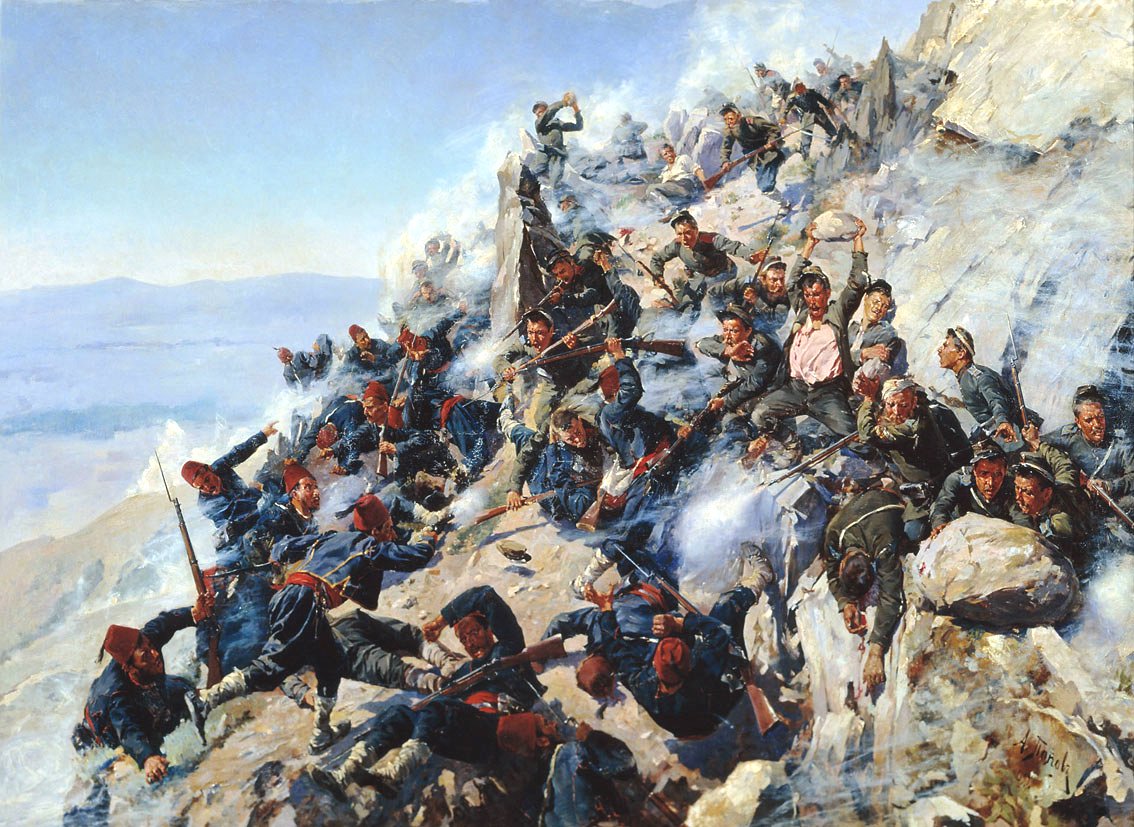
Between 1850 and 1899, war was still something you looked at before you experienced it. Before photography could freeze corpses in trenches and before cinema could replay slaughter on command, oil painting carried the burden of representing violence. And it did so with troubling elegance.
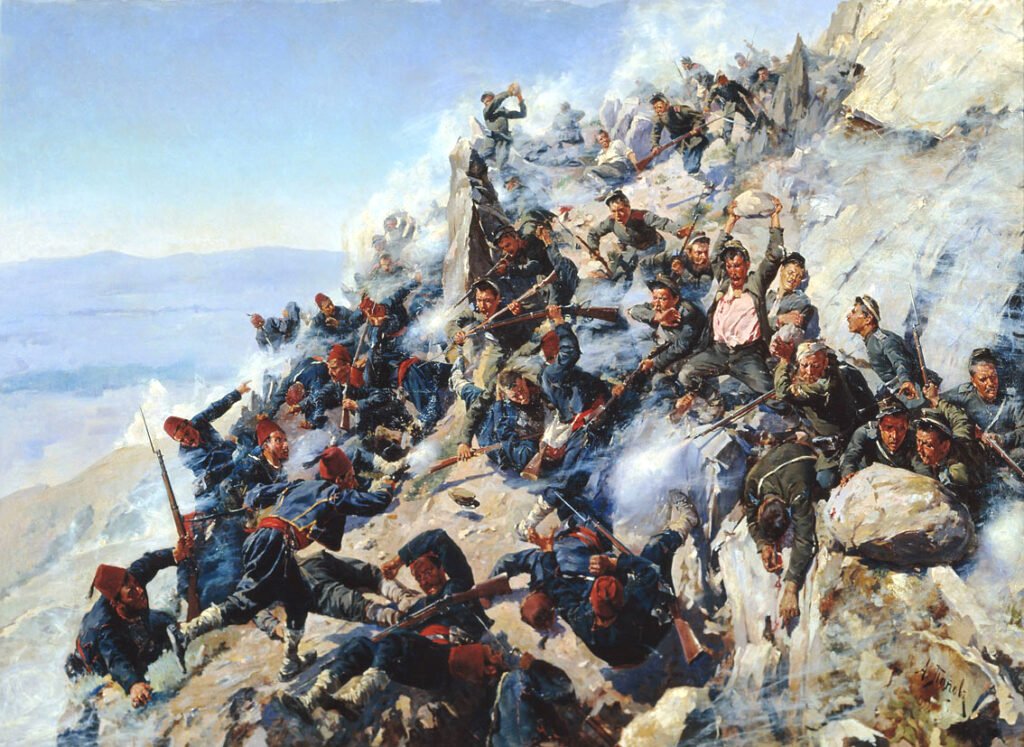
Nineteenth-century battle paintings were not records. They were interpretations—myth-making machines disguised as documentation. Horses reared heroically. Smoke curled like stage design. Blood appeared, but never too much. Death was present, but never inconvenient. These paintings did not ask whether war was just; they assumed it was meaningful.
Painting War Before It Became Unphotographable
The mid-19th century marks a peculiar threshold. Industrial warfare had already arrived—rifled guns, mass conscription, mechanized logistics—but art still clung to older visual languages. Painters such as Meissonier, Detaille, and Lady Butler depicted battles with cinematic clarity long before cinema existed.
What they offered was not truth, but coherence.
War, in reality, is chaotic, disorienting, and morally incoherent. Painting, however, insists on composition. Every battle scene had to make sense visually, even when the event itself did not. This necessity forced painters to aestheticize violence—not out of malice, but out of medium.
Empire Needs Images
These paintings did cultural labor. They reassured empires that their violence was noble, their losses justified, their ambitions righteous. A fallen soldier was never anonymous. He was symbolic. A charge was never futile. It was destiny in motion.
This visual rhetoric mattered. In an age before mass media saturation, paintings shaped how civilians imagined war. The battlefield became a place of sacrifice rather than attrition. Pain became meaning, not waste.
Institutions like The Musée d’Orsay’s holdings of 19th-century military painting show just how refined this language became—controlled chaos, disciplined emotion, violence curated into grandeur.
Smoke as Moral Softener
Notice the smoke. Always the smoke.
Gunfire is rarely clear in these works. Instead, clouds obscure gore, blur bodies, and soften consequences. Smoke functions like moral fog: it allows the viewer to admire courage without confronting aftermath.
This technique mirrors something still visible in contemporary visual culture—how uncomfortable realities are filtered through aesthetic distance. It’s a strategy artists continue to interrogate, much like the satirical dismantling of power structures found in Pawel Kuczynski’s visual allegories, where symbolism replaces spectacle to expose the machinery underneath.
The Horse as Ideological Tool
The horse dominates these canvases. It is grace, power, obedience—all virtues empires love to project onto themselves. Horses die, yes, but beautifully. Their collapse is tragic, not grotesque.
By the end of the century, this symbolism would no longer hold. Machine guns do not care about composition. World War I would shatter the visual grammar of heroic war permanently.
These paintings sit precisely at that moment before illusion breaks.
Why These Paintings Still Matter
Today, these works feel unsettling not because they glorify war, but because they reveal how easily violence can be made beautiful. They remind us that aesthetics are never neutral. Beauty can anesthetize. Order can lie.
The paintings of 19th-century war are not relics. They are warnings—framed, varnished, and still disturbingly persuasive.