Trains occupy a unique territory in human imagination. They are machines of steel and schedules, yet they have always carried something more than passengers. A train suggests movement with purpose, a story unfolding in a straight line across landscapes that change slowly outside the window. Unlike planes, which simply leap across the sky, trains move through geography in a way that invites observation — forests sliding past, mountains appearing gradually, cities dissolving into countryside.
Perhaps this is why trains appear so often in fiction. They are ready-made stages. Characters are confined together, destinations loom ahead, and the rhythm of wheels on rails creates the perfect pacing for narrative tension.
The train is not merely transportation. It is storytelling infrastructure.
The Fictional Trains That Shaped Our Imagination
Some trains exist only in fiction but have become so culturally powerful that they feel almost real.
The Hogwarts Express, departing from Platform 9¾ in Harry Potter, is perhaps the most beloved fictional train of the modern era. Its bright red locomotive does not merely transport students to school; it carries them into a secret magical society. The train becomes the symbolic threshold between ordinary life and the extraordinary.
Another unforgettable train glides silently across water in Hayao Miyazaki’s Spirited Away. The sequence is quiet, dreamlike, almost meditative. The train passes through flooded landscapes where telephone poles rise from the sea like forgotten monuments. Nothing dramatic happens — yet the moment remains one of the most haunting journeys in animation.
Fictional trains can also carry darker symbolism. In Snowpiercer, the train holds the last survivors of a frozen Earth. Instead of adventure, it contains rigid social classes separated by carriages, turning the train itself into a moving metaphor for inequality.
Then there is The Polar Express, where the train becomes a vehicle for childhood wonder. The journey is less about geography and more about belief, carrying children toward a world where magic still feels possible.
Some fictional trains operate in surreal universes. Infinity Train, a modern animated series, imagines a train with endless cars, each containing a different reality — puzzles, strange ecosystems, philosophical dilemmas. The train becomes a labyrinth of psychological exploration.
Classic literature also contributed to the myth of the railway. The Lone Ranger’s silver train, racing through American Western landscapes, symbolizes frontier adventure and justice arriving with thunderous wheels.
In cinema, The Darjeeling Limited by Wes Anderson transforms a train journey across India into an introspective pilgrimage for three brothers trying to reconnect with each other and themselves.
And of course, one fictional train above all others has become synonymous with mystery: the train in Agatha Christie’s Murder on the Orient Express. In that story, the train becomes a locked-room puzzle on rails, proving that a railway carriage can be as suspenseful as any haunted mansion.
These trains do not exist in reality — yet they live permanently in cultural memory.
The Real Railways That Feel Like Fiction
If fictional trains capture the imagination, real railways often surpass it.
The Trans-Siberian Railway remains the longest railway journey on Earth, stretching across nearly 9,300 kilometers from Moscow to Vladivostok. The trip crosses forests, steppes, rivers, and entire time zones. Passengers can spend a week aboard the train, watching the geography of Eurasia slowly unfold.
In Europe, the Glacier Express travels between Zermatt and St. Moritz in Switzerland, passing through deep valleys, alpine villages, and snow-covered mountains. The train is often described as the slowest “express” train in the world — and that slowness is precisely what makes it spectacular.
Nearby, the Bernina Express climbs high into the Alps on dramatic stone viaducts and tight curves, offering views that feel more like cinematic panoramas than transportation corridors.
Across the Atlantic, the Rocky Mountaineer carries passengers through Canada’s dramatic mountain landscapes, weaving between glaciers, rivers, and pine forests. Glass-domed carriages turn the journey into a moving observation deck.
Australia contributes one of the world’s most iconic rail journeys: The Ghan, which cuts across the continent from Adelaide to Darwin. Over nearly 3,000 kilometers, the train passes through red desert, vast emptiness, and remote settlements that reveal the scale of the Australian interior.
In Norway, the Flåm Railway climbs steep mountain terrain between fjords and waterfalls, transforming a short journey into one of the most visually striking train rides in the world.
Scotland offers its own cinematic railway with the West Highland Line, famous for the Glenfinnan Viaduct — the same sweeping bridge used in the Harry Potter films. Reality and fiction literally overlap here as modern trains cross the same dramatic structure used to portray the Hogwarts Express.
Meanwhile, the California Zephyr in the United States crosses the Rocky Mountains and the Sierra Nevada, turning a cross-country trip into a slow-motion travel documentary.
These journeys prove that the romance of rail travel is not merely fictional.
The Orient Express: Where Fiction Meets Reality
If there is one train that perfectly bridges fiction and reality, it is the Orient Express.
Originally launched in 1883, the train connected Paris to Istanbul, carrying diplomats, aristocrats, artists, and adventurers across Europe. The carriages were luxurious, the service legendary, and the route itself became synonymous with elegance and intrigue.
Writers quickly adopted the train as a narrative setting. None more famously than Agatha Christie, whose Murder on the Orient Express transformed the train into one of the most iconic crime fiction locations in literary history.
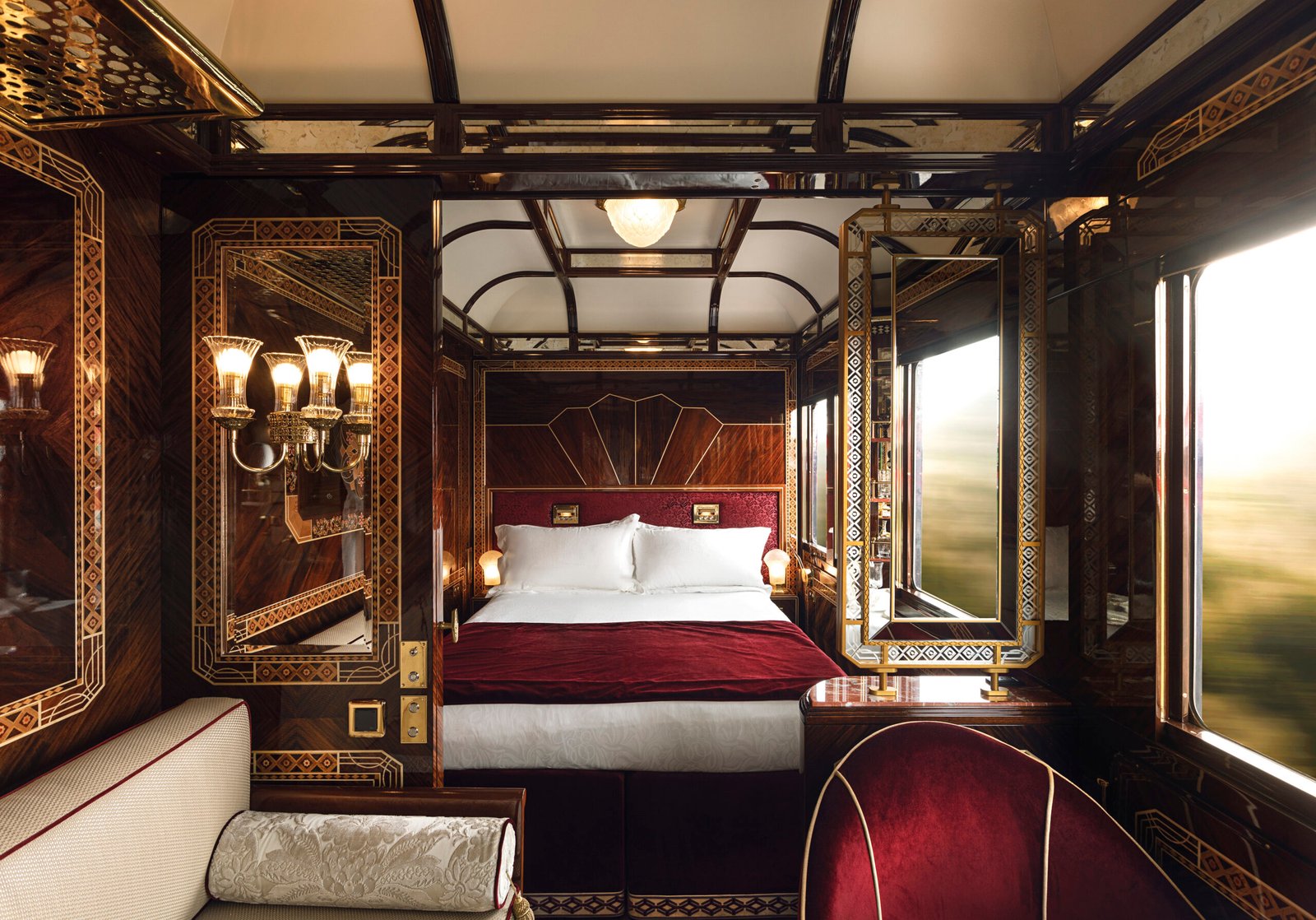
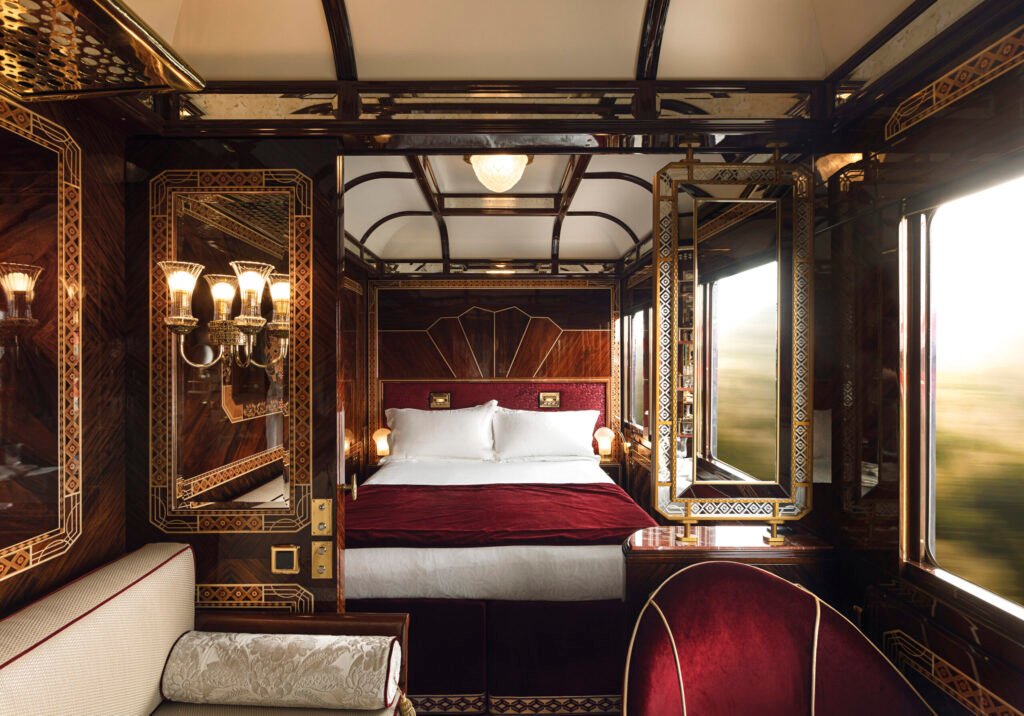
What makes the Orient Express unique is that it exists simultaneously in two worlds: the historical railway network and the fictional universe of detective stories. Passengers today can still ride the Venice Simplon-Orient-Express, a restored luxury train that recreates the glamour of early twentieth-century travel.
Few machines have carried both real passengers and imaginary plots with equal success.

Why Trains Inspire Stories
There are practical reasons why trains appear so often in storytelling.
First, trains impose structure. Once a train departs, characters cannot easily escape each other. This creates natural tension — the perfect condition for drama.
Second, trains create a moving backdrop. Landscapes change constantly, allowing stories to progress visually as well as emotionally.
Third, trains place strangers together. In a carriage, people from different backgrounds share space, creating unexpected encounters that writers and filmmakers can easily turn into narrative sparks.
For these reasons, trains have long fascinated artists and storytellers. Visual metaphors involving machinery, movement, and society often appear in contemporary illustration and symbolic art, including works like those explored in Art-Sheep’s feature on Pawel Kuczynski’s satirical illustrations, where complex social systems are often represented through powerful visual symbolism.
Trains, in this sense, are more than vehicles. They are metaphors for systems in motion.
The Return of Train Travel
Rail travel is also experiencing a cultural revival. Environmental concerns, interest in slow travel, and nostalgia for the romance of earlier transportation are pushing trains back into the spotlight.
Unlike airplanes, trains encourage passengers to observe the journey itself. The rhythm of the tracks creates a slower perception of distance. You feel the land passing beneath you.
Organizations studying global rail infrastructure, such as the International Union of Railways, note that modern high-speed rail systems and scenic railway tourism are both expanding rapidly.
The train, it seems, was never truly outdated.
The Rails Between Imagination and Reality
Whether fictional or real, trains occupy a powerful symbolic space. They represent transition — the moment between departure and arrival, between who we were and who we might become.
A train journey always carries the promise of transformation. Characters board trains in one state and often leave in another.
Perhaps that is why the most memorable trains — from the Hogwarts Express to the Trans-Siberian Railway — remain lodged in cultural memory long after the journey ends.
Because once the train starts moving, the story has already begun.